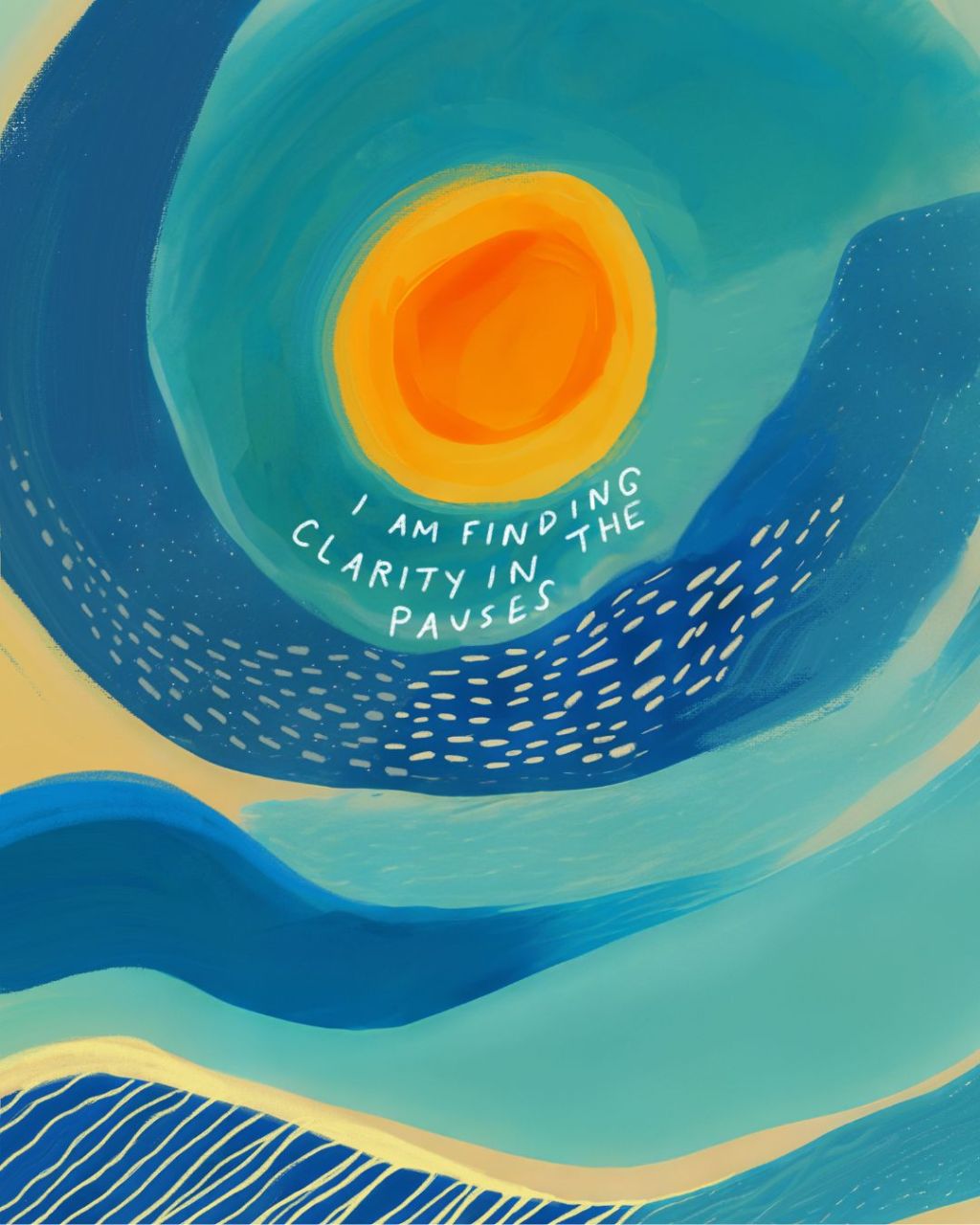
How can quiet pauses be powerful and bring clarity?
Notes from ocean currents during times of minimal wind:
When the wind is calm, surface ocean currents slow down because they are primarily driven by wind. However, deep ocean currents continue to move because they are driven by differences in water density, which are influenced by temperature and salinity variations. This shows that while surface currents are wind-driven, deep currents are driven by density differences. In these quieter moments, they become quietly powerful.
It may look like surface currents slow down when the wind is calm, but deeper currents that are driven by density are still moving large amounts of water in a way that can’t be seen from the surface. The fact that ocean current patterns change when there isn’t much wind shows that wind and differences in density are what drive surface currents and deep currents, respectively. Deep waters flow even when calm.
Perhaps, like the ocean finds clarity in the pause of the wind, we can also learn something from these quieter moments. The ocean’s currents may seem to stop, but they are actually shifting in a new way. Density differences in the water create a slow, powerful flow.
Like the ocean, perhaps, we too find clarity in stillness. Hidden changes and transformations can still flow even when it seems like nothing is moving.
Even though this process may be slower than we want, it’s not too late to find clarity amid the stillness.
Find clarity in the pauses by noticing the quiet changes.
Find clarity in the pauses by observing subtle shifts.
Find clarity in the pauses by recognizing the depth the small movements.
Our daily lives may not look exactly like the ocean’s, but we can still learn that change happens even when it appears still.
The ocean’s currents keep moving when the wind stops, driven by the weight of the water. We can keep flowing with great depth, even in quiet times.
There is room for movement and transformation over time, wave by wave. – Morgan Harper Nichols
