Category: Daily

  • Embracing the depths of your story

    Embracing the depths of your story

    If you were to think of your life as a story, there are likely chapters that you could easily recite over and over. For some, it might be the story of how you grew up, and for others, it might be the story of how you ended up in the city you’re currently in or the story of your middle name. These stories become a part of us in a way that can be very useful. This is especially true if you have parts of your story that people might not be familiar with, such as having a rare name or being from a small town that few have heard of. However, one of the challenges of having familiar stories is that they can feel fixed and stuck in time. You may even get tired of telling other people the same old stories. You may even get tired of telling those stories to yourself, too. So what can you do?

    Here’s something you can try:

    Think of a book you’ve read where you’ve been able to watch or read an interview that features the author of the book. It’s likely that upon listening to them talk about the story and its characters, you learned something new about the book when hearing them dive into all of the details that weave the story together, even if it’s not written on a page. They share details that only they know because they’re the only ones who have been telling that story. What if––if only for a moment––you could imagine yourself as the author of a fictional book you’re writing, where you’re sharing the behind-the-scenes later on:

    What are some details of your life that may have been overlooked or forgotten? What are the untold stories and hidden layers that add depth and richness to the narrative? The details you might share face-to-face or with certain people? The things that were beautiful and meaningful but hard to put into words?

    You don’t have to put words into a perfectly publishable narrative to take a moment to reflect on the details. Even just acknowledging them is a way to be reminded that your story is alive with a richness that is worth paying attention to.

    May the hidden layers of your story help you realize the depths of it. – Morgan Harper Nichols

  • Small Ways to Expand A Sense of Possibility

    Small Ways to Expand A Sense of Possibility

    Allow yourself space to explore new connections, even in small ways. There are so many things that you can pay attention to that might seem small or seemingly insignificant but that can actually tell a story of something so much more.

    Consider the photos on your phone. When was the last time you printed some of them out? How might looking at a moment that you were really grateful for in a physical piece of paper help you remember it more? It doesn’t even have to be a formal photo print. You could print something on a black and white piece of regular paper, fold the page, and use it as a bookmark in your journal.

    Of course, a printed photo might not change everything, but in a life where so much is fleeting, it can become a symbolic act of taking a little extra time and effort to find value and appreciation in an easily overlooked place.

    This is an example of making new connections—allowing yourself to connect one small thing to the other in pursuit of something forgotten or never realized before.

    A new connection could be a photograph you took years ago; that’s “old news” that takes on new life when you print it.

    A new connection could be a moment when you think of two people who don’t know each other but know you, and you introduce them so they can become friends.

    A new connection could be realizing that you already have a skill in one area of your life that comes naturally to you and that you can apply to another area of life.

    These are just a few of many examples and you are free to go in search of many more, one connection at a time. – Morgan Harper Nichols
  • Creating Space to Think Things Through

    Creating Space to Think Things Through

    Whenever you’re faced with a conversation you need to have, a dilemma you’re trying to figure out, or something else that requires some serious thought before taking action, having a go-to place where you can really think things through is something that can help in the process. Having this kind of space allows you to organize your thoughts and explore new possibilities.

    However, trying to find a way of doing this that works for you is something that can be practiced. Here’s a simple exercise called “Subtle Shifts” to help you create that space and practice organizing your thoughts:

    Step 1 – For the next 3-5 days, take a photo of something ordinary or mundane in your daily life, such as the view from your window or the arrangement of items on your desk.

    Step 2 – Review the photos you’ve taken at the end of the week.

    Step 3 – As you review them, open up to a blank page in a journal and write “Subtle Shifts” at the top of the page. Then, write down what subtle changes you noticed from day to day. If everything remained the same, that’s perfectly fine. Challenge yourself to identify at least one small difference. You can format your entry as a list or a paragraph – there’s no right or wrong approach.

    This may feel like a small exercise, but in reality, it can make a significant impact on how you process your thoughts, observe, reflect, and prepare for what’s next.

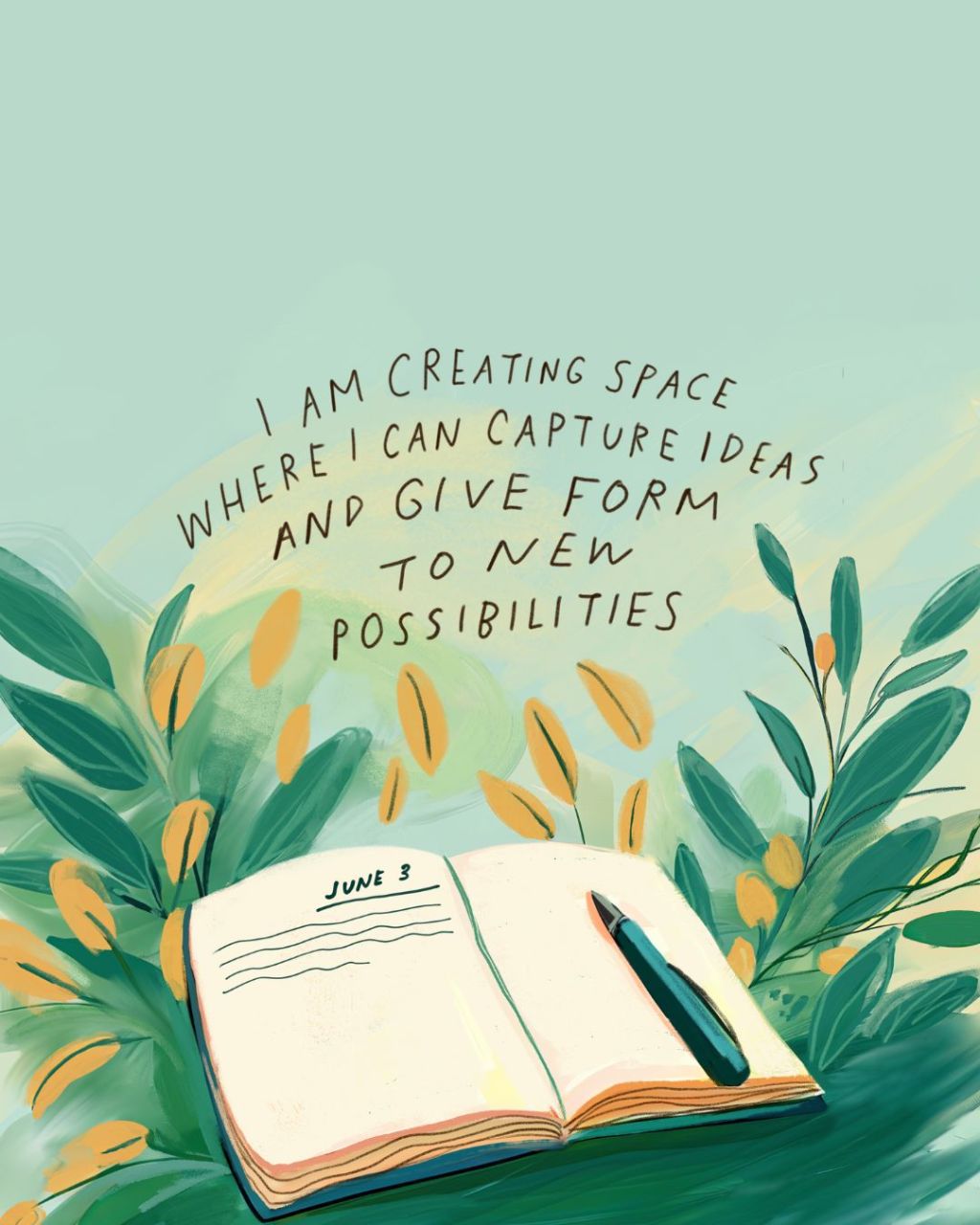
    By creating space to organize your thoughts, even before the smallest thing, you are engaging in a valuable process that can grow and even give form to new ideas. Through these simple observations, you might even begin to notice new things you’ve never paid attention to before.

    Of course, organizing thoughts is not the only part of working through something, but it’s a part that can be overlooked because it can be overwhelming. So give yourself permission to start small and create a space where you can practice giving form to new possibilities. – Morgan Harper Nichols
  • Making space to gather possibility

    Making space to gather possibility

    There are so many reasons why looking ahead can feel too abstract, too daunting, and too uncertain. So, instead of trying to think about it all at once, let yourself think for a moment of a new memory you’d like to create.

    The idea of a “memory” can have a lot of strong emotions attached to it.

    For instance, you might have memories associated with people you are no longer around to or close to anymore. There could be grief there and at times this can also make it hard to imagine — what will new memories look like?

    So give yourself permission to create space to explore what new memories might look like. What new things have you not been able to do? What things might you like to try alone, and what other things are focused on other people joining in?

    Make a list. Look up pictures and make a mood board. Ask a friend: “What kind of new memories would you like to make?”

    It is not selfish to try this, for the language and images that you end up finding can become points of inspiration and even templates for others to join in on, too.

    This doesn’t have to be the only thing you do when looking ahead, but it can be one of many. Find a space (even if it’s just one page in a journal or one mood board) where you can explore the possibilities of new memories.

  • There is space to try again

    There is space to try again

    I hope after everything, you feel free to write it again. Even if it’s nothing more than a few words for the beginning of a message you may never send. Even if it’s just to create just enough space in your life to say: I was here. And I’m still here. And here, in the wild of June, this story has not yet reached its end.

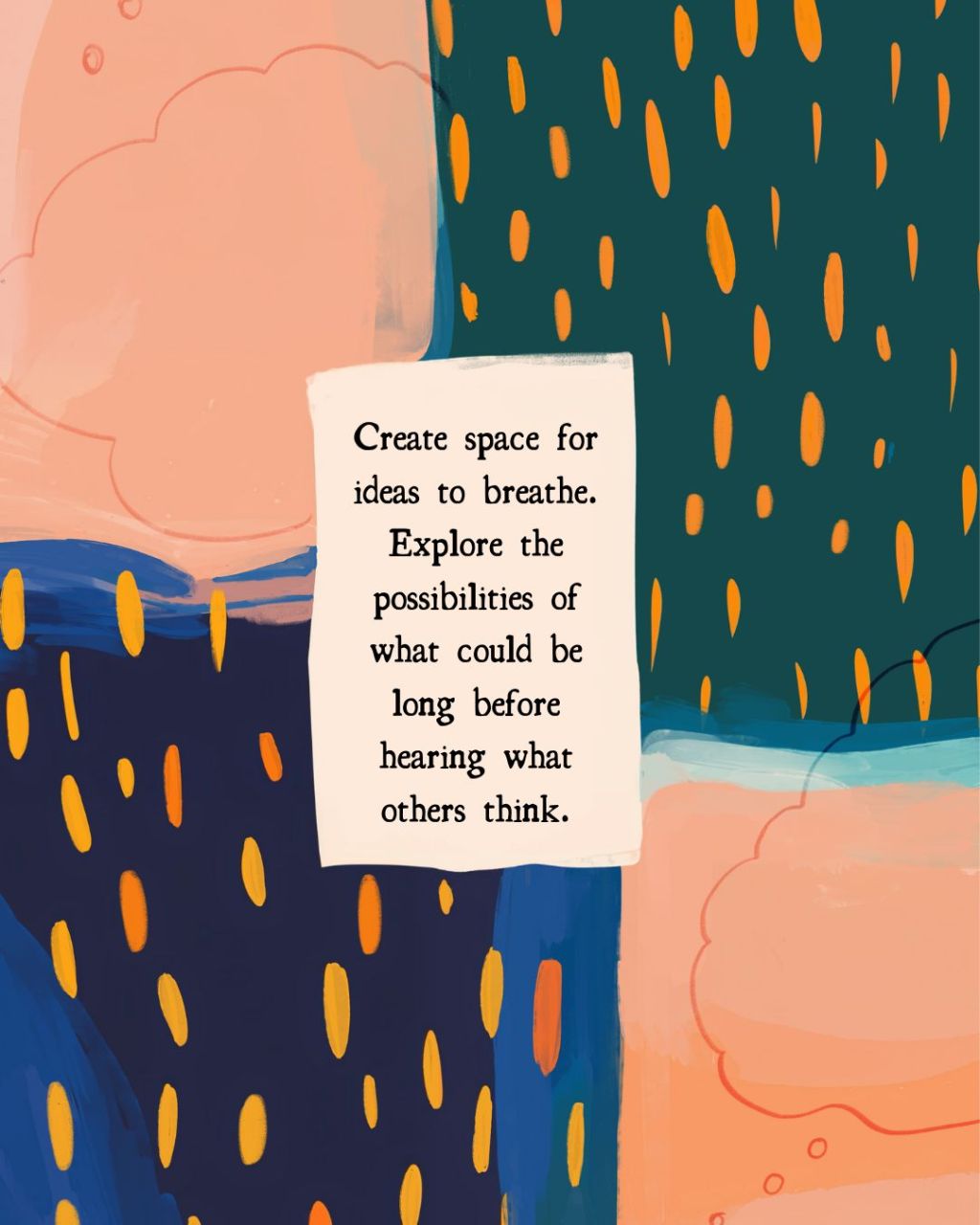
    And you do not have to wait to know what the next chapter will entail for this to be true: you are allowed to keep returning to the spaces that allow you to breathe and explore the possibility of what could be. Even if it just begins with one line at a time.

    “Here’s what I’ve been meaning to say…”

    “I don’t have perfect words for this for here’s what I know…”

    “I used to hold so much in. But now…”

    Even if it’s just nothing more than a few words, allow yourself to create space this June. You never know what small beginnings (even if in the form of a sentence) can teach you.

    -Morgan Harper Nichols

  • Grace for Unfinished Chapters

    Grace for Unfinished Chapters

    When you are able to cultivate gratitude in the present, you are also laying the foundation of contentment that you can carry with you, toward the future.

    This can especially be true when it comes to how you relate to other people. In moments where you find yourself being compared to others or something was said to you that doesn’t reflect who you fully are, it’s in moments like this where you can remember what’s actually true about you, and how that’s something worth being grateful for.

    If there is a moment in the future where someone says, “Oh, you’re still working on that? I thought you’d be done by now.” In that space, you can reflect on all the ways you’ve been learning to be grateful for your own pace and growth.

    There might be times when others tell you (or you tell yourself), “It’s surprising you haven’t moved on to bigger things yet.” And in those moments, you remember how you’ve been learning to be grateful for your unique journey.

    When you’re hearing, “Are you still doing that? I thought you’d have found something else by now,” You can remember the small ways you’ve been learning to be grateful for your own strengths and progress.

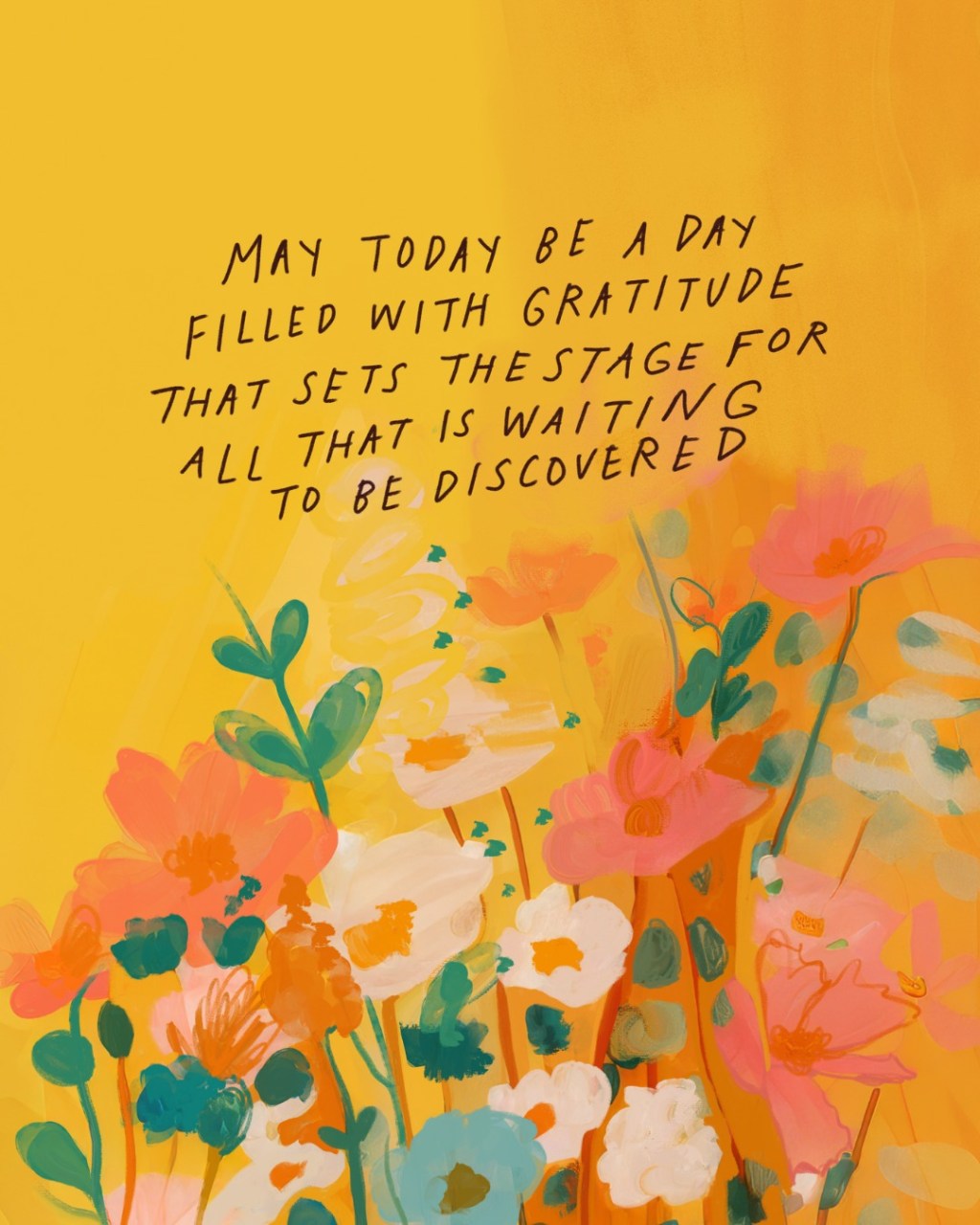
    There is no way to perfectly prepare for everything that will come, but you can still take moments right here in the present, learning to be grateful for what you have, what you’ve learned, and what you’ve been becoming more aware of each day. On this last day of May, may today be a day filled with gratitude that sets the stage for all that is waiting to be discovered. May there be grace for unfinished chapters. May there be spaciousness in the journey of becoming. – Morgan Harper Nichols
  • The life that happens in overlooked moments

    The life that happens in overlooked moments

    When you look at a flower, you might pay more attention to the bright petals than to the other parts of the flower. But there are many different parts that make a flower complete: the petals, the stem, the leaves, and even the tiny stamens and pistils inside. Each part has a role to play, and even though some parts are small and often overlooked, they are just as important as the bright petals. Our lives are much longer than the life of a flower, but when you consider the smaller experiences that make the whole…the moments we allow ourselves to deeply feel an emotion, experiences where we gain clarity, or an unexpected lesson that ends up making a difference..they are a part of the larger experiences we have in life, too. By themselves, they may seem like fleeting moments, however, these small parts are like all of those details that help the flower grow and thrive. Try to notice the small details in life wherever you can find them…especially the ones that aren’t as tangible, such as letting yourself feel or taking a moment to reflect. For it’s not just the big, tangible moments that are a part of the whole story. Continuing to notice the small details matters, too. – Morgan Harper Nichols
  • Possibilities of Hidden Potential

    Possibilities of Hidden Potential

    At times, what might seem like nothingness might just be rich soil waiting for seeds to be sown and watered. Closer observation opens up the possibility of hidden potential.

    Sometimes, what looks like nothing might actually be soil full of potential, waiting for seeds to be planted and watered. Think about a garden: at first, it might just look like a patch of dirt. But when you look closer, you realize it can become a place full of plants and flowers. This is like the quiet moments in our lives where it may seem like nothing is happening. However, if we pay attention, we might find that these moments are full of possibilities. So, just like in a garden, take the time to see the potential in what seems like nothing. These quiet spaces can help you figure out important things that become part of the larger blooming of what matters most.

  • Growth can spiral before it blooms

    Growth can spiral before it blooms

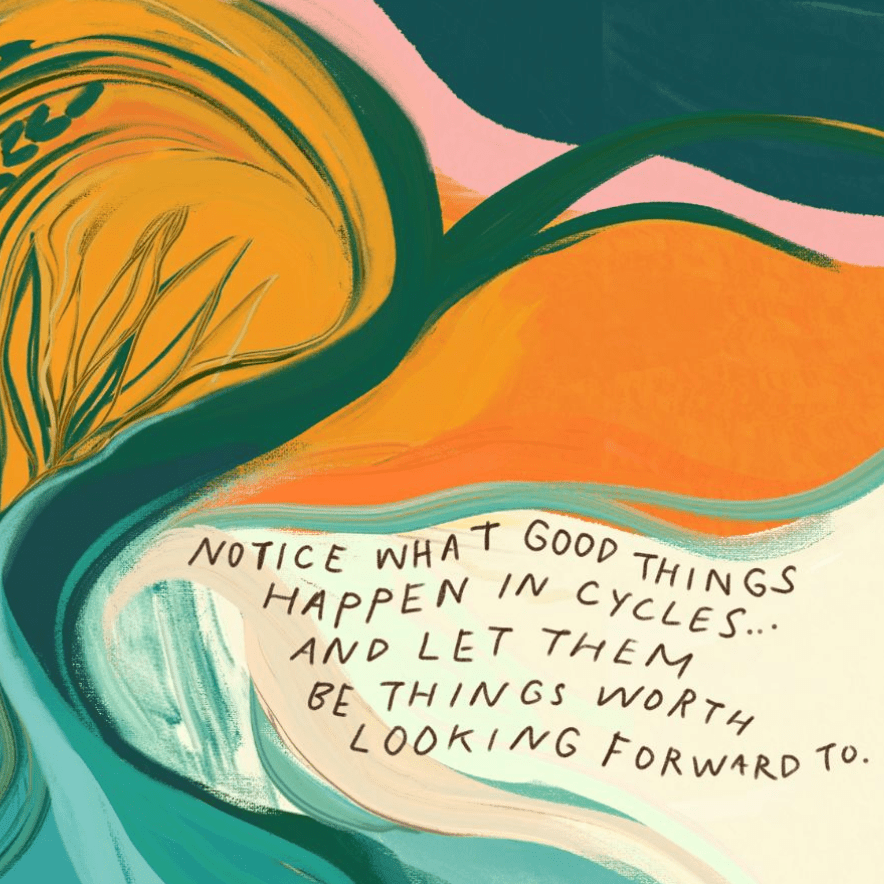
    Notice what good things happen in cycles…and let them be things worth looking forward to.

    This can be valuable to remember because we live in a world where there are things that are more step-by-step and feel very defined.

    Many things happen in ways that feel more like a linear series of steps. Just to name a few:

    Baking a cake
    Washing dishes
    Traveling on a road
    Building a piece of furniture
    Navigating a traffic light
    Writing a term paper
    Going up or down an elevator
    Moving through an assembly line

    Daily life is filled with things that require a clear sequence of steps to complete.

    However, not all of life is like that. And that’s okay…

    While step-by-step processes are helpful for many things because they show a clear path from start to finish when it comes to so many other things in life, it can be a little less predictable: paths we take toward dreams and desires, moving through grief and all of its (often-intertwined) stages, understanding and finding connection in different relationships.

    In a world of step-by-step, at times, it can be easy to feel as though nothing is happening if it’s not linear. You might feel as though you are going in circles, constantly going back to where you started. In that space, may you remember that there are many things that happen in cycles and going through these cycles is natural. Seasons. Lunar cycles. Water cycles. The cycle between day and night.

    As you move through the different cycles of life, be kind to yourself. If something has ended up being a bit more of a winding, circular path than you expected, allow yourself to seek out space to feel, to talk it out, to rest, to write it out in a journal (even if you feel like you’re rambling!), and just be reminded that life doesn’t have time be sorted out into step by steps before you can breathe and move through the space you’re in at a mindful pace. Continue to notice the good things that happen in cycles––even if it’s something that feels small, like the cycle between day and night. Pay attention to these rhythms and embrace when, where, and how they apply to other areas of life. Sometimes, growth can spiral before it blooms.

    – Morgan Harper Nichols
  • Some transitions speak in subtle ways

    Some transitions speak in subtle ways

    When you are listening to music, oftentimes, it will be easier to pay attention to the musical notes more than the spaces in between. These gaps are called “rests,” and even though they are silent, they are just as much a part of the song. Of course, our lives are much longer than the length of a song, but when you consider the ways we move through our days, moments of transition, and quiet pauses, there is something to be learned from the significance of rests in music. This is especially true considering that the in-between moments in the songs are the ones that get overlooked, and yet, they are essential to the rhythm and flow of the music.

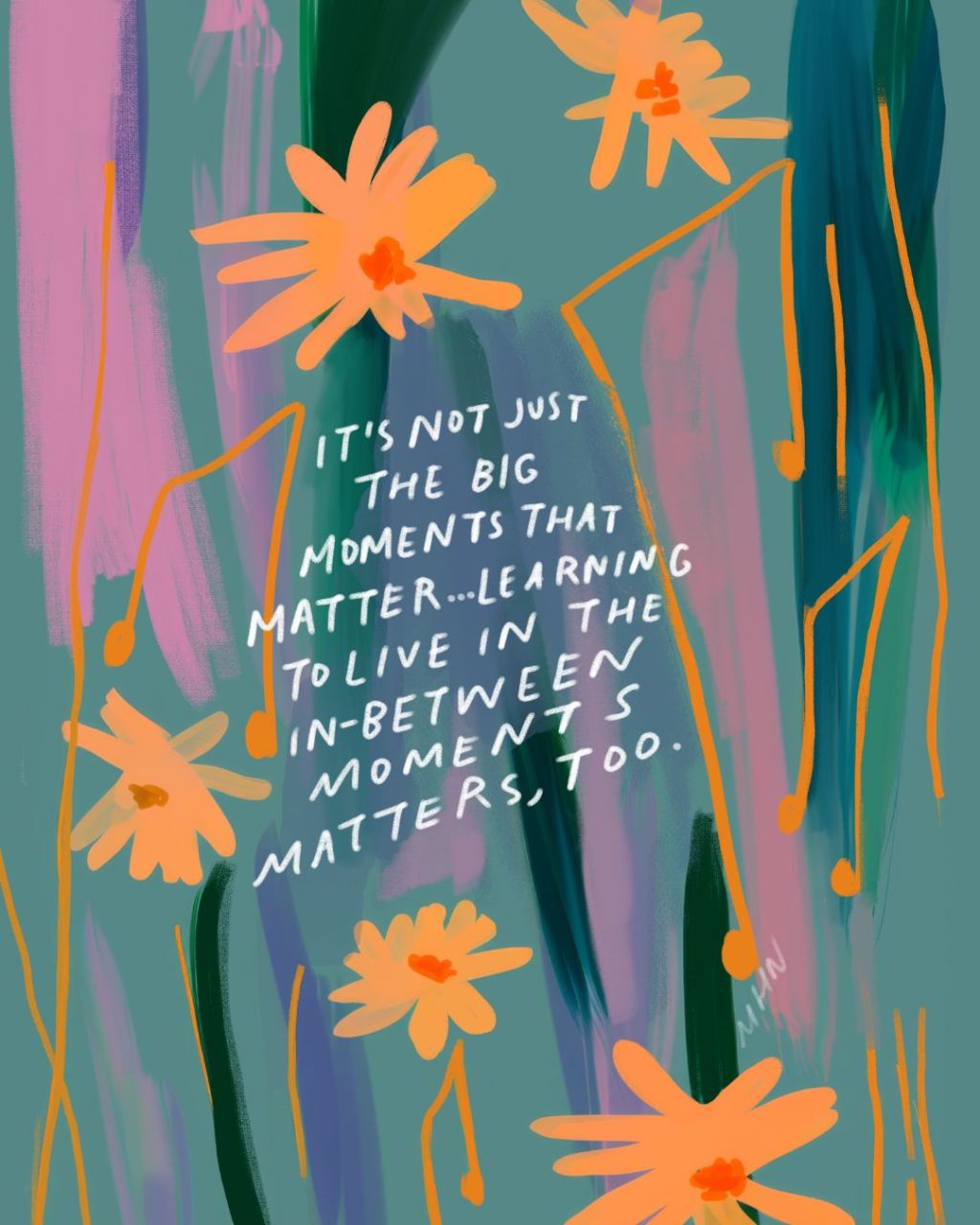
    Try to listen for the pauses in the music wherever you can find them. For it’s not just the big moments that matter. Learning to live in the in-between moments matters, too. Some transitions speak in subtle ways.

    -Morgan Harper Nichols

  • Breathe (+ New Free Workshops!)

    Breathe (+ New Free Workshops!)

    breathe
    and stay here as long as you need
    even before you make sense of things
    and while the forest garden is still a dream
    breathe


    There is a lot we can learn from just taking things one word at a time. Even before the word feels fully embodied.
    Even when they just feel like letters on a page.
    Even when it’s something simple as the word “breathe.”

    This has been core to my creative practice, and also, something I hold onto when moving through life.

    And I’m excited to share it with you! I am adding two new free writing workshops and I am sharing it with everyone here, first!

    Thursday, June 12, at 7pm EST

    Thursday, July 10 at 7pm EST

    • Held on Zoom for 90 minutes (Interactive, Q&A, No supplies Needed)
    • Price: Free or PWYC (pay what you can)! – This is PWYC because I’m a strong advocate for creating more accessible ways to learn and provide resources. Of course it takes resources to do things, but making it accessible is a major priority for what I do (and I plan to do even more like this in the future!).
    • Space is limited, just to make sure there is room for participation and questions!

    Hope to see you there,

    – Morgan Harper Nichols

  • Giving things space to breathe

    Giving things space to breathe

    For whatever it is you are trying to figure out right now, remember giving it space to breathe doesn’t mean you’re giving up. In fact, it’s a way to explore how things might come together in ways you didn’t expect. This can be especially true when it comes to dreams. At times, you may be wanting to immediately get to work or share it with others. But if you haven’t been able to get started yet and if you haven’t been able to receive the perfect response from others, that doesn’t mean you have to throw it all away this very second.

    Write down your ideas or record them.

    Come back to them in a few days (you could even put a reminder on your phone for a week from now that says “revisit that dream”).

    Take the pressure off yourself from needing to sort through it right now, and let yourself look forward to reflection. Amidst all the rush of life, create spaces where you can be reminded that not everything has to be now or never. Not everything has to be something that other people “get” or can make sense of right away…including yourself. Create space to breathe wherever you can. – Morgan Harper Nichols

  • Letting go is a practice

    Letting go is a practice

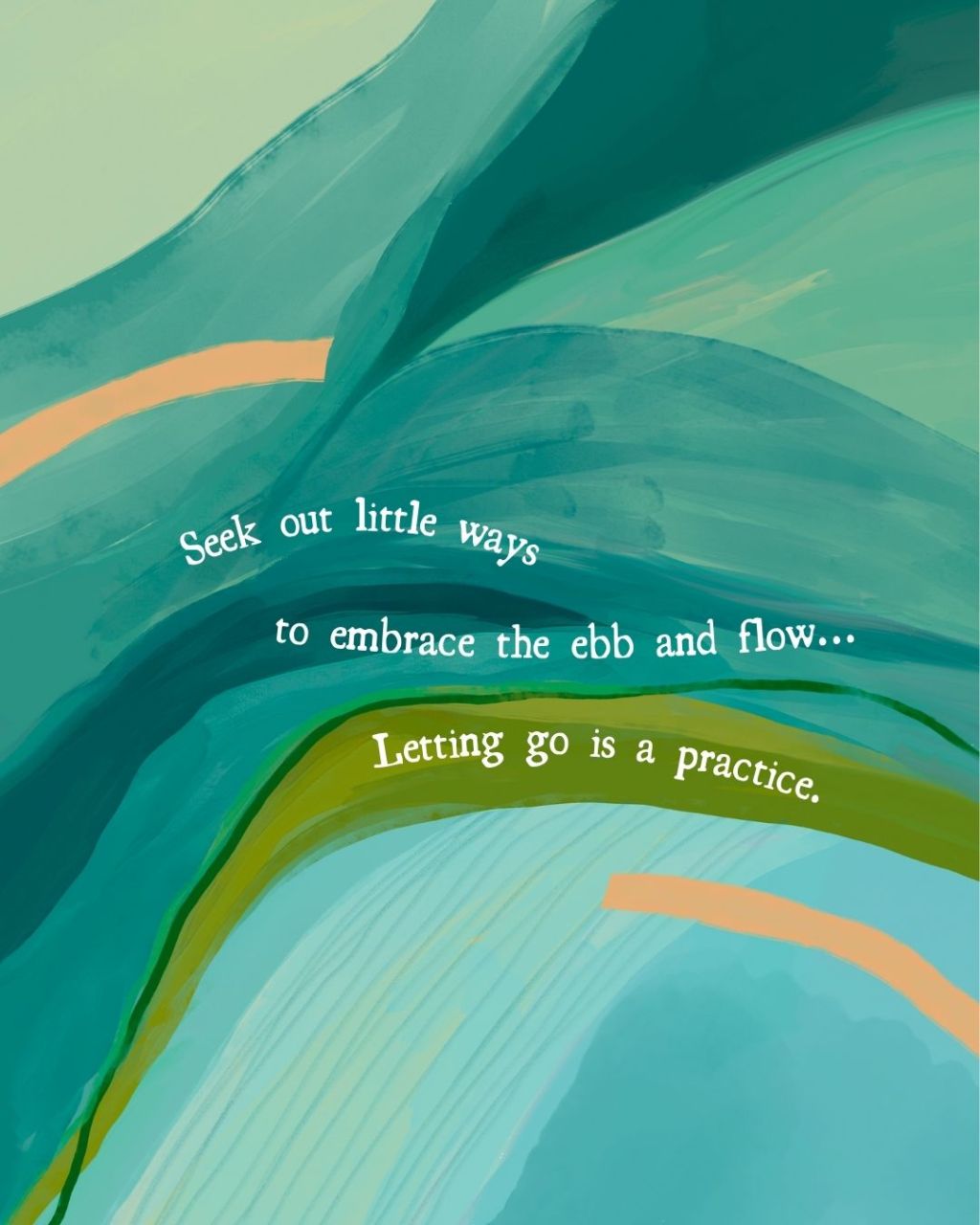
    As you learn to let go, may you be kind to yourself if it does not seem to happen all at once. As the tides ebb and flow, so too might this experience of holding on and releasing. If “letting go” feels like too much all at once, let yourself consider one thing at a time. For some, this might be a whole area of life––such as a future plan that you’re reconfiguring or reconsidering. For someone else, it might mean taking a break from a certain kind of way of working toward an outcome so that you can reassess. Whatever it is, no matter how small or great, remember that this takes great courage to do and that is all the more reason to be gentle with yourself.

    No matter the number of times a day you must hear the words “schedule,” “plans,” or “deadlines,” you are allowed to seek out spaces in your life where you can let those things go. Let the idea of an ebb and flow remind you that there is also room in this life for “pause,” “rest,” and “breathe.” – Morgan Harper Nichols

  • Questions to Create Clarity and Space

    Questions to Create Clarity and Space

    Questions to ask yourself:

    Can I finish something else first and come back to this?
    Is anyone counting on me to finish this today?
    Will pausing this help me think more clearly about it later?

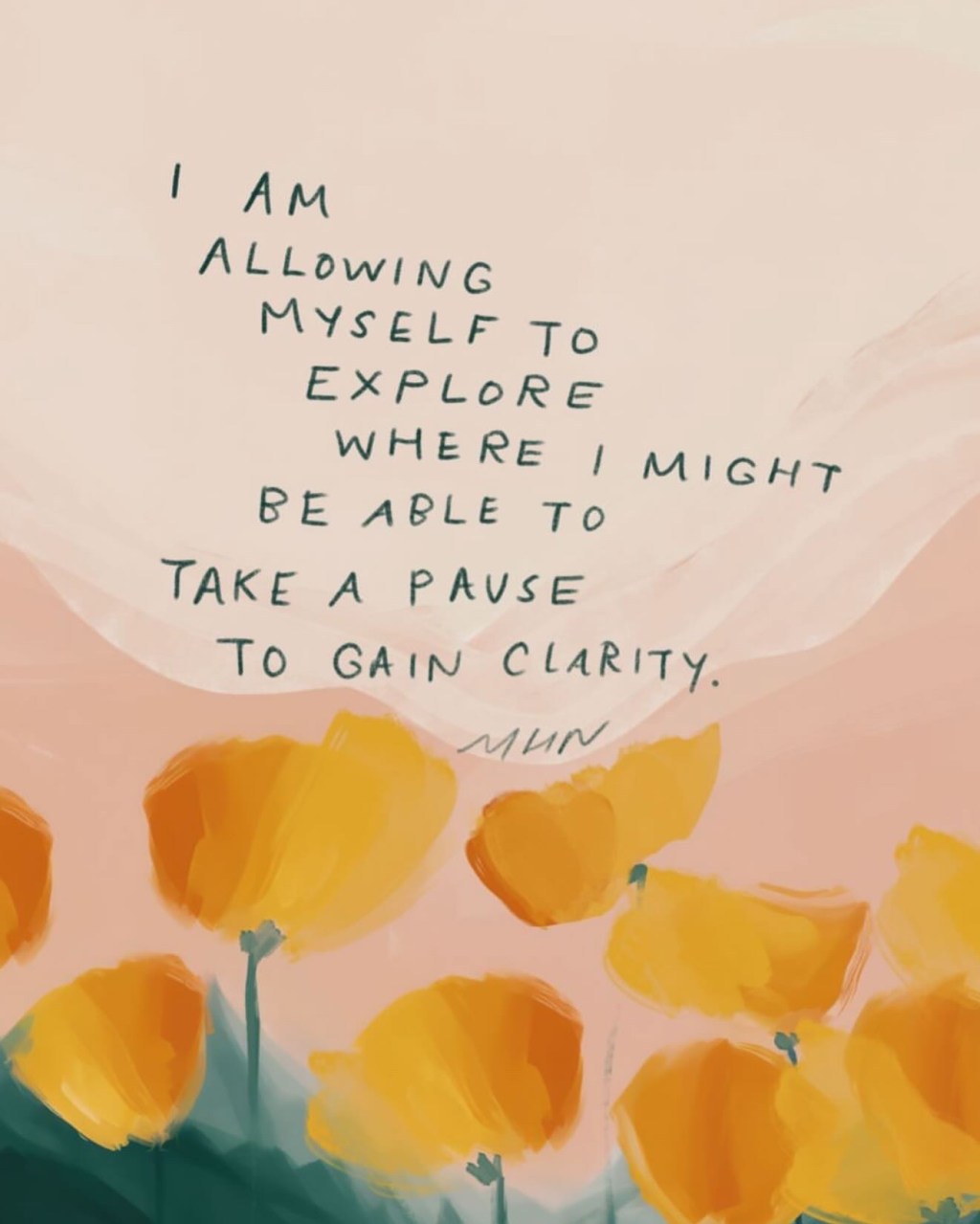
    Creating space for questions like this is a way to begin to explore how, where, and when subtle shifts might be possible. For even though every single thing won’t have an immediate, easy answer, you’re allowed to make space to consider where you might be able to take pressure off and create breathing room.

    Not being able to figure it out all at once does not mean you are a failure. Not being able to answer this in this very moment doesn’t automatically mean you might not be able to answer it later. Let the questions you ask become spaces you create to pause, reflect, and consider, even before the moments of clarity.

    For all of the questions that you must answer for everything else, allow yourself to welcome a gentle question or two. Create space where it’s possible. It matters, even when it starts small.

    -Morgan Harper Nichols
  • Growth can move in many directions

    Growth can move in many directions

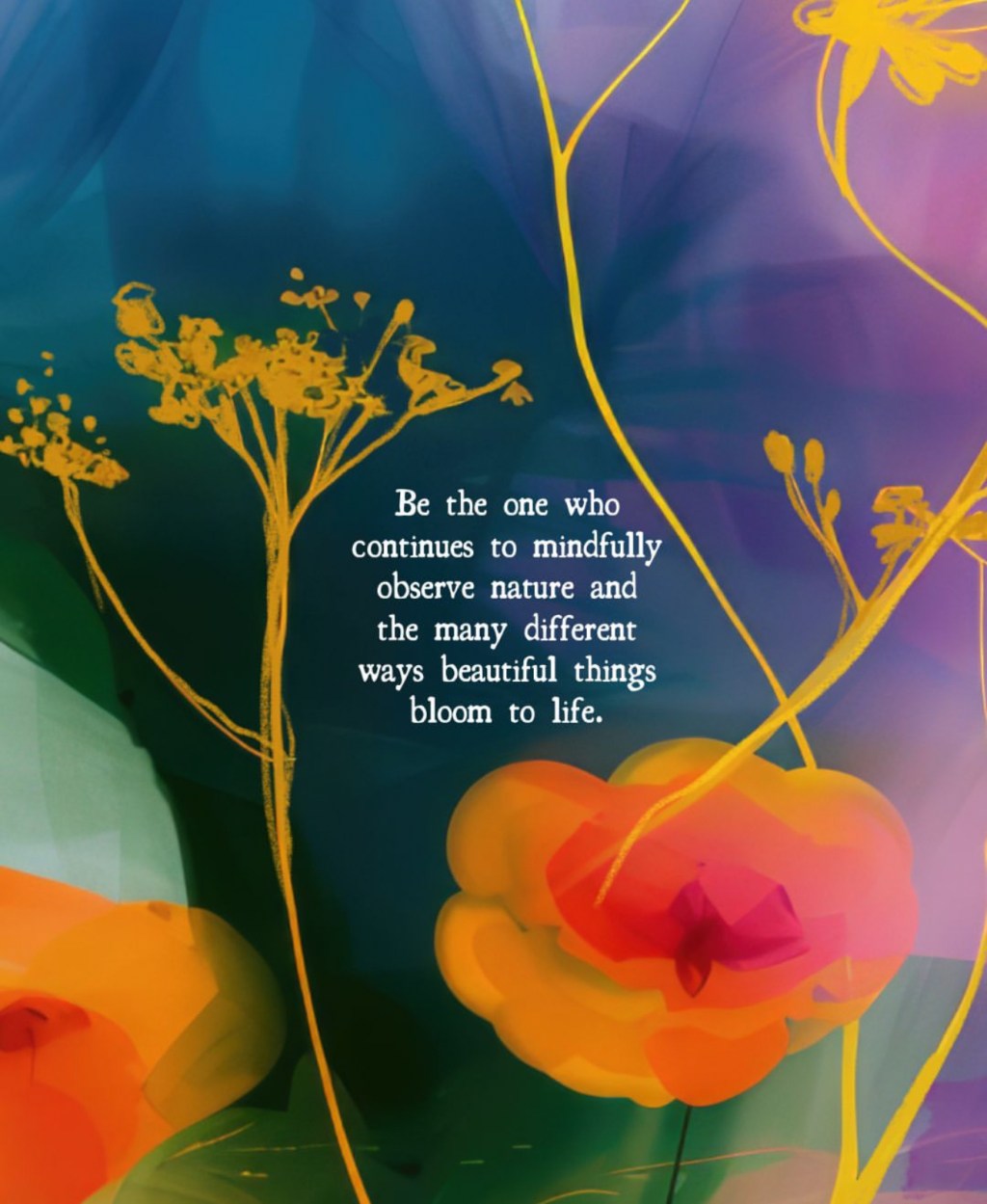
    Notice what takes its time in nature. This will not be the case for all things in nature, of course, but there are enough things to observe, notice, and consider what you can learn…even when it comes to flowers. Even though many flowers spring forth each year in yearly cycles or less, there are other flowers that take much longer, even decades.

    This can be especially useful to remember when considering that stages of growth can coincide with stages of grief: like a seed nestled deep, breaking through layers of earth with quiet courage, in which you experience many of these different “stages” at once. When you start to wonder “how long,” it can feel extra heavy when you are in a field of other flowers blooming much more quickly than you.

    If you find yourself in a place where you cannot help but notice the poppies or marigolds springing up around you, allow yourself to observe the magnolias, the tree peonies, and agaves, too. And even if you are only observing them from photographs or internet searches from afar, let them remind you of the beauty and fullness of life that still springs forth at a force at a slower pace. While this might not “fix” everything, you can allow these things to remind you of all that grows slowly, yet still mindfully and meaningfully, one day at a time.

    -Morgan Harper Nichols
  • What starts slowly can still expand

    What starts slowly can still expand

    There may be times in life where new beginnings feel like nothing more than blank pages:

    How can you look forward to what’s new when so much remains unknown?

    How do you muster up the energy for what’s ahead when the previous pages have left you drained?

    It’s in these moments that it can be easy to forget: turning the page is a valuable act all on its own. It might feel like the smallest, most insignificant shift, but it still matters. So even before you find the right words to describe the feeling, figure out the details of what you need to carry on, and before you assemble the parts of a new dream, any moment from this moment forward is worth tending to even before it “becomes something.”

    Haven’t found the “right words” yet? The fact that you’re even curious is a valuable step.

    Still sorting out the details? The fact that you’re even aware that the details matter is worth acknowledging all on its own.

    Assembling the parts of a new dream? The fact that you’ve even allowed yourself to dream, after everything you’ve been through, is a miracle all on its own.

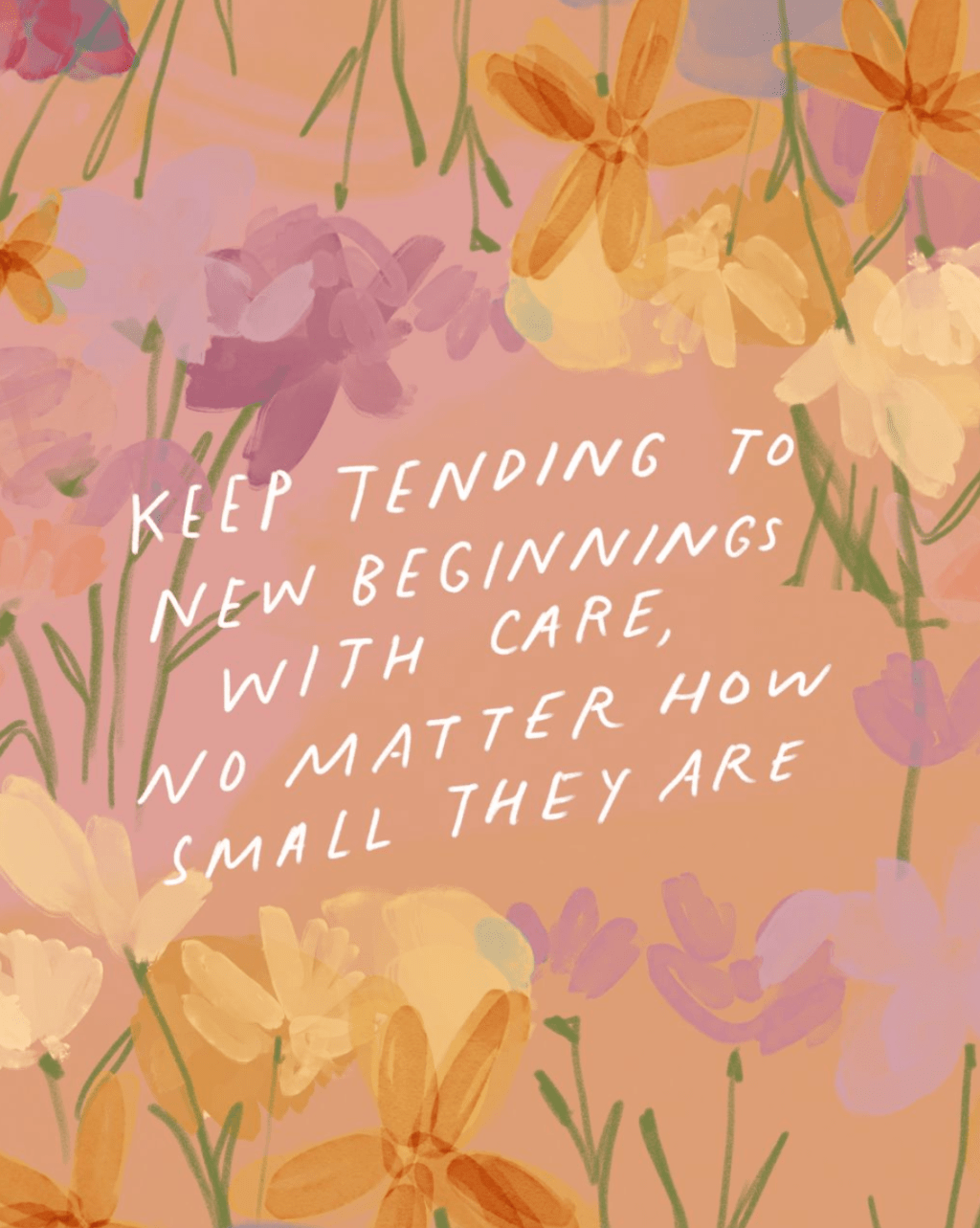
    Allow yourself to tend to new beginnings with care, right here. The seeds you’re sowing matter even before they start growing.

    – Morgan Harper Nichols

  • Write down a few plans in pencil

    Write down a few plans in pencil

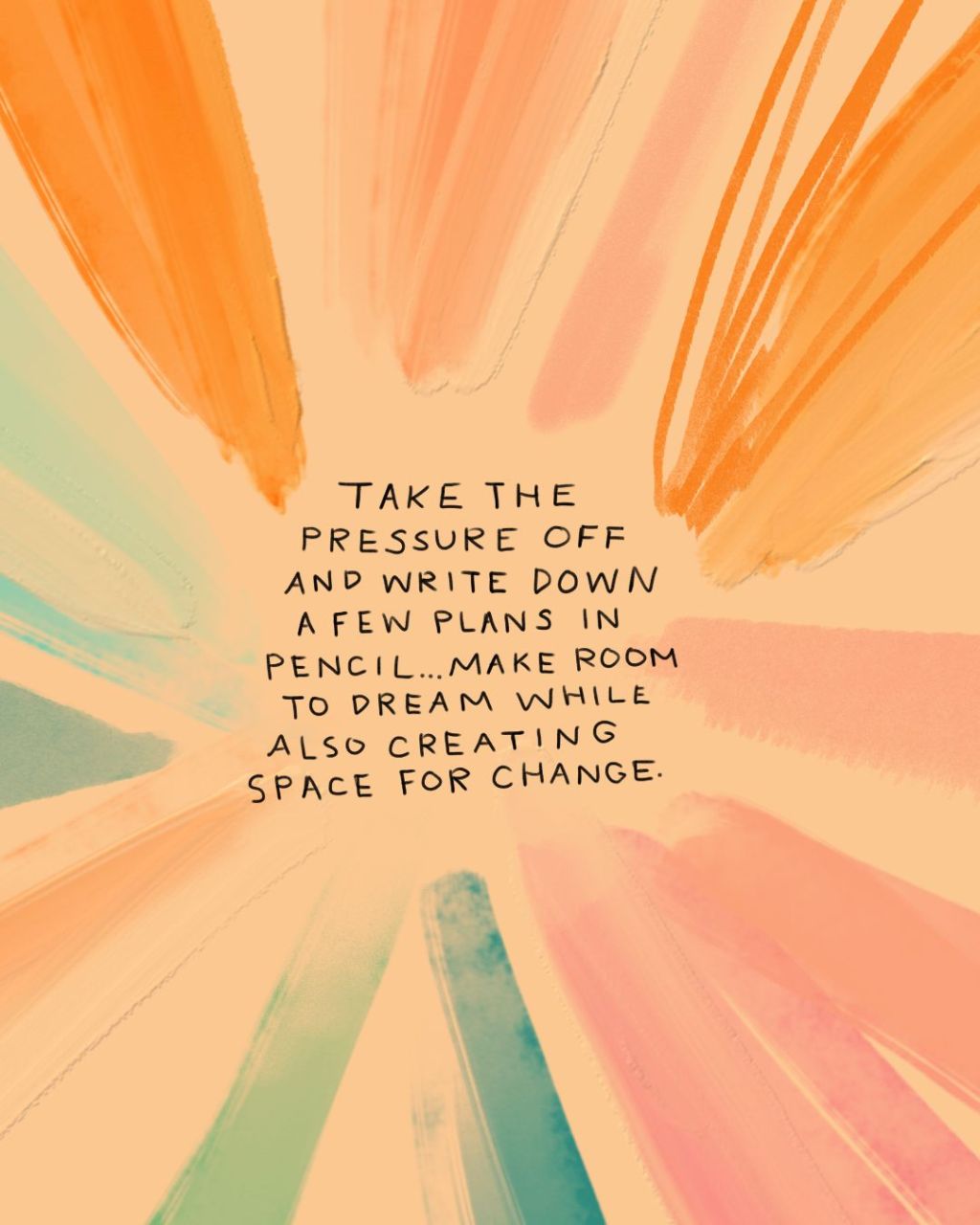
    Take the pressure off by writing down a few plans in pencil. Make room to dream while also creating space for change. There is nothing wrong with desiring for a goal or plan to feel concrete and real, but at the same time, you are free to consider: that if something is started to feel like a lot of pressure, could this be something you keep on the list but know it’s okay if it changes later? This is not a way of ignoring all commitments but instead, recognizing that adaptability and flexibility can be a part of meaningful progress too.

    Questions to consider:

    -How can I celebrate small victories along the way, even if my plans change?
    -Are there any commitments that I can prioritize differently to reduce pressure?
    -Where in my life can I put up a lot of different ideas and explore options openly?

    Even if it’s nothing more than a mood-board where you allow yourself to move things around or a journal where you brainstorm freely, allowing yourself to have some free space is a way to create a little breathing room.

    -Morgan Harper Nichols

  • Courage comes in many shapes

    Courage comes in many shapes

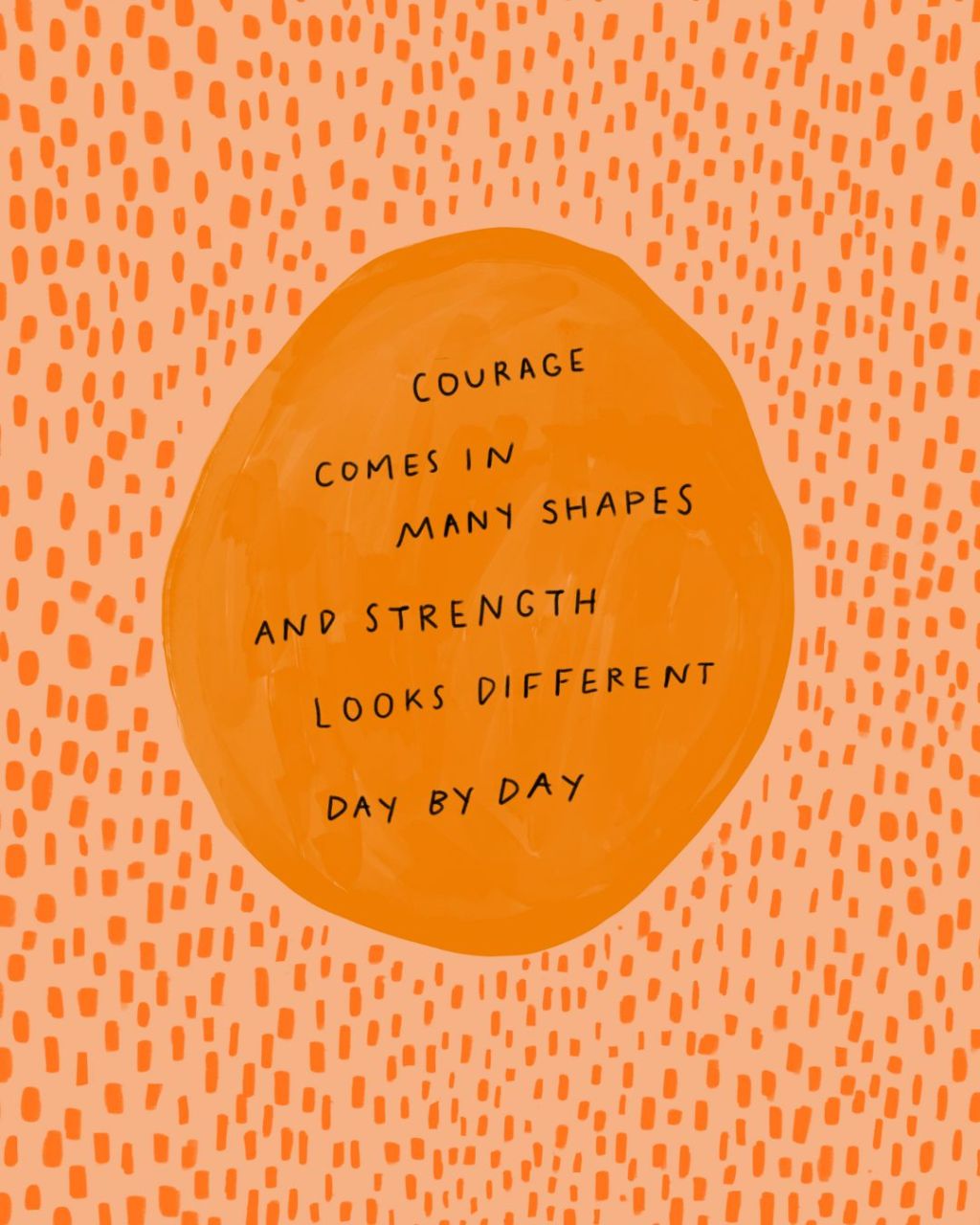
    Courage comes in many shapes, and strength can look different day by day. So remember to pay attention to what this might look like in small ways. Sometimes courage is pressing “send” on that one message. Sometimes, strength is saying “no” and sticking to it. Sometimes courage is having a brief moment where you remember that you are proud of yourself for letting go or walking away. Sometimes strength is gentle, and it sounds like a single deep breath that you took today. May you never discredit the courage and strength that might appear more subtly, but still matters in significant ways.

    – Morgan Harper Nichols

  • Small Questions to Give Life More Breathing Room

    Small Questions to Give Life More Breathing Room

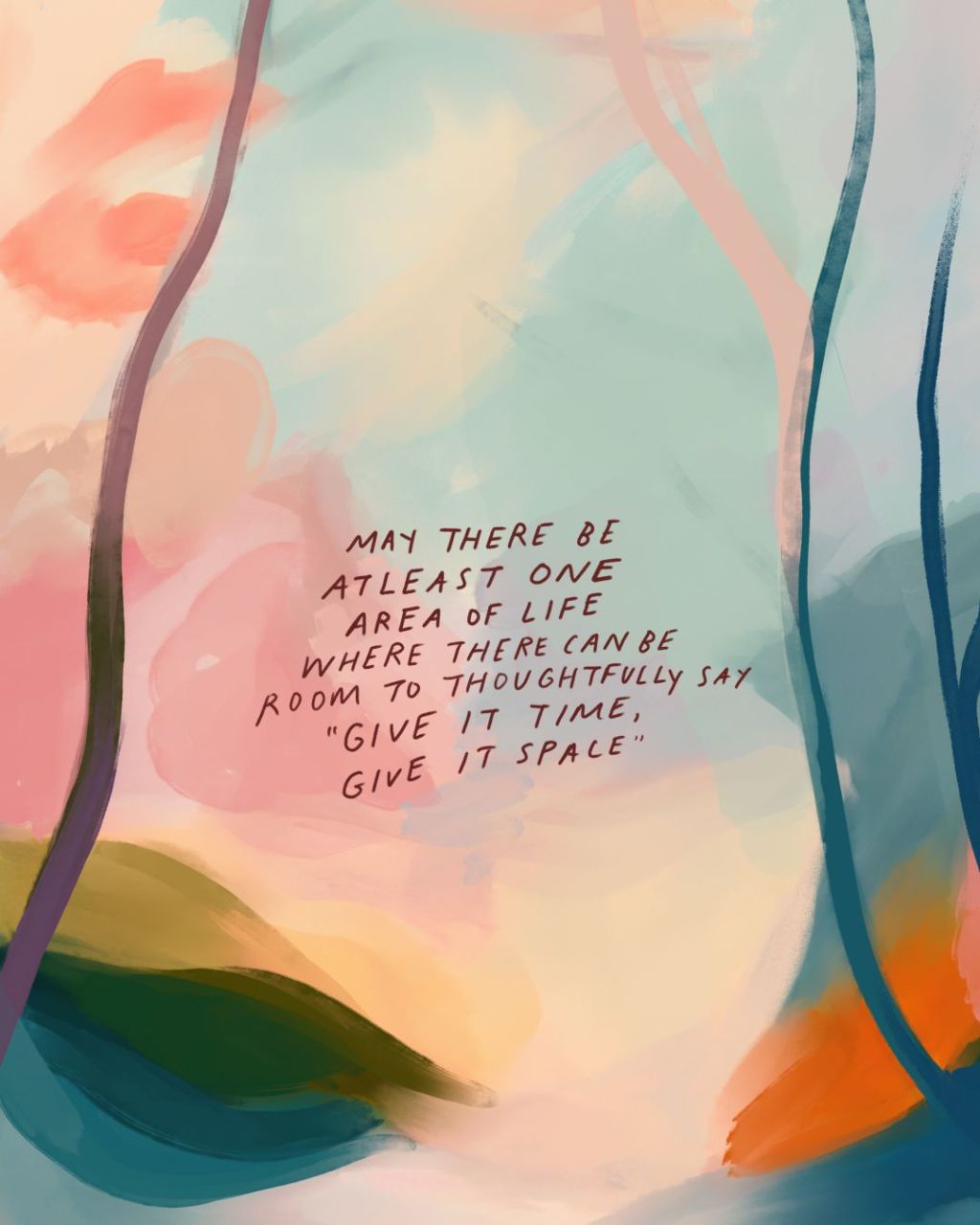
    May there be at least one area of life where there is room to thoughtfully say: “give it time, give it space”

    If you have ever moved something around on your calendar, then you may know this feeling: the relief and clarity that comes from being able to experience the flexibility to adjust plans. Perhaps, even beyond the daily routine, it is possible to explore other areas of life where you can do the same thing. Amidst all of the things that require immediate attention, it is still worth it to look for areas to say, “I’m going to give this some time. I’m going to give this space.”

    This can look different for everyone, but here are a few questions you could consider, to find “an area.”

    What can you do once a week instead of daily?

    What project can you work on gradually?

    Have you lost interest in a project? Can you pause it?

    Is there something you can skip today?

    Is there a group activity that feels too much? Can you skip the next one?

    Which social event makes you feel tired? Can you attend less often?

    What to-do list item can wait until later?

    You may not be able to make a list of items for each of these questions, but if a single idea came to mind, that’s an “area.” It might be the most subtle thing, such as choosing not to go to an event that you weren’t expected to go to. However, what matters is that you know it for yourself. What matters is that at this moment, you are becoming aware of how to breathe right here and give something time and space.

    -Morgan Harper Nichols

  • Small Practices for Intentionality

    Small Practices for Intentionality

    For all of the things in life that require a sense of urgency, it can still matter to create space for making the kind of connections that turn passing details into reference points. Not only does a brief pause allow real rest, it also builds new links that matter for the journey ahead.

    Some of the most profound connections and understandings emerge slowly. It might not feel like it in the moment, but a year from now, you will be able to look back on the notes you took today. The small things that you captured that seemed mundane. The lessons learned, the wisdom gathered. You will be able to realize that even in small ways, you have been allowing yourself to continuously engage in life, one day at a time. Focus on taking note of the small things and give yourself something to look back on.

    Here are a few ideas of things you could try:

    – Open up your notes app or your notebook and write down five things you’re grateful for. However, make an effort to write down the kind of things that would normally be overlooked.

    – Record a voice memo that is a note to your future self. If you find that listening to your own voice is distracting, you can use a transcription tool to just read it later, too.

    – Take five photographs of something in your environment––no matter if they have a beautiful aesthetic or not. You know those nostalgic photos from the 80s and 90s? They were taken in moments like this, oftentimes when someone was just testing out a disposable camera. Embrace the spontaneity and document, even when it seems unremarkable right now.

    Let small practices like this become a part of intentionally allowing some things to grow slowly in your life. Even if you don’t use what you’ve created for some kind of final product or creative project, it is still something you can try to practice noticing the details, right, and allowing this to be something that can grow with time. In other words, do them with the intention that they will gain significance with time in their own unique way, and as you grow, you will recall it all in new ways, too.

    -Morgan Harper Nichols

  • Pace Yourself Through These Mountains

    Pace Yourself Through These Mountains

    Pace yourself through these mountains.
    One breath at a time.
    One day at a time.

    For all of the slopes, ridges, and rocks, there is a lot to consider here…
    And as you encounter nature’s rugged steps and feel the need to take a breath, may you know that it is just as courageous and honorable to seek out a mindful way to move through this space. This is how you grow in awareness: by adapting your approach as you go.

    So when you start to notice shifts within your environment,
    and when you start to wonder how you will make it ahead,
    and you feel the altitude rising,
    know that any pace you take from here, whether you move at a slower pace, a faster pace, or you take a moment to pause, all of it is, in fact, a pace and also a space for which you are becoming more aware of how to move through this space, even without having it all figured out.

    Pace yourself through these mountains.
    Pace yourself through these mountains.

    -Morgan Harper Nichols

  • Emerge from the chrysalis

    Emerge from the chrysalis

    Emerge from the chrysalis,
    come into the sunlight…
    after all of the waiting,
    now is the time to fly.

    I hope you can find at least one area of your life where you can say, “now is the time. After all the waiting, now is the time.”

    Of course there are many things in life for which we cannot control how long the waiting will take, but at the same time, it can still be worth it to identify where we can say “now is the time,” anyway. To say:

    “When will I stop waiting on approval from others? To stop thinking I have to have it all figured out perfectly before again? Now is the time.”

    Like a butterfly emerging from its chrysalis, let yourself begin to look for ways to come alive, beyond the waiting. And even if it’s subtle, know that it matters to come forth into the sunlight this way. This too, is transformation.

    – Morgan Harper Nichols

     A colorful digital illustration of a butterfly emerging from a pink chrysalis hanging on a branch. The butterfly’s wings are vibrant shades of blue, green, and yellow, with black edges and orange dots. The background features a pastel mountain landscape at sunrise or sunset, with a gradient sky of pink, blue, and orange hues. Beneath the butterfly, white handwritten-style text reads: "Emerge from the chrysalis. Come into the sunlight. After all of the waiting, now is the time to fly."
  • Let today be what today needs to be

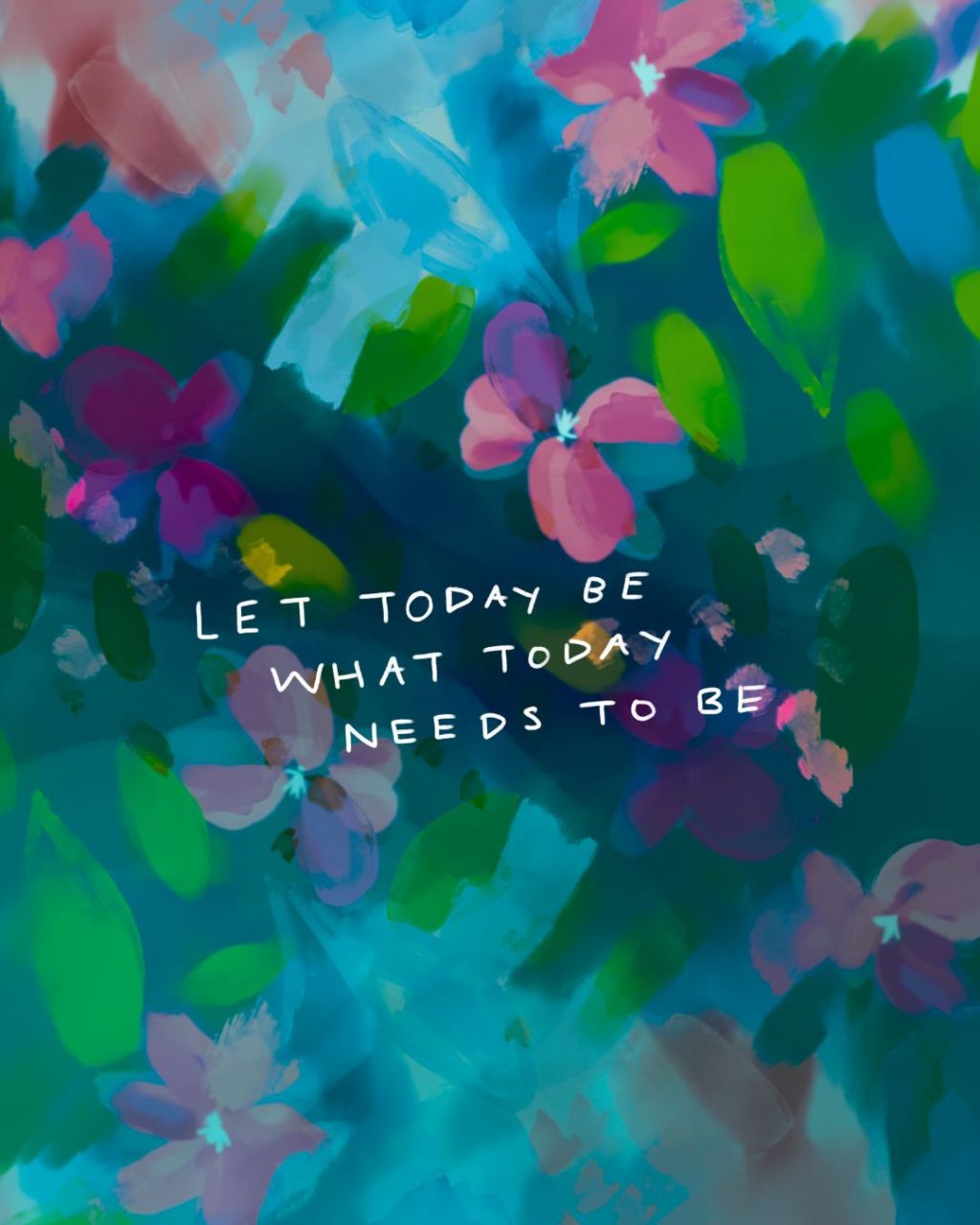
    Let today be what today needs to be

    as you move through the day,
    may you know it’s okay
    to create a little space,
    to let this day be
    what it needs to be.
    and however you can,
    create room to simply breathe.

    for you have already been through
    so much,
    and to simply breathe
    through this moment
    is more than enough.

    inhale,
    exhale,
    and pace yourself
    through the landscape
    of the day,
    gathering what you need as you go.

    grace,
    gratitude,
    space,
    hope,
    joy,
    love,
    rest,
    room to feel what you need to feel,
    room to grieve,
    room to embrace gentleness,
    slowness,
    room to learn what it means to be free,
    room to breathe,
    room to
    breathe.

    in your stillness, in your motion,
    in your silence, in your song…
    breathe.

    -Morgan Harper Nichols

  • Collecting Meaningful Moments in Life

    Collecting Meaningful Moments in Life

    Even when it is hard to find joy, whenever or however you can, it still matters to recognize that it is something worth treasuring.

    To “treasure” something is to “keep it carefully.”

    Allow yourself to consider the multiplicity of this:

    How can you find things worth treasuring, to build upon them over time? How can you begin to collect things that are worth keeping? In a time where hidden algorithms determine so much of what we encounter and engage with, taking a moment to collect things worth keeping is a way to stay engaged with life, in ways big and small.

    Maybe you’re the one who holds on to the journey in its memory form. You remember what was as so much more than just nostalgia, but as a layered record of unfolding and becoming.

    Perhaps you’re the one who knows where laughter can be found. Even if it’s in the smallest moments, you know that laughter is its own form of release and working through the tension.

    Maybe you’re the one who is grateful for the small things that get overlooked or underappreciated… being the one to elevate and highlight what is meaningful with quiet attention and honest enthusiasm.

    Maybe you can be the one who continues to bring up the dreams… whether that be your own dreams, the family’s dreams, the community’s dreams. The things that seem to light up the room when someone talks about them, even before they come into fruition.

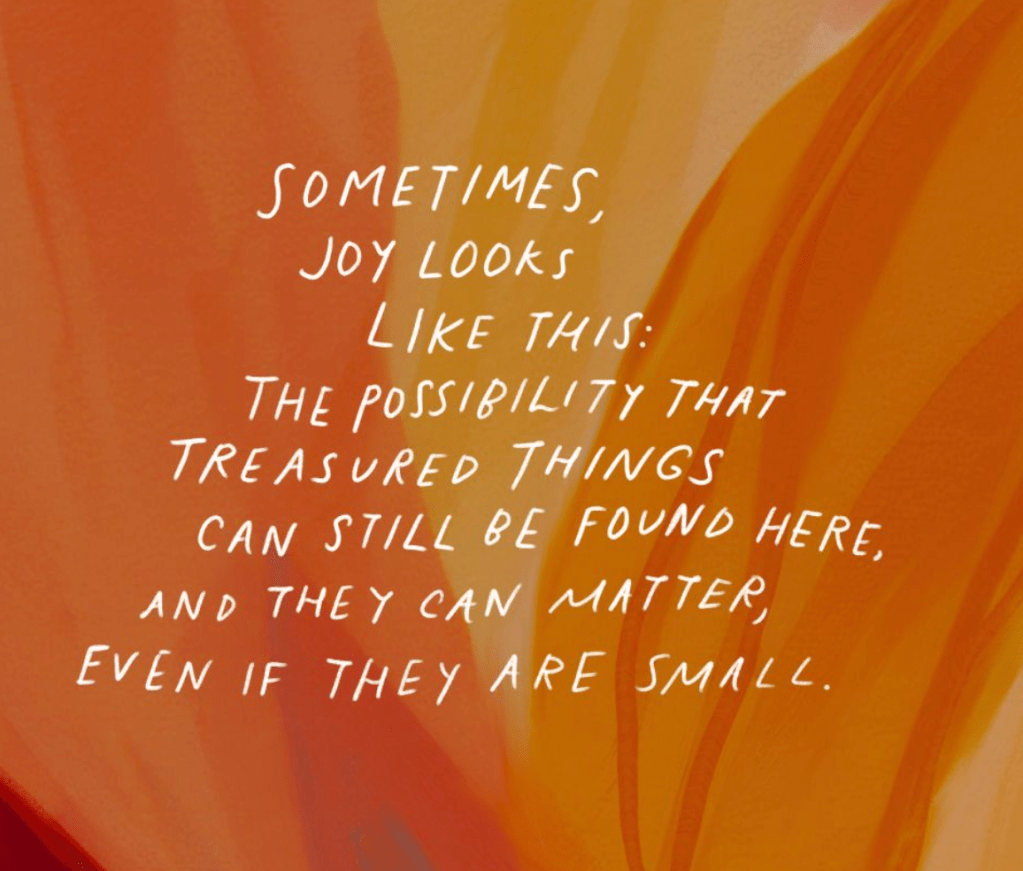
    There’s nothing wrong with longing for big moments of joy. And at the same time, you are free to allow yourself to seek out moments of a more subtle or overlooked significance. Because sometimes “joy” looks like this: the possibility that treasured things can still be found here and they can matter, even if they are small. And even when those treasured things are small, they are still worth pursuing… and not only for ourselves, but for others, too.

    – Morgan Harper Nichols