Tag: daily reflection

  • The things that matter to you have value

    The things that matter to you have value

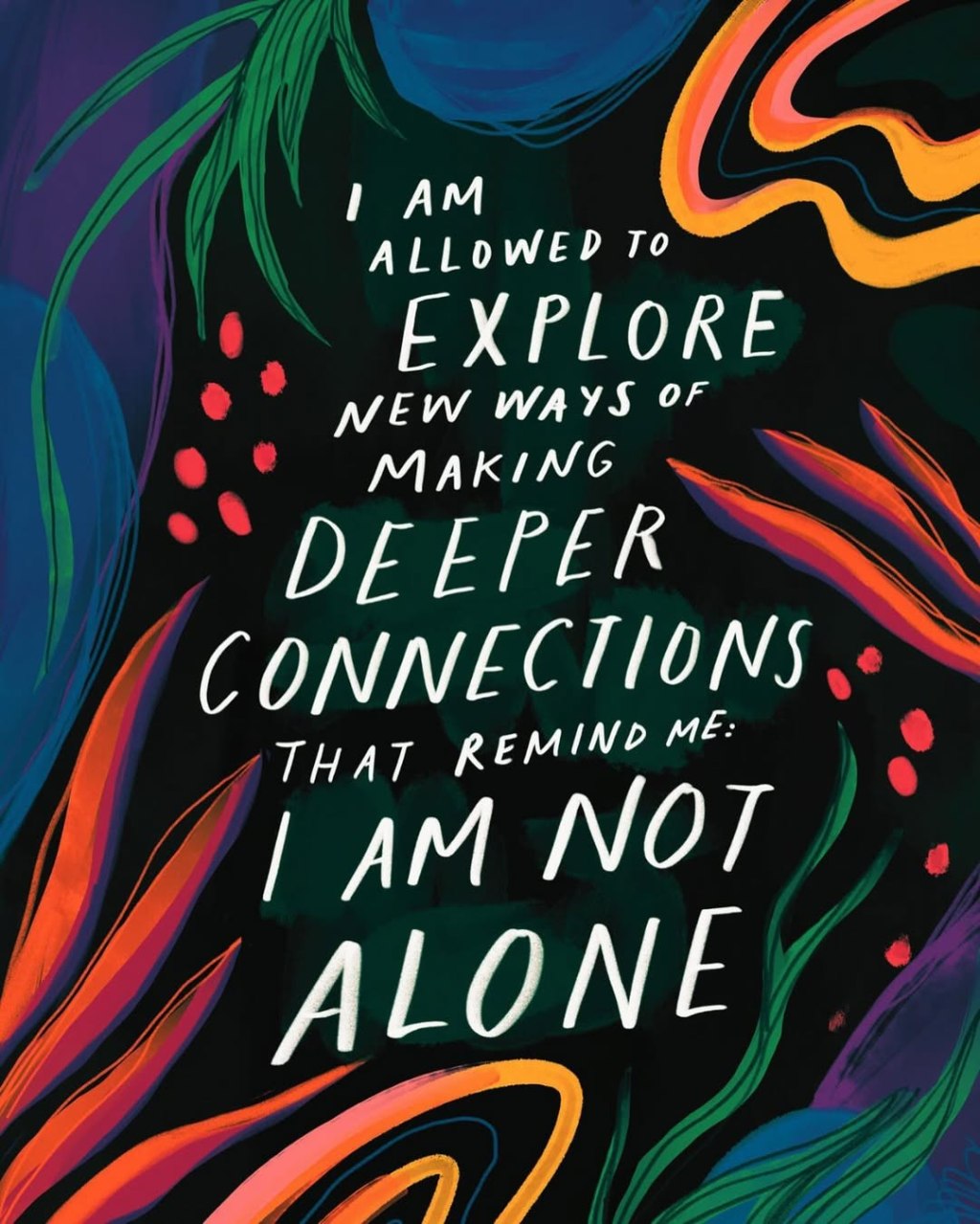
    Pay attention to the small things that remind you: you’re not as alone as it can feel when so much is quietly turning beneath the surface. And this is true even when it comes to the small, good things that matter to you, but you’re not sure how (or if) they connected with others in the same way. But even if you’re still sorting out the meaning in a larger way, I hope you can know, these things matter even in their smallness. Whether it’s a song, a memory, or a conversation with a friend, these are not just fleeting moments. On their own, they may not seem like very much, especially when compared to the strong validation that comes from being seen in a clear or unmistakable way. But just as tiny seeds can bring a garden into bloom or scattered stars fill a night sky, the small things can matter more than we tend to realize, even when it comes to feeling less alone.

    It might seem like the way to form deep connections is to show up in a big way. You may want deeper connection in a certain part of your life or with a specific person. In that space, it can feel like being truly “seen” would require constantly showing your brightest self. But what the smaller moments of feeling less alone suggest is that connection can also grow gradually, and that depth can take shape over time.

    There’s no guarantee about how deeper connections will form, but it’s still worth continuing to notice the small things that ease the sense of isolation. Even if it’s just one song or one quiet text thread with someone who matters, even if it’s not everything you hoped it might be by now, there’s still value in making space for the small moments that speak to you. They matter.

    The things that matter to you have value. And so do you.- Morgan Harper Nichols
  • From Noticing into Making

    From Noticing into Making

    For the one seeking to bring forth something meaningful, right here:

    Now is the time to embrace your creativity. And do so knowing this:

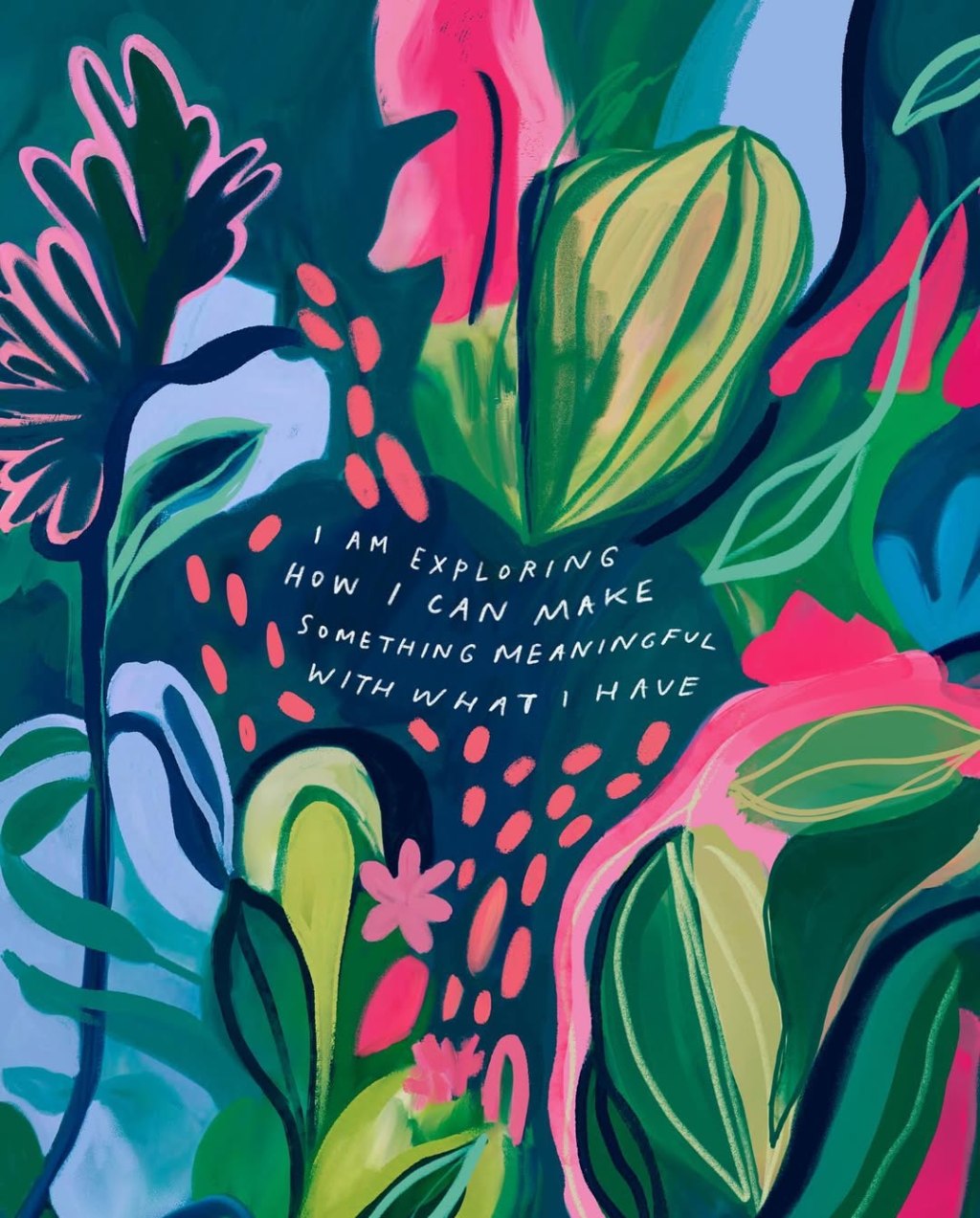
    You do not have to create something original in order to create something meaningful. You do not have to reinvent the wheel every time you approach the canvas, the camera, or the page. Your ideas don’t have to come from a blank slate. They can come from taking a look at your current landscape.

    Some of the most meaningful art we have is from people who found beauty and depth in the most ordinary places. They took note of small, ordinary things in their daily life or spoke to common emotions that many different people were feeling.

    You do not have to be an artist to create depth meaningful experiences, right here. Paying attention to these subtle things is a way of making the most of what you have. Keep discovering new ways to be present right here.

    Here are some questions to get you started as you make space for what’s meaningful, right here:

    Choose 1 of these 5 questions for the day:

    1 – What are small things you’re grateful for that are hard to put into words? Could you take a picture of them or a video instead?
    2 – What’s a sound that brings you comfort, but you’ve never really thought about why?
    3 – What’s a subtle change in your environment that signals the passage of time to you?
    4 – What’s a mundane object that holds an importance to you that others might not understand?
    5 – What’s a small gesture someone makes that speaks volumes to you?

    These questions spark creativity not only because they help you notice what is meaningful, but they help you make something meaningful with what you have. Let observation be a part of how you practice gratitude, creativity, and connection. Slow down and pay attention wherever you can, and bring forth creativity to make something meaningful, right here. – Morgan Harper Nichols

  • What It Feels Like to Remember

    What It Feels Like to Remember

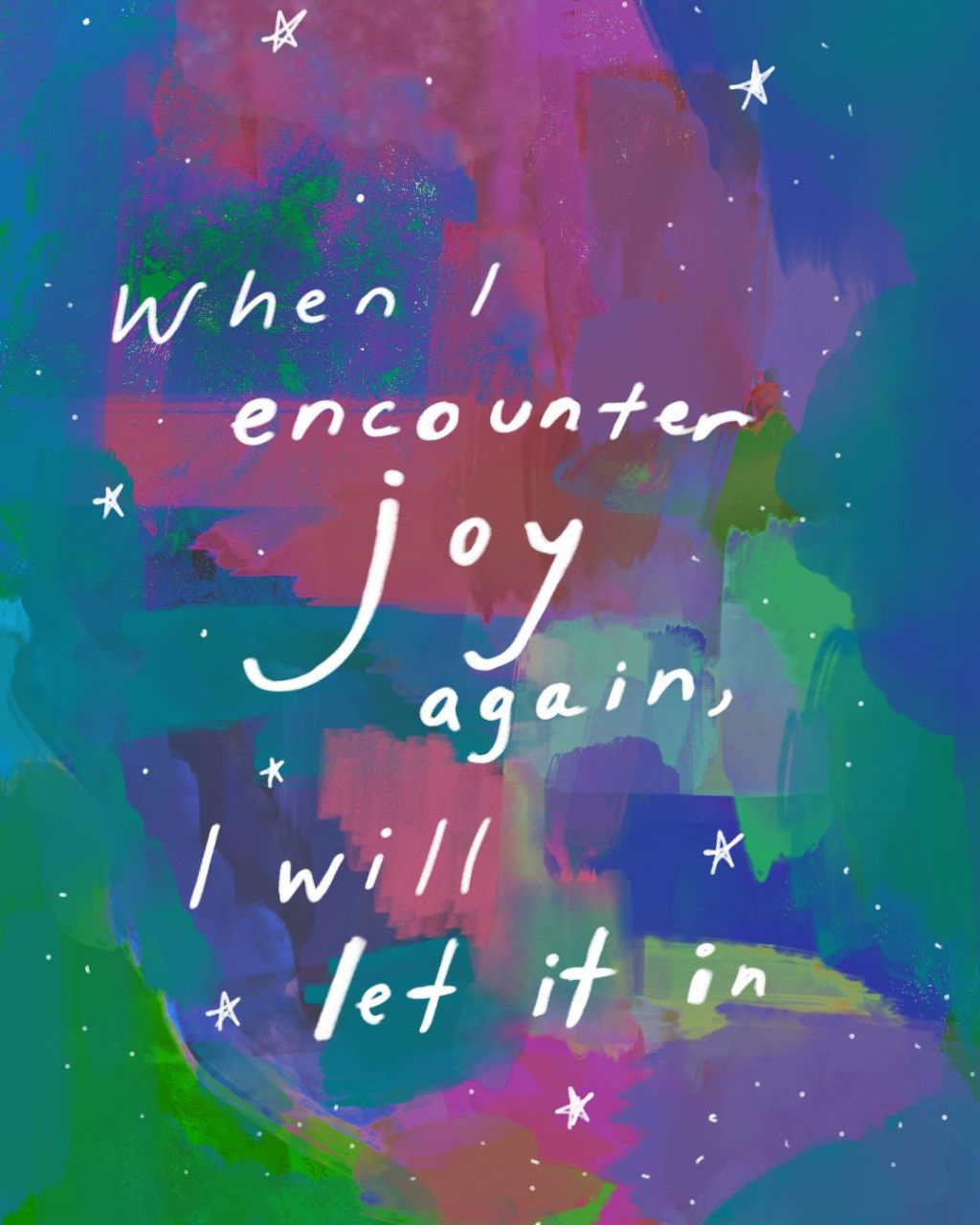
    When you encounter joy again, let it in. Let it in knowing that this does not mean you are ignoring the realities of all that remains unresolved right now. Instead, it means you are allowing yourself to remember what it feels like to enter into the kind of experiences that don’t have to explain themselves, amidst it all. Even when it is as subtle as a slowly rising sun, and the warmth on your skin is ever-so-gentle, may you know it still matters:

    The laughter that reminds you: you are worthy of release.

    The music that reminds you: you are free to feel the full range of your emotions.

    The random story you share with someone you care about that reminds you: you are allowed to seek out moments where you feel seen.

    When you experience moments like this, you do not have to write it off as “nothing.” These small moments may not be everything, but they still matter. These moments are still flickers of sunlight finding you again and again. Let any little bit of joy help you remember, recall, and continue to build upon what is good, restorative, freeing. – Morgan Harper Nichols

  • Smallness does not equal insignificance.

    Smallness does not equal insignificance.

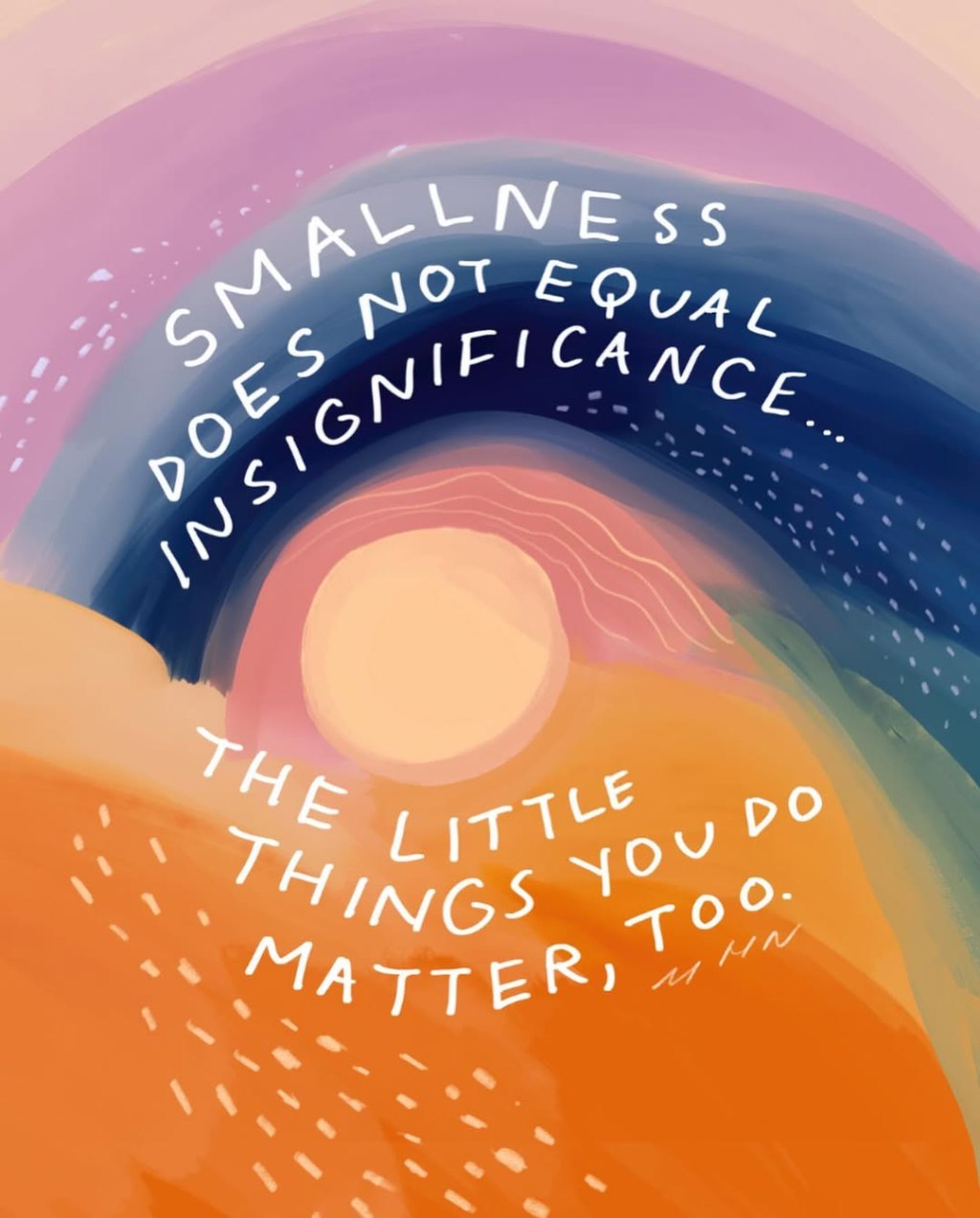
    Smallness does not equal insignificance. The little things you do matter, too.

    And the small ways you are learning to be present here matter more than you know.

    And, even by taking a single breath in this space, you are making progress.

    Even the way you are learning to move through each day
    is worth acknowledging.

    Being present in this space takes courage.

    Be kind to yourself here.

    Be gentle with yourself as you move through this space.

    Yes, there are mountains ahead, and there are mountains behind, and mountains you have won to come so far, all grace and grace has been given to you.

    The goals you have yet to reach don’t take away from progress already made.

    And however you can,
    pace yourself…
    for needing to pause
    and slow down
    doesn’t take away
    from your growth.

    Allow the echoes of your own forward movement and the beat of your own heart become reminders of how you’ve been learning to make progress at a mindful pace.

    -Morgan Harper Nichols
  • Wholeheartedly, Unapologetically You

    Wholeheartedly, Unapologetically You

    May there be at least one area of your life
    where you feel free to say:
    “I may not have all of the answers,
    but I am slowly, but surely
    beginning to embrace the idea
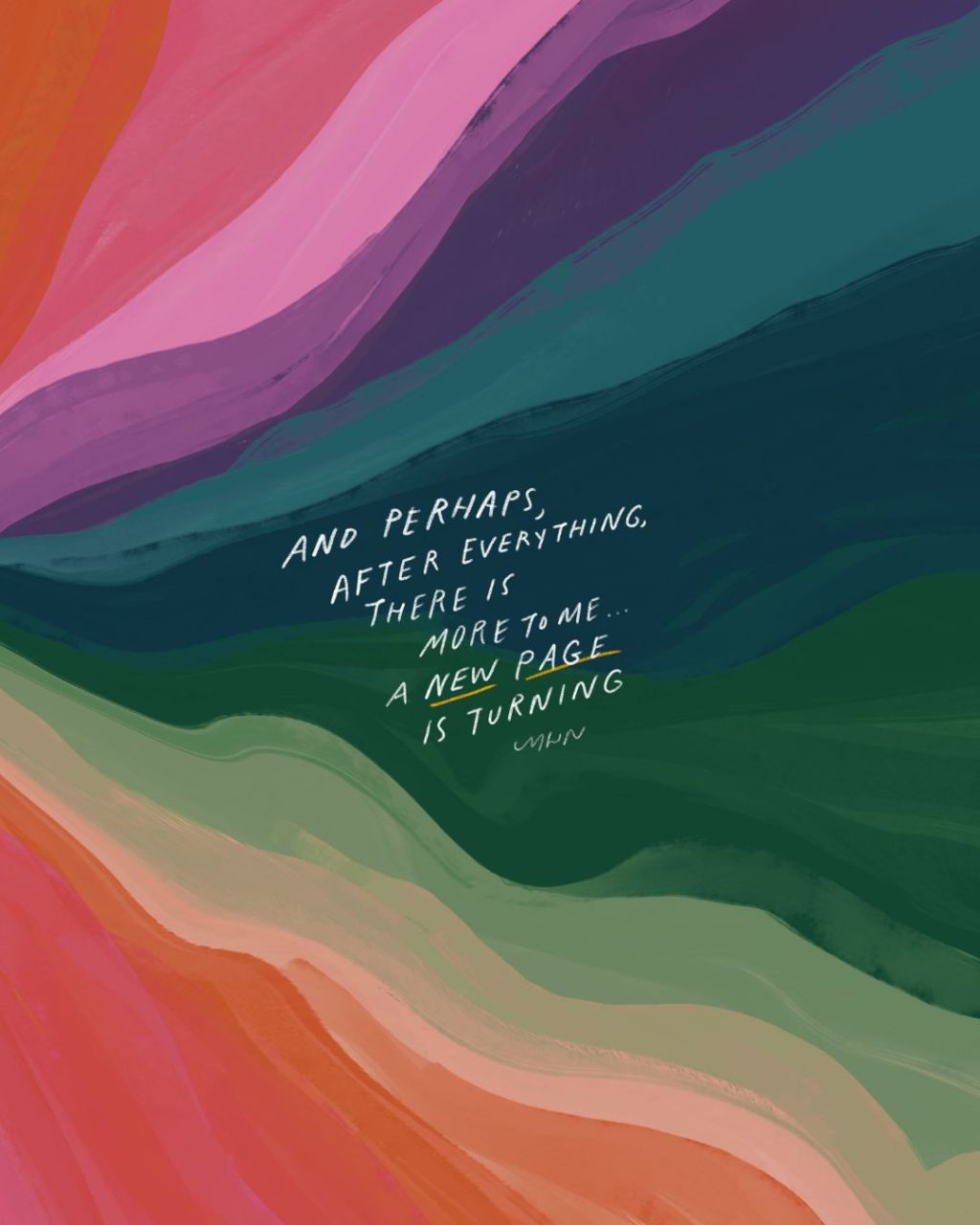
    that a new page is turning.
    Things will be different here…
    and I am free to welcome that,
    wholeheartedly
    and unapologetically.

    I have learned from where I’ve been,
    and I am also curious,
    and perhaps, even at times excited
    about who I can be.
    Not because I have to always be focused
    on striving to improve
    but because I am recognizing,
    that after everything I’ve been through,
    I’m still free to sing:
    ‘even here, there is more to you.’”

    – Morgan Harper Nichols
  • Seeking out spaces where you don’t feel like you have to be “on”

    Seeking out spaces where you don’t feel like you have to be “on”

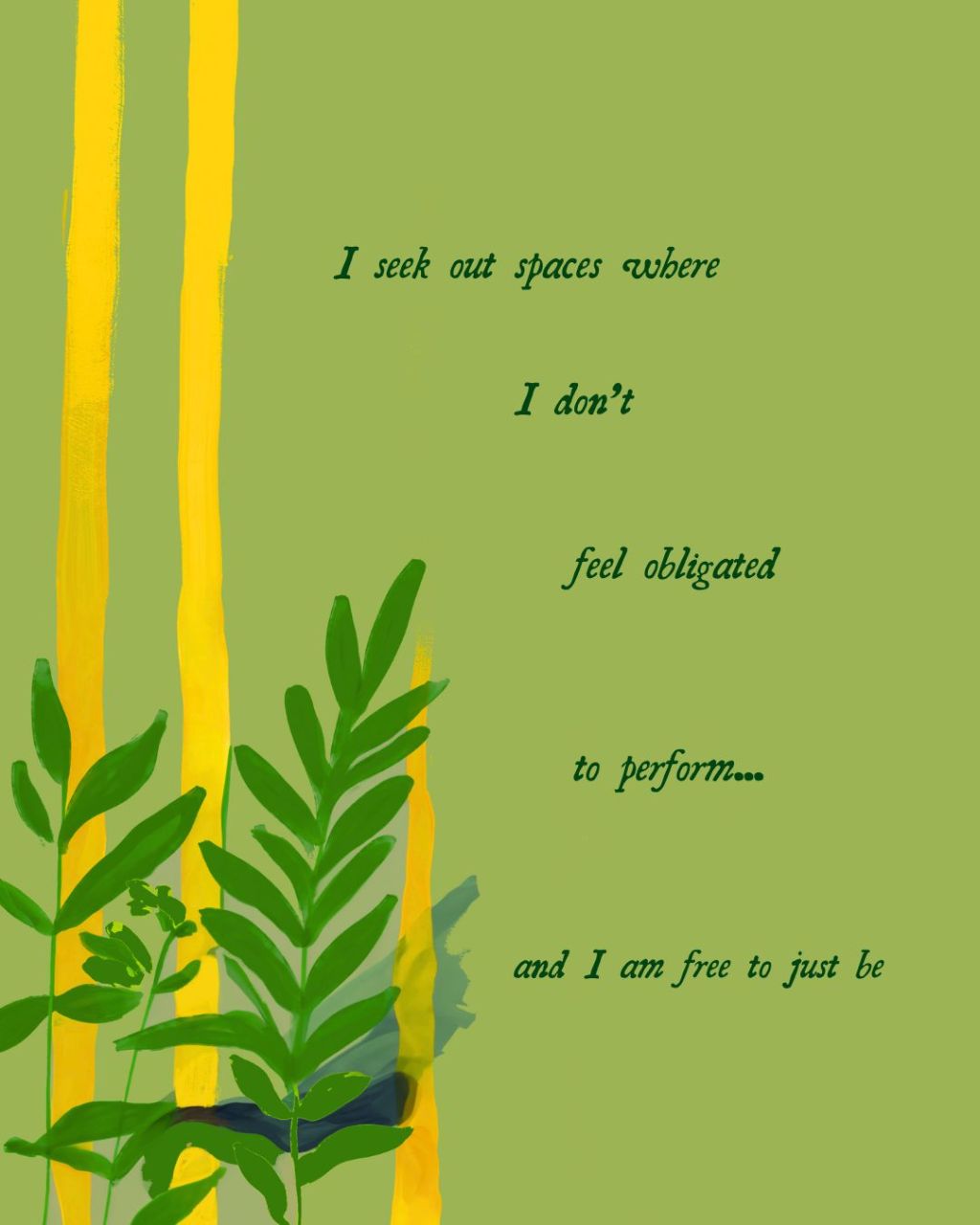
    Amidst all of the roles and responsibilities, may there be room for you to pursue a space where you do not feel obligated to perform. As you move through each day, considering all of the many things that are asked of you, that is all the more reason to remember: you are free to seek out places where you do not feel like you have to be “on” all the time. Even if it starts small, allow yourself to seek out that space to just be. Whether you need to stretch, not smile, close your eyes, or turn on the music––let this be something you pursue and something you build upon. Let these small practices become something you expand upon in other areas of your life. Create space by asking questions like this:

    What kind of music or sounds help me unwind and feel more at ease?
    How can I communicate my need for personal space and downtime to those around me?
    What small things give me a sense of renewal?

    If nothing else, allowing yourself to sit with one of these questions for the day is a way that you are beginning to create space, beyond the obligations and the need to be “on.” Start small and keep seeking space to just be, right here. – Morgan Harper Nichols
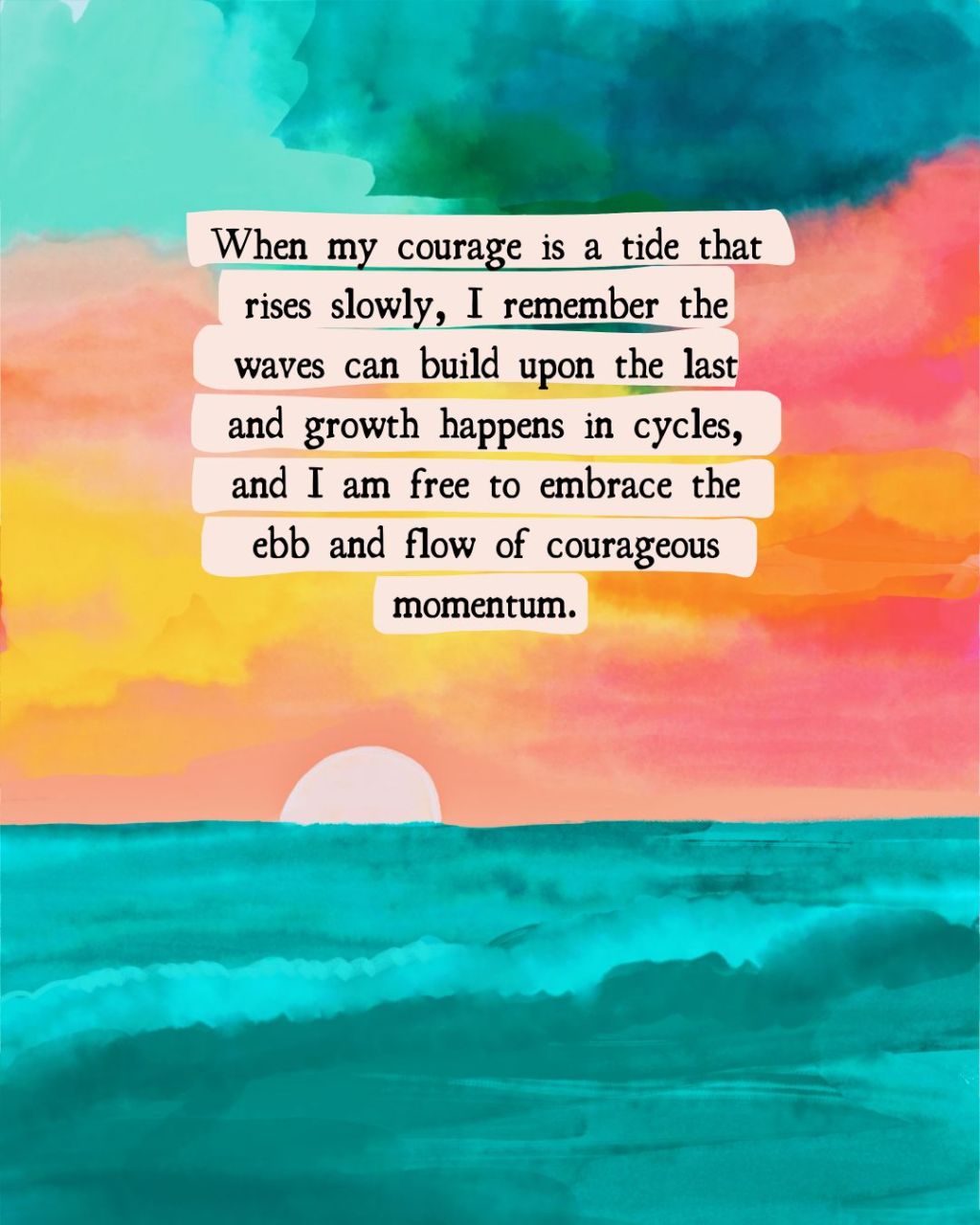
  • When courage is a tide that rises slowly

    When courage is a tide that rises slowly

    What if I fail?”
    “I don’t think I have what it takes.”
    “I shouldn’t even bother trying.”

    On the surface, it may seem as though these thoughts can only signal the end of a journey. However, like a tide that rises slowly, courage grows incrementally. Even amidst the questions that arise, water rises, too. And those doubts that seemed as though they would only hold you back are just one part of a larger momentum.

    When it’s hard to believe, remember all of the times you’ve been courageous in a way you didn’t even realize you could be:

    -When you asked for help and admitted you needed support, even though at first you feared appearing too needy.
    -When you share an idea in a not-so-familiar way, even though at times you’ve doubted if you’re worthy of the attention.
    -When you tried something new and showed quiet bravery, even though at first you doubted if you were capable.

    All of these examples include an “even though:” an acknowledgment of the doubts you engaged to act courageously.
    Like waves, courage can build over time.

    So when you remember those questions that arose in the moments where you wanted to be courageous, remember all of your “even though” moments, where you rose slowly but surely…where you were courageous, anyway. Breathe deep and remember this as you as you let your courage rise today.

    -Morgan Harper Nichols

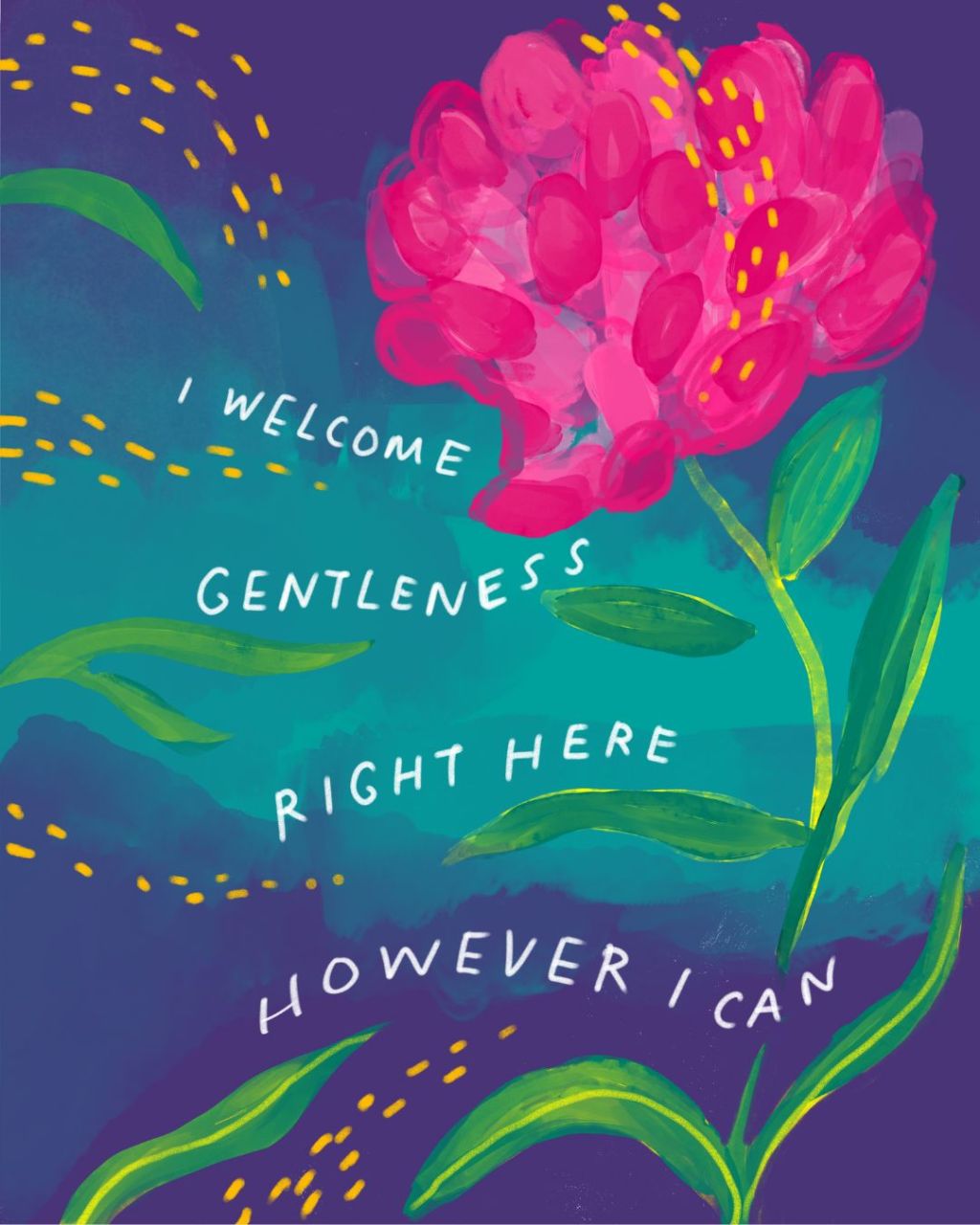
  • Welcome gentleness however you can

    Welcome gentleness however you can

    With gentleness, there is room for both strength and care. There is room for looking ahead while also embracing a slow and steady path. Like a garden’s ecosystem that is able to be sustained through gentle interactions over time, you, too, can nurture steady growth over time.

    You don’t have to force everything into neat rows; instead, you could allow aspects of your life to grow in harmony with the surroundings.

    Rather than focusing solely on rapid progress, you can cultivate a range of experiences that all bloom in their own time. Instead of striving for perfection, you could let your journey unfold organically and beautifully.

    While there will be areas in life where urgency is necessary, there may also be areas where a slower, gentle approach could be welcomed. Welcome this kind of gentleness however you can. Consider these journaling prompts to help you get started:

    -Regular Prompt: What future achievements do you strive for?
    -Gentle Alternative: How can you work towards mountain-like endeavors while being kind to yourself?

    -Regular Prompt: What are your goals for the next year?
    -Gentle Alternative: What small efforts can you make toward the things that are becoming increasingly important, over the course of the next year?

    -Regular Prompt: What skills do you want to learn in the future?
    -Gentle Alternative: How can you slowly explore new practices or activities that build bridges and make connections that you’d like to make?

    There is nothing wrong with the original prompts; however, if you ever find yourself getting stuck, you’re allowed to go beyond them. Just like a gardener adjusting their approach based on what the plants need, you can modify your prompts to suit what you need. And this something you can do through subtle shifts, over time,

    On the surface, these subtle shifts may seem like a matter of semantics or word choice. However, the specificity here allows for a more considerate approach to life in which you can welcome gentleness. Like choosing the right soil, thoughtful language can support steady and expansive growth. Welcome gentleness however you can. – Morgan Harper Nichols

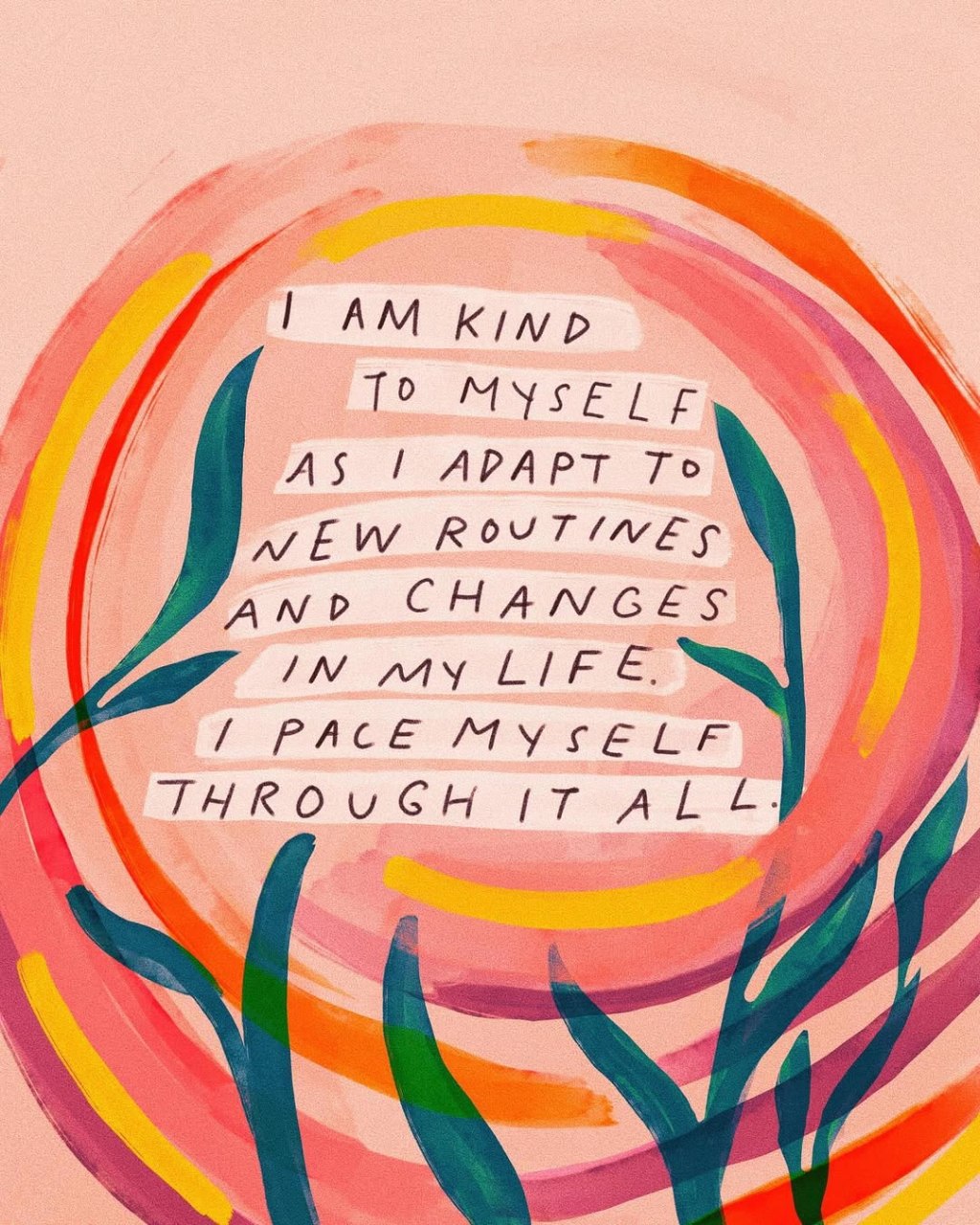
  • A reminder for new routines and changes

    A reminder for new routines and changes

    There are so many changes that can occur in life in which it takes time to adjust to what’s new. This is all the more reason to be kind to yourself as new changes unfold around you.

    Whether it’s something as small and a slight change in routine or a major change, at times it can be easy to think

    “This shouldn’t be difficult for me.”

    “I should be able to handle this better.”

    “Why can’t I just go with the new flow like everyone else?”

    In that space, remember that your pace doesn’t have to be like anyone else’s…including your past self. It’s okay to acknowledge how difficult it is to realize just how much is changing while also knowing it’s not too late to practice becoming more mindfully aware of what you can and cannot do, moment to moment, day by day. Words to repeat to yourself in this space:

    “I am recognizing that it can take time to adjust, and that’s okay.”

    “I am doing what I can, hour by hour, day by day.”

    “I give myself permission to rest and reset.”

    Be kind to yourself as you adapt to new routines and changes in your life. Pace yourself through it all. – Morgan Harper Nichols

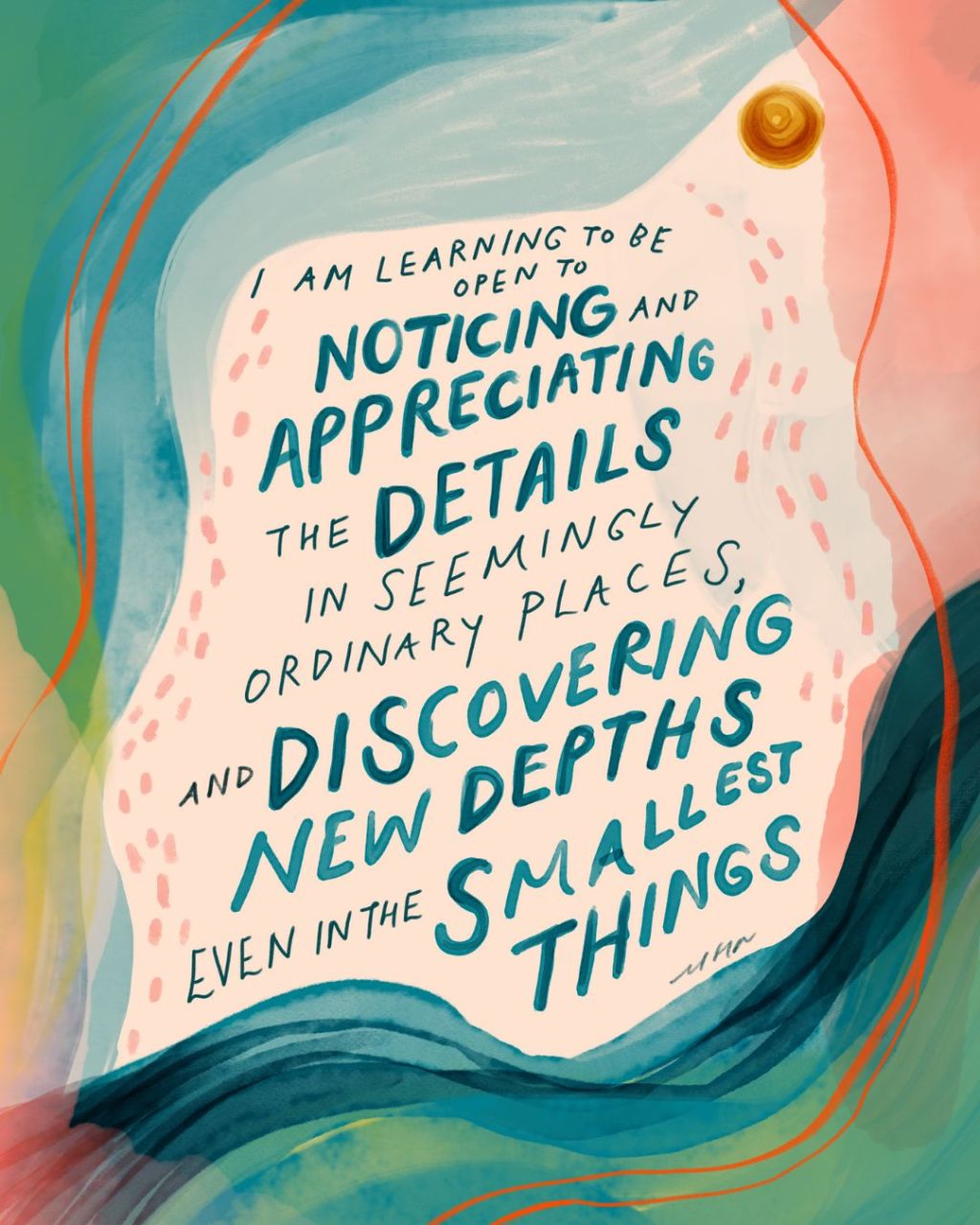
  • Discovering new depths, even in the smallest things

    Discovering new depths, even in the smallest things

    You are free to discover new depths, right here where you are.

    You are free to engage in a practice of finding meaning in ordinary spaces, revealing depths that you have never realized before.

    Look for small moments that remind you of how you can explore new ways of doing things, right here where you are. This could look like:

    -Encountering someone rearranging or organizing something in a way that inspires you to try your own version.
    -Hearing someone you know recall a story you’ve heard them tell before, but you think of a new question to ask them about it.
    -Turning on a free calming nature music video on loop, transforming a noisy space into something slightly more calming.
    -Giving energy to something important that often gets overlooked.
    -Taking a photograph of something that isn’t typically or socially deemed as “photogenic” because it’s seen as too ordinary, but choosing to observe the beauty in it anyway.

    What all of these examples have in common is their potential to transform the mundane into something meaningful. These moments may not feel like they take you into the furthest depths, but just as dipping your toes into the water still lets you feel the ocean’s embrace, these are small moments that provide meaning and value in ways you might not expect. No matter how many times you have traveled the same coasts of everyday experiences, there is still more beyond the shore. Stay open to the small details in daily life that remind you of the hidden depth that awaits in the simplest things. And as you begin to notice these small things more, you might just begin to discover even further depths you never noticed before. – Morgan Harper Nichols

  • Navigating the winding journey with gentleness, attention, care

    Navigating the winding journey with gentleness, attention, care

    If you think of your life as a journey, you will slowly begin to find that it doesn’t have to be a sprint or forceful. Instead, you are free to navigate this winding path with gentleness, attention, and care. Even when figuring things out, remember that there is room for depth, exploration, and discovery to grow over time.

    It’s okay if some paths feel non-linear. It might be unfamiliar at first, but with time, you will find your rhythm and pace.

    Parts of this journey may feel sporadic. In relationships, there might be periods of closeness and distance. You will encounter both grief and joy. And as you do, remember, through it all, as sure as rivers flow and flowers grow, there will be room for you to nurture gentleness, attention, and care, right where you are.

    Words to repeat to yourself on the roads that wind and meander in life:

    “I am finding rhythms here, one day at a time.
    I am exploring new paths patiently.
    I am learning that when I reach a winding part of the journey, it does not mean I am ‘behind.’
    I am realizing that finding areas in life where I can take my time adds richness to life.
    For wherever I am headed at any given moment, I practice breathing on the way there.
    I navigate this winding journey with gentleness, attention, and care.”

    -Morgan Harper Nichols

  • the value of gradual changes

    the value of gradual changes

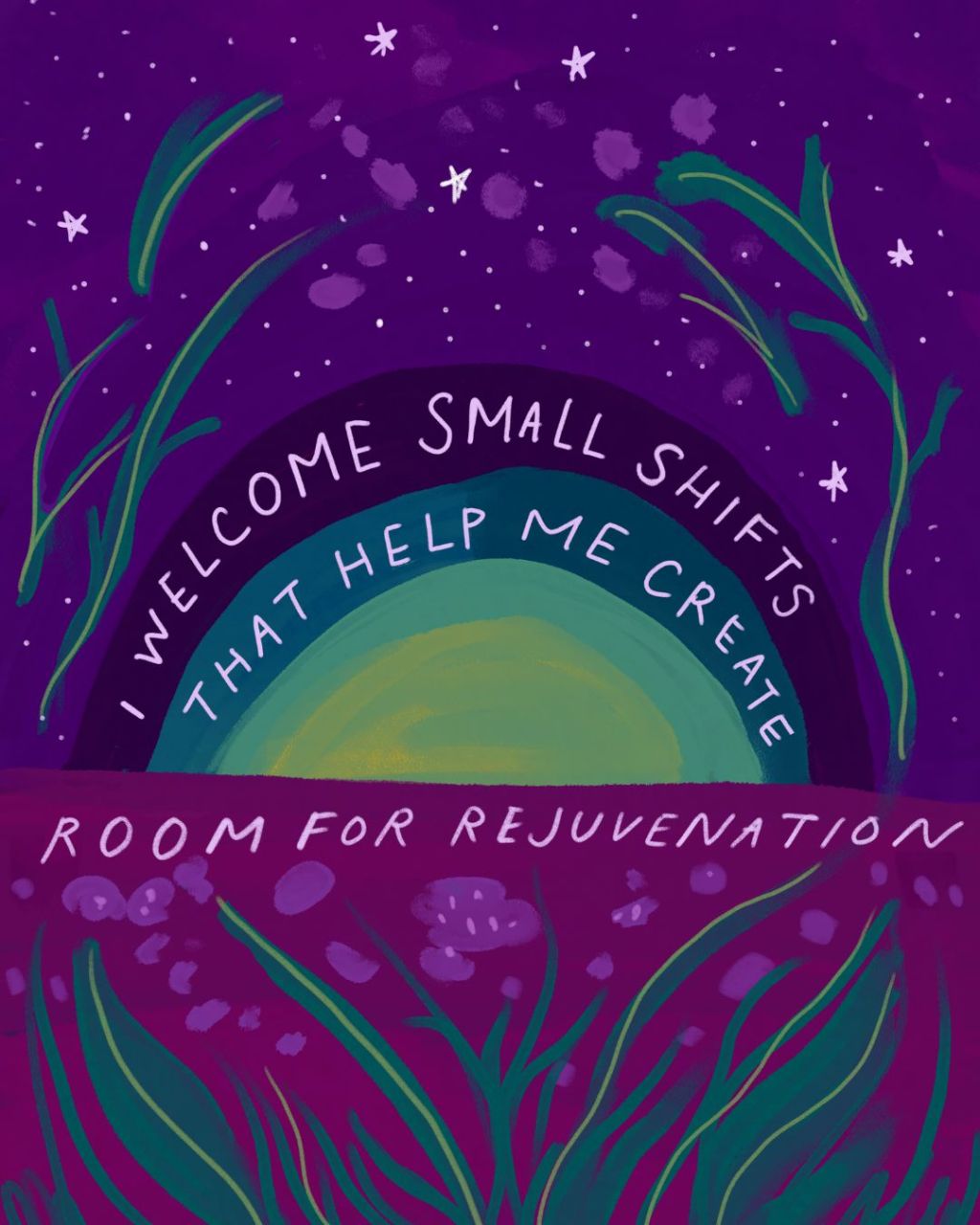
    There’s so much we can learn from the smaller shifts. Even when it comes to ways we think about rejuvenation, and creating space for it.

    Consider the sun’s daily journey. We rarely notice its moment-to-moment movement. Yet, at dawn and dusk, these accumulated small shifts suddenly become obvious. The sun’s gradual change, which is harder to notice throughout the day, reveals itself dramatically as the sun begins to set.

    As the sunrise and sunset show us, these gradual changes add up over time. When it comes to creating space for rejuvenation, small cumulative shifts matter, too.

    Here’s a way to think about rest and feeling refreshed over a longer timeframe. Reflect on these questions about the past decade:

    How has your idea of “feeling refreshed” changed over the last ten years?
    What things do you do differently now to rest and recover compared to 10 years ago?
    What activities have always helped you feel rested and energized?
    How do you think the way you recharge could continue to change with time?

    Taking a long-term view allows you to spot subtle shifts that might go unnoticed in shorter periods. It’s like watching the sun’s journey across the sky – individual moments may seem unremarkable, but over time, the change becomes profound. Like horizon lines stretching out before you, this broader view can help you appreciate how far you’ve come and how your small, consistent efforts have gradually built up over time.

    Through the years, you’ve been learning more about what it means to find rhythms, rest, and rejuvenation than you realize. And even if you still have ways to go, what you’ve already been discovering matters more than you know.

    Remember, in the same way the sun’s position becomes clear at specific times of day, your cumulative efforts for rejuvenation will show themselves in noticeable ways over time, too. Keep giving attention to those small shifts. – Morgan Harper Nichols

  • Learning to hear the piano in the background (searching for harmoniousness)

    Learning to hear the piano in the background (searching for harmoniousness)

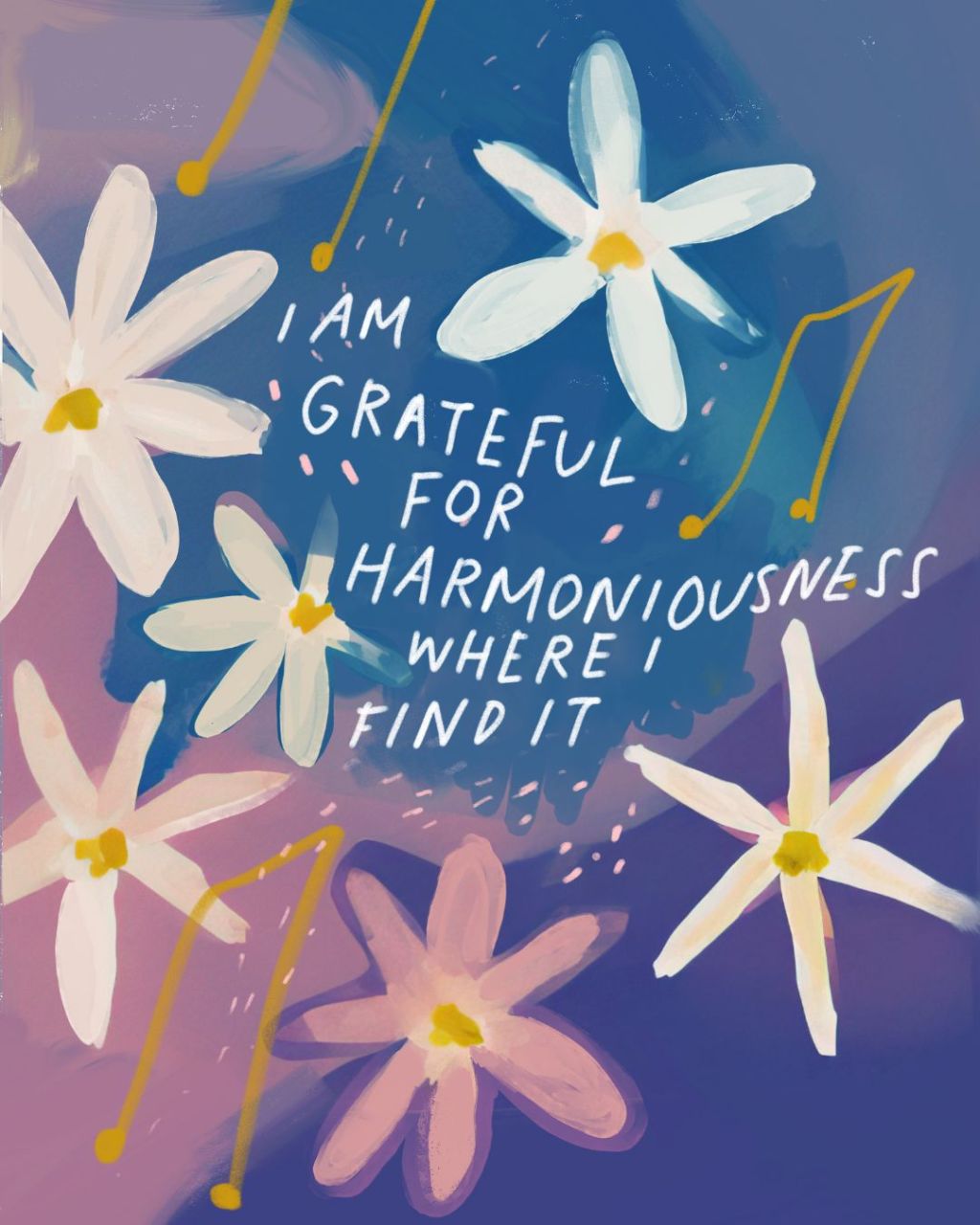
    May you be grateful for what is subtly, yet meaningfully harmonious wherever you find it.

    When people are singing and their voices are harmonizing together, it creates a pleasant sound that blends seamlessly and it can be deeply appreciated whether you have a trained musical ear or not. However, if those voices were singing over the sound of someone playing a piano, it might be harder to hear the chords that the piano is making because it’s more subtle and in the background. However, even though it’s more subtle, there is still harmony coming to life there, too.

    It’s a beautiful, satisfying thing to experience things coming together in life, like vocals creating harmony. However, before, after, and in between those moments, there are also the subtle notes, like the piano in the background that might get overlooked but are still worth paying attention to.

    You stumble upon something small that you’ve been looking for.
    Someone explains something to you in a way you can understand it.
    Moments when you’ve identified your role as a part of a larger initiative.

    These small, and even serendipitous moments may not seem like very much on the surface, playing softly in the background as we listen out for the bigger moments, but in reality, like piano notes in the background, they are still a part of what composes harmonies in life.

    So in those moments where you find yourself longing for those bigger harmonies in life, like dynamic voices all singing together in a melodic, rhythmic fashion, may you know it’s okay to long for that. It’s beautiful and it’s only natural to desire this. And at the same time, in those in-between moments, notice when more subtle harmonies begin to feel a space. Even if they are subtle, allow yourself to practice training your “ear” for them. And this process might just help you find value in the greater harmonies, too. – Morgan Harper Nichols

  • Breaking through to begin again

    Breaking through to begin again

    There will be times in life when you are aware that you are outgrowing old constraints. You may realize that something you used to do all the time no longer feels like a part of your journey. Or perhaps, there are people you used to be close to whom you’ve had to say goodbye to. These are moments where you can feel the shift happening, and you may even notice things changing within yourself.

    And then, there are also moments when the outgrowing of those old constraints may happen in more subtle ways, and it’s worth noticing those, too. In the same way a plant might not initially look like it’s about to outgrow its pot before it suddenly sheds old leaves to make room for new growth and reaches for the sun in a new direction, perhaps the same is true in our lives, too.

    Perhaps, it might look like this:
    The shift: You used to be driven by a strong image of how things were supposed to go, but now, you’re becoming less attached to those rigid expectations. You’re starting to be open to unexpected possibilities.

    The subtle outgrowing: There might not be a dramatic action taken in this sense, just a quiet shedding of tightly-held blueprints. Instead of resisting when life doesn’t follow the script, you are slowly cultivating an openness to what may unfold.

    The shift: You once could only see strength as holding on with all your might, but now you’re discovering the importance of letting go, too. You’re learning that flexibility and adaptability are forms of strength as well.

    The subtle outgrowing: This transformation might not come with grand gestures. Instead, it’s a gradual realization that there are some things that need untangling and unwinding. By releasing them, you’re not giving up; you’re making room for growth and new experiences, gently becoming a little more free, easing your way into new beginnings.

    In both the larger and more subtle moments, may there be more room to observe all of the steps you’ve taken to move through this. Like a growing plant, may you continue to turn and face the rising sun and shed what is no longer needed so you can continue to grow as you were meant to. – Morgan Harper Nichols

  • Be engaged where you need to be, and let go where you need to

    Be engaged where you need to be, and let go where you need to

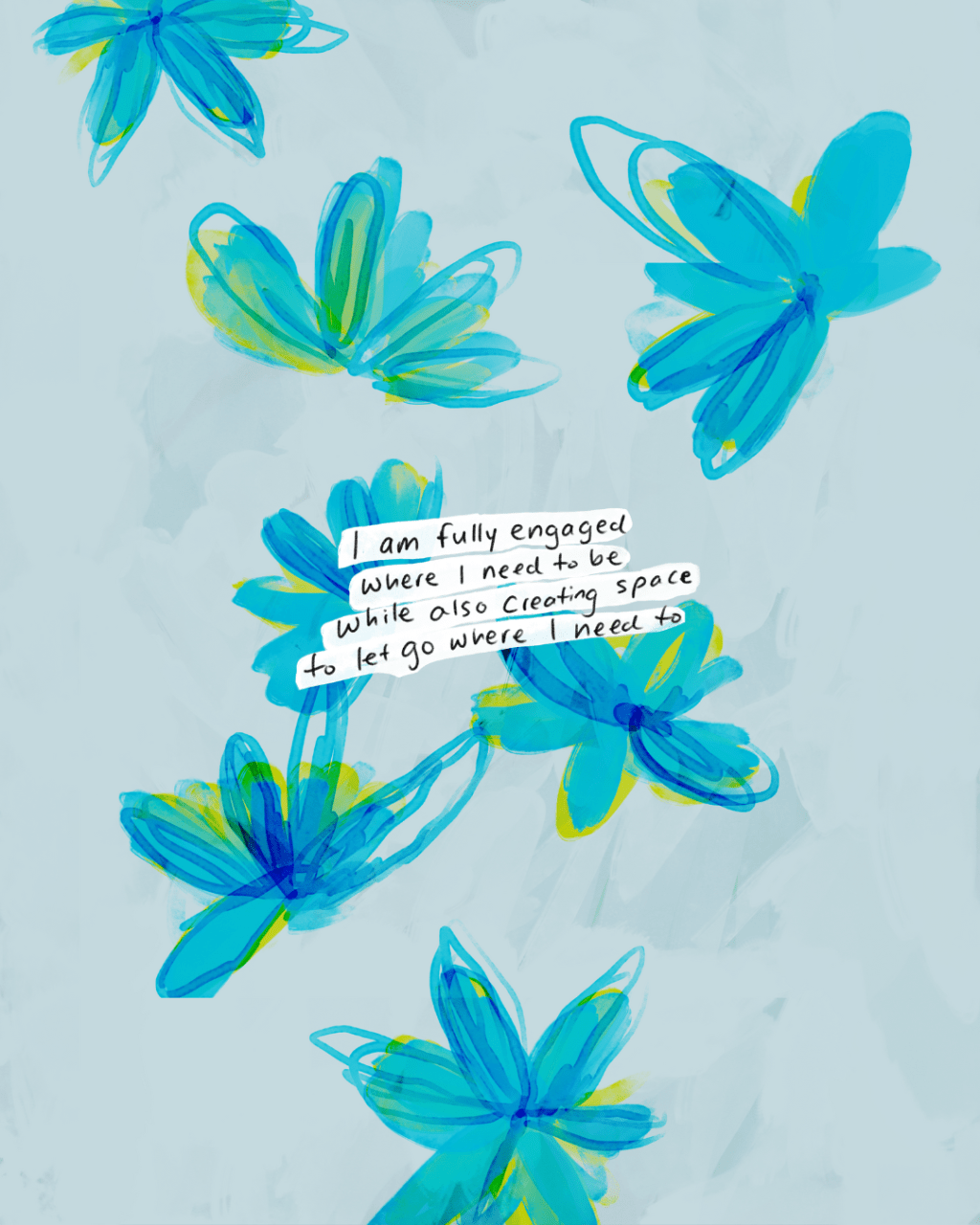
    Allow yourself to be fully engaged where you need to, and let go where you need to. You are not inadequate if you cannot be fully engaged with all things, at all times. Doing your best in the moment doesn’t mean you’re not fully committed. Instead, it is an opportunity to invest your efforts where they’re needed and release the rest.

    Allow yourself to enjoy creating something while knowing that even before all of the details work out, you’re free to appreciate the progress you’ve made so far. You are allowed to find joy in the journey even before the outcome.

    Give yourself permission to embrace rest and renewal when needed, while letting go of the expectation you must rest in a perfect way for it to be worthwhile.

    Create room for flexibility and adaptation, even before you have it all sorted out.

    Being fully engaged in this life right here where you are doesn’t mean being present perfectly, never being distracted or overwhelmed. Instead, it’s about recognizing amidst the distractions and overwhelm, you are free to adjust, refocus, and take pressure off again and again, however you need to. Like the rhythm of breathing, creating space for what’s next. Fully engage where you need to and let go of the rest. – Morgan Harper Nichols

  • Redefining what counts as meaningful

    Redefining what counts as meaningful

    Finding value in ordinary experiences is not about forcing positivity onto every passing moment. Instead, it’s about allowing space for quiet recognition to take root. It is a way to be present how you can, as you prepare for the journey ahead.

    To find any richness in the ordinary today is not about ignoring everything else, but about allowing yourself to practice the very kind of attention that makes meaning possible in the first place. When you take time to notice more subtle things such as, how good it feels to be in certain spaces, how safe it feels to be with certain people, and how small gestures can restore a sense of belonging, you are affirming that the conditions for care, recognition, and connection begin in the everyday. You are saying that even if these things are normally small and unnamed, they still matter, and they are worth nurturing so that they can continue to grow in the future.

    You are allowed to redefine what counts as meaningful. You are allowed to consider everyday moments as valuable within themselves, not because they will always lead to something big, but because they help you notice what matters as you prepare for the journey ahead.

    Reclaim the significance of ordinary moments. And let them shape what kind of world is possible to carry onward into.

    – Morgan Harper Nichols

  • Changing the landscape itself

    Changing the landscape itself

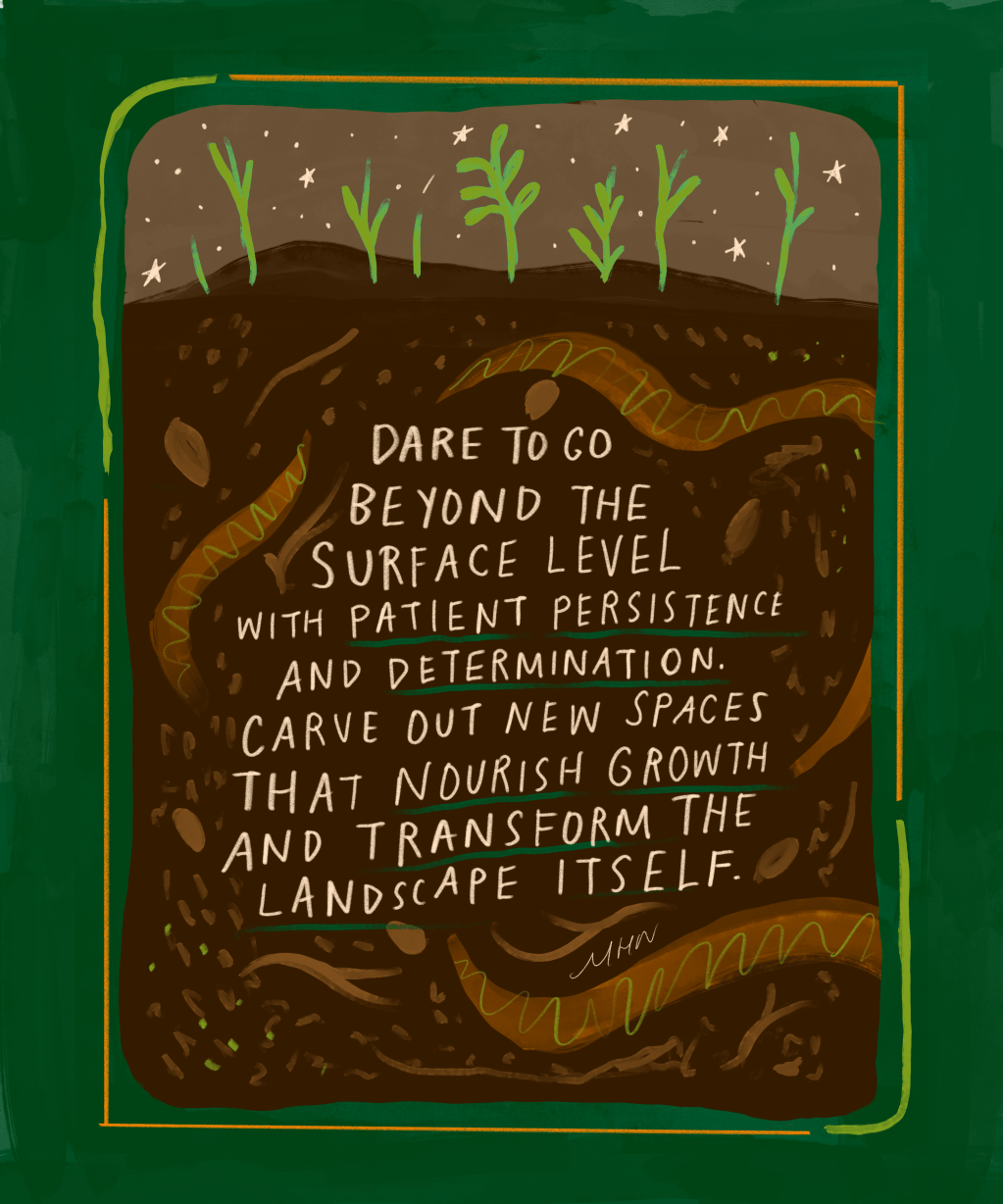
    Earthworms live in soil and eat decaying plant material. Their movement helps mix and aerate the earth, making it healthier for plants. And perhaps, one thing that can be learned from the earthworm is the significance of daring to go beyond the surface level. Without earthworms, soil would become compacted and less able to support the growth of crops and wild plants. In the same way earthworms patiently carve out new spaces underground, we can shape the spaces we move through with quiet persistence and determination. The smallest act can shift what seemed unmovable.

    Even when our efforts take time to show results, what remains is a kind of patient persistence that can continue to grow and a determination that we can continue to build upon. We can decide to say “yes” to depth. To spend more time on what good, honest things hold, not just what shines. To be present to the soil of this very moment, not only the distant skies.

    This does not mean hiding away forever or stagnating. Instead, it means thinking about the long-term, including the long-term that extends beyond ourselves. Like earthworms, we can learn to work steadily beneath the surface by staying present in what’s slow but necessary, and as a result, transform the landscape itself. A landscape not made overnight, but built to nourish what comes next. That kind of steady effort may not look like much at first, but it’s often how something good begins. – Morgan Harper Nichols

  • To Begin Again

    To Begin Again

    Words to repeat to yourself:

    “I embrace little moments that remind me: it’s not too late to begin again.”

    Whether you’re

    Changing course on past goals or dreams,

    Wanted to try something new but worried about failing,

    Want to do something different but don’t know how…

    Let it be the little moments that remind you: you don’t have to rush into new beginnings. You can start small, gathering the ingredients you need to make something new. Look for places in your environment that can remind you of this.

    Here are some examples:

    Think of the ingredients lined up on the counter before you’re getting ready to cook something. It’s like seeing all the pieces you need, reminding you that you have what it takes to start and create something new. This could be a useful way to think about a new beginning if you feel overwhelmed by a blank slate. Think of the ingredients of life as being a base to work with.

    Think of the fresh book smell. It’s like a reminder that you can take your time with it. You don’t have to rush through every page. As you move through it, things will begin to make more sense. Think of moving through the month like that; as the fresh month feel wears off, just like a book, you’re getting deeper into the story. This could help if you feel overwhelmed by starting fresh. Think of the process as a journey that unfolds over time.

    Think of a cleaned-off shelf, ready to be rearranged. Even though there’s nothing on it yet, the shelf has enough structure to imagine what you can fill it with. Think of moving day by day like that, with each set of 24 hours offering new opportunities to add something meaningful. This could be useful if the idea of a blank canvas feels daunting. Consider the shelf’s structure as a foundation to build upon.

    While starting over in life in big ways often involves so much more than this, these smaller, daily things serve as inspiration for thinking about the bigger things.

    May these simple, everyday things remind you that you are free to begin again, no matter how big or small the steps you take. Embrace the little things and let them be a part of what helps you create space toward new possibilities. – Morgan Harper Nichols

  • May the sunrise find you, right here at the edge of June

    May the sunrise find you, right here at the edge of June

    As you move toward the edge of June, I hope July reveals something wholehearted, and perhaps, even beautiful for you. Because for all of the things that have failed to make sense, and for all of the troubled, tangled things that seem to keep cracking open, maybe, there can still room for sunlight to filter through, too.

    As you look to the month ahead, may you look for any opportunity to pull back the curtains of what-ifs and almosts, even just a little, and let the sunrise-like nature of possibility find you: a slowly, rising current of warmth that still surprises you, even when it seemed the sunlight had already chosen elsewhere. May sunrise land right here, even if its flickers at first. And may there be something in you that believes in matters. – Morgan Harper Nichols

  • Finding language to tell this story

    Finding language to tell this story

    It can take a lot of energy to describe things and search for the right words, even when it comes to experiences we’re intimately familiar with. However, it can make a difference to give yourself permission to practice and explore within a space where there’s less pressure.

    Here’s an idea you can try. This exercise invites you to explore the subtle differences in how we perceive and describe shared experiences, ultimately helping you to find language for your own story.

    1 – Think of a recent, neutral or positive experience with someone else, like a dinner conversation or a trip to the grocery store. Write down 3-5 words that describe the overall feeling or atmosphere of that experience (e.g., relaxing, warm, busy). Don’t worry about being creative—just note what comes to mind.

    2 – Reach out to the person you shared the experience with. Explain you’re doing a journaling exercise: “Random question. What 3-5 words describe [briefly describe the experience] for you? I’m doing a quick journaling exercise.”

    3 – Compare your lists. Take note of word similarities and differences. Do they highlight different parts of the experience?

    4 – Observe even in shared experiences, we each perceive, describe, and tell stories differently.

    Alternative Exercise: Describe an experience today using 5 words. In 3 days, describe the same experience again without looking at your original words. Did anything change?

    Why This Matters: This exercise helps you validate your voice by showing how we all perceive and describe even simple experiences differently.

    This can have a profound impact on the stories we tell. When you can acknowledge and embrace these differences, it creates an opportunity for deeper connections and an opportunity to grow in confidence and it also allows you to connect more deeply with others and learn how they tell stories. You can start to notice your unique way of finding language for a store by noticing the subtle differences in how you (and others) describe even the most simple things.

    -Morgan Harper Nichols

    If you’re interested in finding language to tell stories (through journaling, letter-writing, or creative or professional work) join me for an in-person writing workshop in Atlanta, Georgia on July 26! Tickets

  • small gentle spaces

    small gentle spaces

    Finding room to breathe, to feel, and to let go can be difficult to find in life, and at the same time, it can unfold in smaller ways than you may think. A small space to let out a breath you’ve been holding doesn’t need everything else to stop before you notice it and before it can matter. It might be small, but it is not insignificant, and it can provide the clarity and recharge you need to return your focus to what matters.

    A gentle space is a moment of calm amidst the chaos, and it’s even something you can happen to find, even if it’s only for a moment.

    Consider this: happening to find a gentle space is:

    Happening to notice the sound of leaves rustling,
    Noticing the oddly soothing rhythmic hum of the washing machine in the distance,
    Observing a tiny new leaf on the houseplant that wasn’t there before,
    Watching iridescent swirls in the soap bubbles,
    Witnessing steam rising from the coffee mug that dances in the sunlight, swirling and fading.
    These little spaces, these little moments, can also be accumulative, meaning they build upon each other to create a more profound sense of peace and clarity.

    It’s in these moments that things stop, perhaps even for a millisecond, but it’s a millisecond that still matters. A millisecond could be seen as a little space all on its own, too. Finding gentle spaces where things slow down and we begin to notice what is packed with dashes of joy, small changes in perspectives of ordinary moments, and flickers of sunlight isn’t about escaping reality, but about recognizing the need to pause so we can actually return to what we need or desire to do, rested and with clarity.

    Look for subtle gentle resets, even when you are just moving through the day. Seek them out in small ways. How can gentle moments provide room for ongoing discovery, even when it comes to something you’d like to feel, such as joy, comfort, and calm? What small things might support a healing journey in ways you’ve yet to realize? You are allowed to seek out these small gentle spaces in everyday life.

    Here’s to moving toward these harder-to-notice resets, not as an escape from life, but as a way to return to it.

    Morgan Harper Nichols

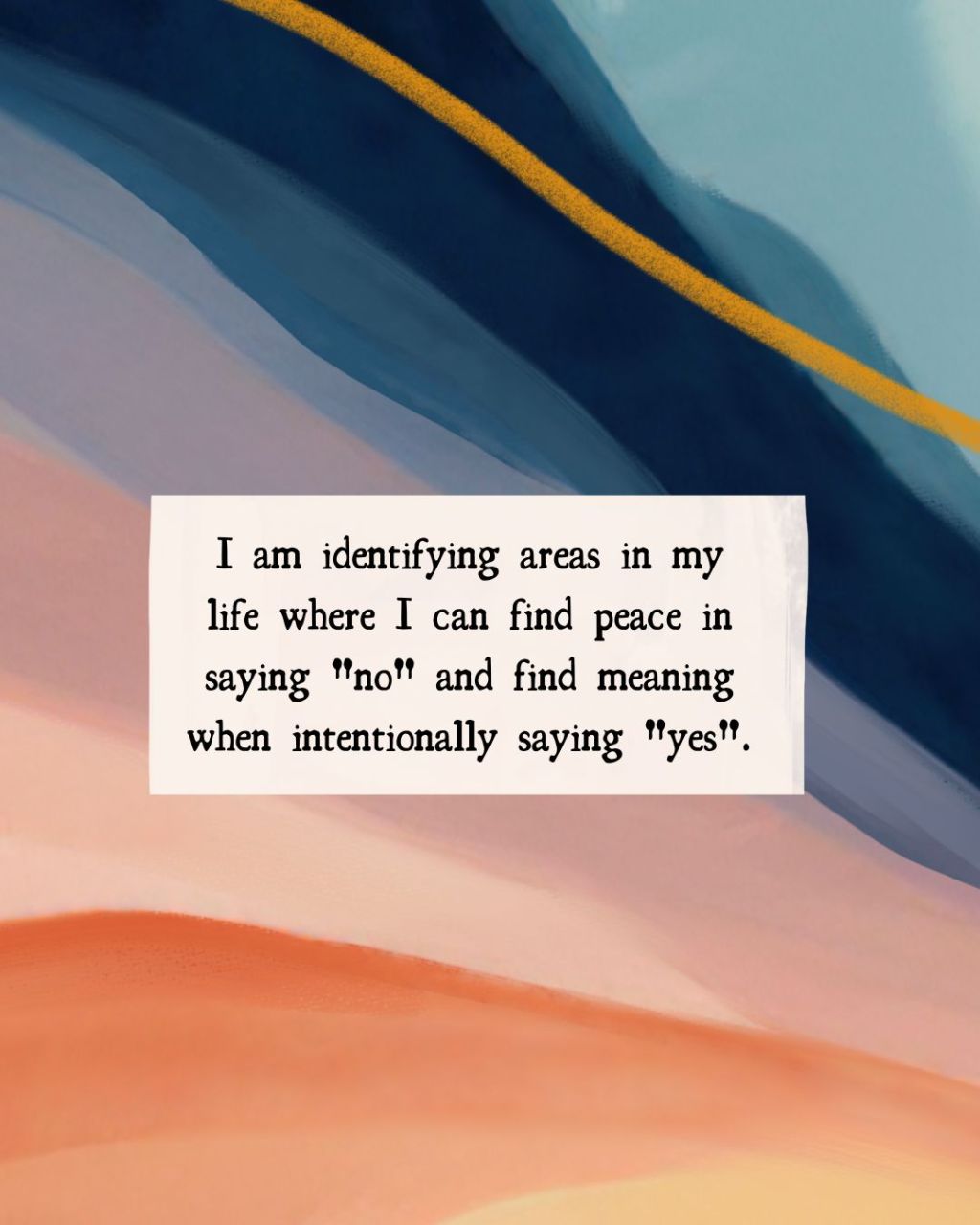
  • Finding peace in saying “no,” finding meaning in saying “yes”

    Finding peace in saying “no,” finding meaning in saying “yes”

    Identify areas in your life where you can find peace in saying “no” when you need to and find meaning in intentionally saying “yes” when you need to.

    Recognize specific situations where there is no room to say “yes” when you need to say “no” and “no” when you need to say “yes.” The significance of these specific situations is that it can be hard to figure everything out, especially when making changes in every area of your life. For instance, trying to say “yes” to many changes at once can be hard to do while pacing yourself and taking steps.

    So, allow yourself to start small. What’s one thing you can say “yes” to today? What’s one thing you can say “no” to today?

    Let’s say you’ve decided to say “yes” to creativity and “no” to the perfectionism that holds you back from being creative. Finding meaning in saying “yes” to creativity might look like allowing yourself to try something new that your 13-year-old self would have liked to create. It has meaning because it’s a part of your story. The peace you find in saying “no” is knowing that what your 13-year-old self needed to create wasn’t about perfection but about honesty and reflecting that version of yourself.

    Other ideas could include:

    Say “yes” to meaningful conversations and “no” to the pressure of always having the right words.

    Say “yes” to learning a new skill and “no” to the hesitation of not being good at it immediately.

    Say “yes” to exploring a new opportunity and “no” to worrying about what others think.

    Let today be the day you say “yes” where you need to say “yes” and “no” where you need to say “no” and let this be a part of how you grow. – Morgan Harper Nichols

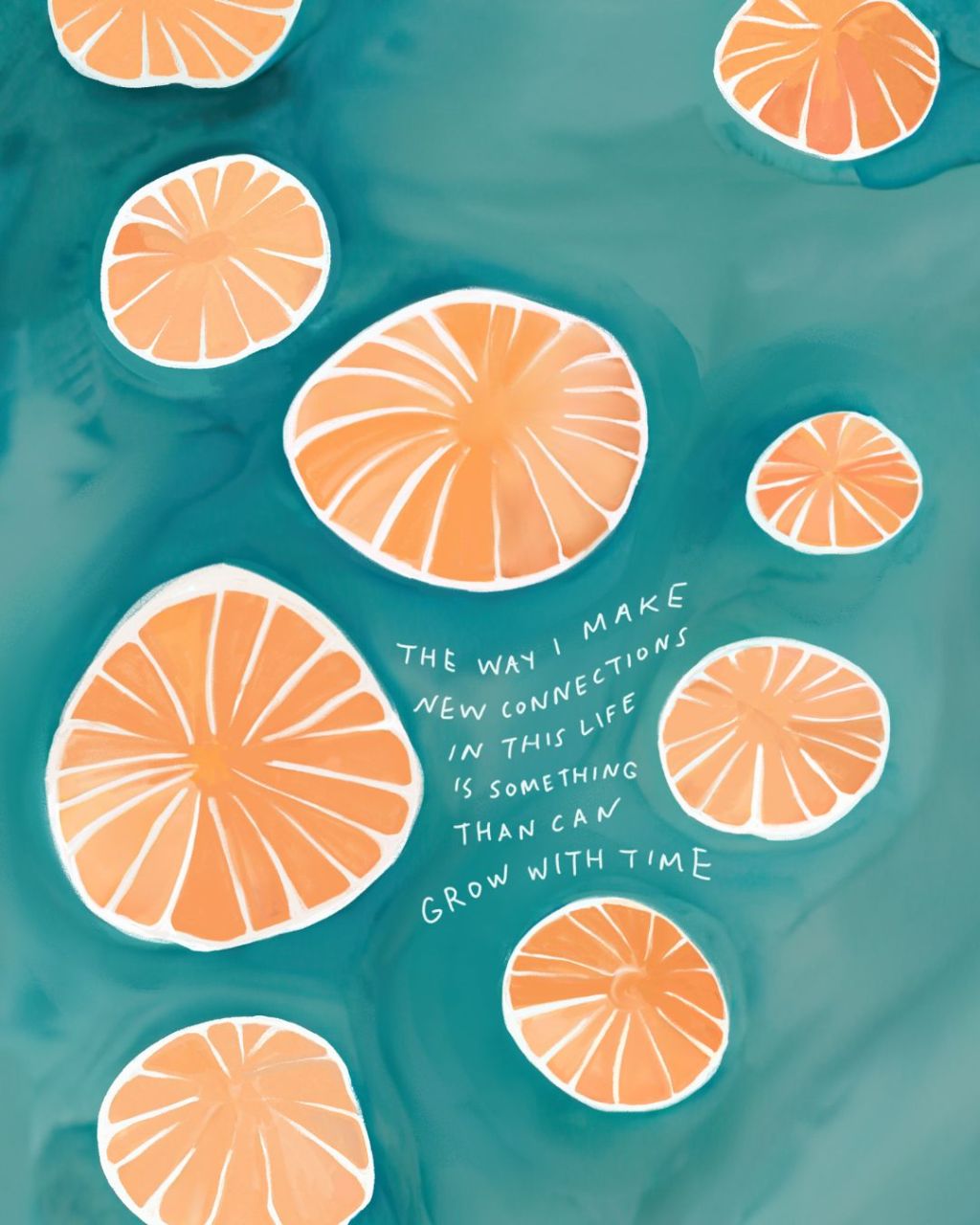
  • making connections that can grow with time

    making connections that can grow with time

    Sand dollars form their unique patterns naturally and meticulously, just as we cultivate connections that evolve and strengthen over time. Each pattern emerges from the slow accumulation and layering of materials, reflecting the gradual development of our relationships. This slow crafting process in nature is similar to how we strengthen bonds through time, patience, and shared experiences.

    Intricate connections take time to form.

    Every stage adds depth and character.

    Their unique journeys create distinct, lasting impressions.

    …a lot like a desired relationship or connection with other people.

    These natural imprints on sand dollars are a beautiful metaphor for the detailed, often unnoticed, growth in our connections. There are so many little things that have to happen in order for patterns emerge through patient growth and yet, they are often overlooked.

    And like each distinct pattern on a sand dollar reflects the subtle, yet specific process of formation, the same is true of the process it takes in relations to cultivate stories, memories, and love in intertwined lives. May this comparison serve as a reminder that as the details take time to form, with careful, gentle attention, there are new ways that love can continue to grow with time.

    May there be space to gradually and deliberately nurture the bonds that enrich our lives.

    – Morgan Harper Nichols

  • And somehow, morning sunlight persists

    And somehow, morning sunlight persists

    there may be unknowns up ahead of you,

    and perhaps, this is also true:

    there will also be sunrises that continue to

    expand all around you.

    and what makes sunrises distinct

    from the full-light of day

    is that they carry traces of night with them

    and illuminating the path before you, anyway.

    yes, there are shadows out here.

    and you do not have to pretend they don’t exist

    before you start how flickers of morning-sunlight-possibility

    somehow, still persist.

    -Morgan Harper Nichols