Tag: daily reflection

  • Discovering New Ways to Be Present

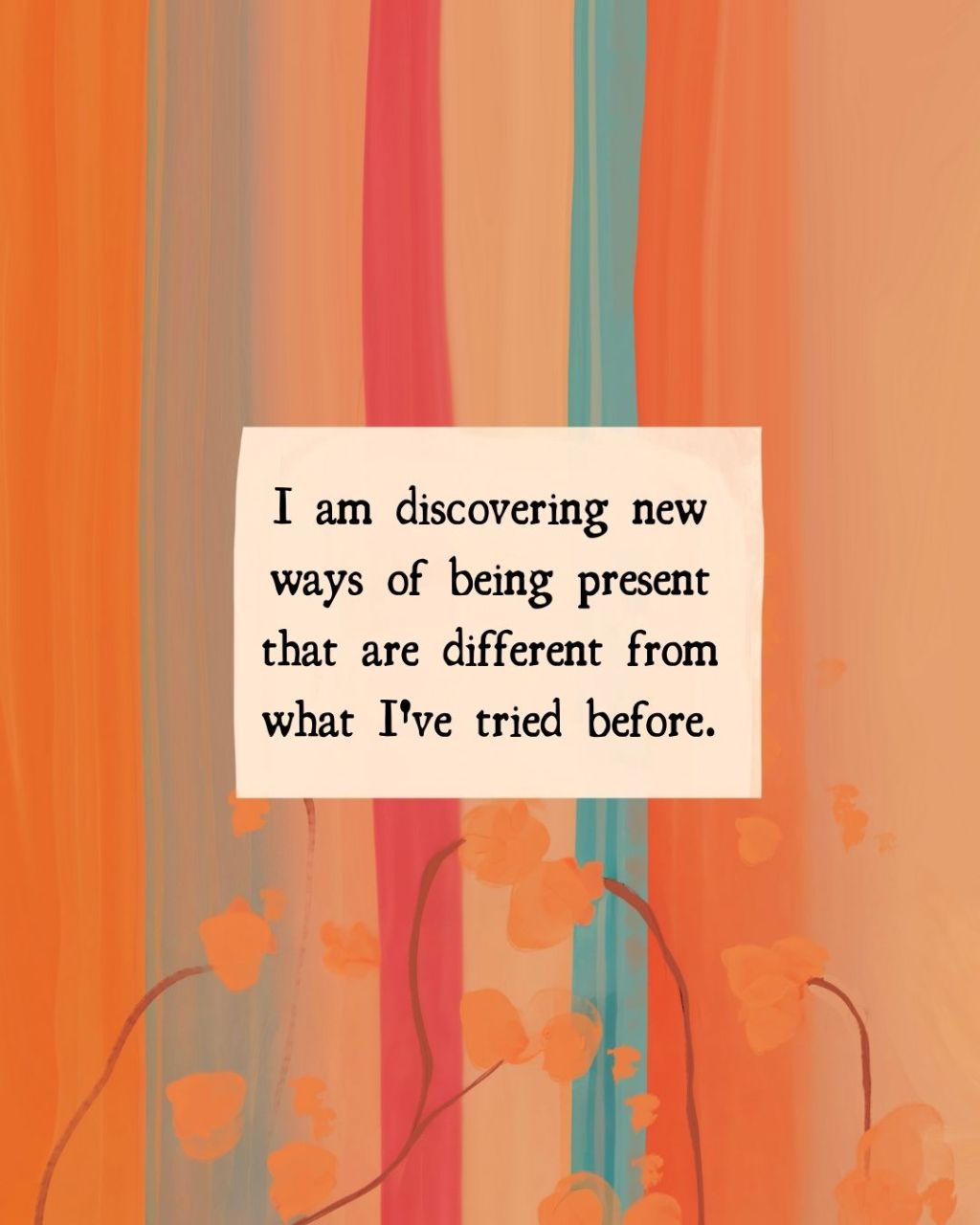
    Discovering New Ways to Be Present

    Being present doesn’t only mean thinking quietly or sitting still for a long time. Sometimes, being present is being attuned in a conversation, being aware of a feeling, or being attentive in a particular setting.

    Even when the days are long, busy, crowded, you are still free to notice the small moments are still worth acknowledging. You are still allowed to observe and recognize the ways you are learning to be alive, right here. Let moments of attunement, awareness, and attentiveness be a reminder that you are being present, even in small ways. Let them be reminders that even when you notice others being present in different ways, the way you’ve learned to move through the actual space you’re in right now matters more than you know.

    So whether you feel like you’ve been able to find enough quiet time or not, it is never too late to allow yourself to explore new ways of being present. And you can do this by acknowledging the ways you’ve already been attentive in your life right here, recognizing that this is something you can continue to be build upon. Allow yourself to keep exploring new possibilities for engaging more fully right here where you are. – Morgan Harper Nichols


    I’ve just announced a new in-person writing workshop in the Metro Atlanta Georgia area (where I’m from!) on Saturday, July 26. Would love to see you there! Tickets now available

    There’s also a few more spots available for the free virtual writing workshops in July. Click here to RSVP
  • To Create is to Exhale

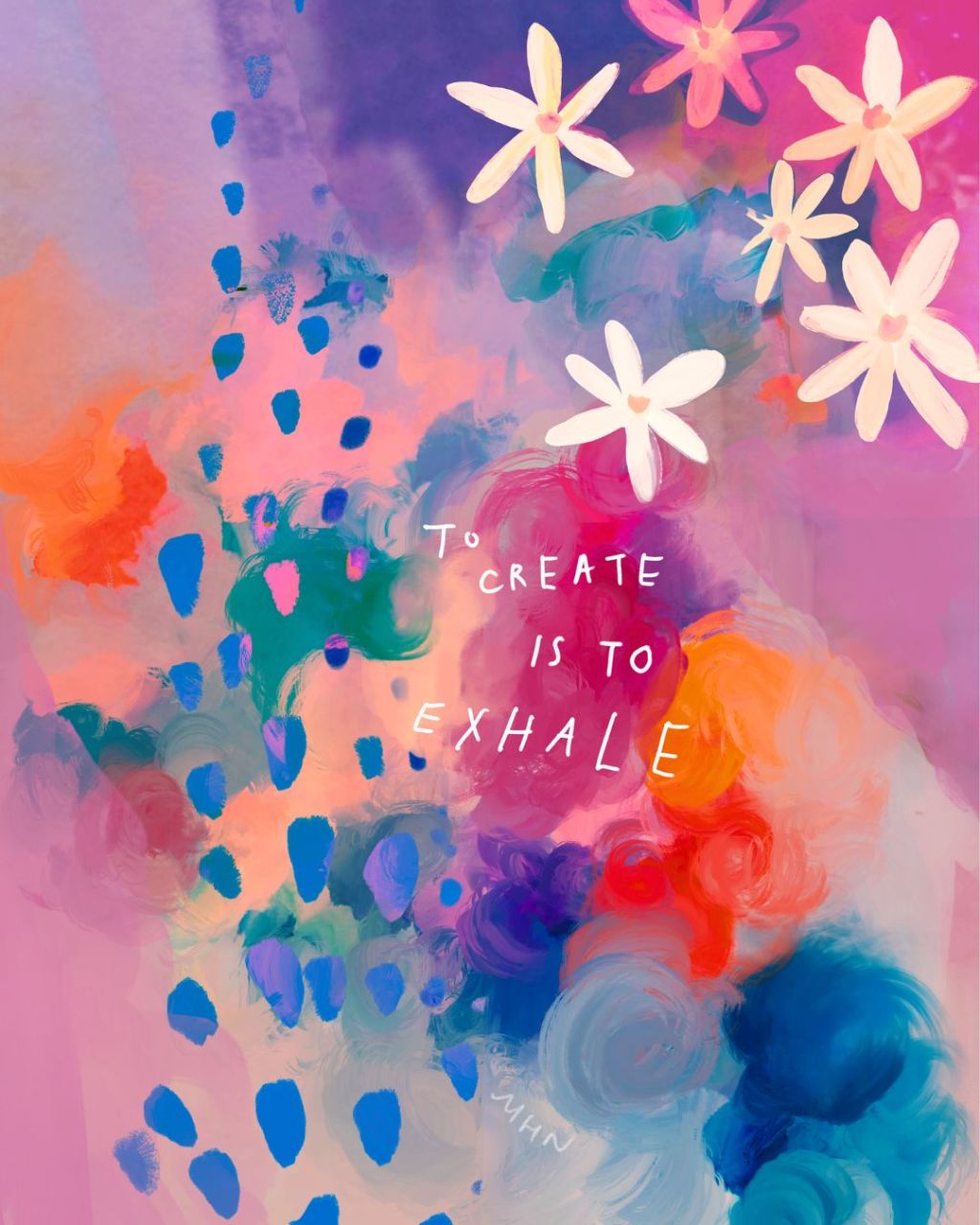
    To Create is to Exhale

    Even here, it matters to create. Not because everything is figured out, and not because you have to make a product or because you must be a “creative,” but because day by day, you have been taking so much in, and it matters to have space to let go. To create is to exhale. To create is to realize that after all the taking-in and the processing, you need to room to breathe.

    Create space

    Create conversation

    Create connection

    Create room for rest, where you need to

    Create a sense of motion, where you need to

    Create something worth sharing

    Create something worth keeping

    Sometimes, creating will take on the form of art, written words, or something tangible and also, many other times, it can take on the form of anything that reminds you: you don’t have to hold it all in. You are allowed to make room for letting go, even here, and no matter how small. To create is to exhale.

    – Morgan Harper Nichols

    This is an excerpt from this week’s series in the Storyteller app. The app is available on Apple and Android.

  • Creating space to think more clearly

    Creating space to think more clearly

    Whenever you start to feel like you need a space where you can just breathe and explore possibilities, it can be hard to find ways to do that intentionally. However, you can start with one small thing at a time, and watch it grow with time. Spider webs are examples of this. Spiders create beautiful, symmetric webs using their amazing silk produced by special body parts called spinnerets. Radial threads provide a sturdy framework, while spiral threads catch prey. The web’s design allows it to bend in the wind without breaking. These intentional connections create strength and flexibility. When we observe the intricacies of a spider’s web, it reminds us to bring the same thoughtfulness to our own lives. By building our spaces with purpose and care, strand by strand, we create environments that allow us to think more clearly and live more intentionally. Right here, you are free to grow, reflect, and create in a gentle, intentional way.

    -Morgan Harper Nichols

  • When you encounter joy again, let it in

    When you encounter joy again, let it in

    For the one whose heart is healing:

    When you encounter joy again, let it in. Even when it is as subtle as a slowly rising sun, and the warmth on your skin is ever-so-gentle, may you know it still matters:

    The laughter that reminds you: you are worthy of release.
    The music that reminds you: you are free to feel the full range of your emotions.
    The random story you share with someone you care about that reminds you: you are allowed to seek out moments where you feel seen.

    When you experience moments like this, you do not have to write it off as “nothing.” These small moments may not be everything, but they still matter. These moments are still flickers of sunlight finding you again and again.

    When you encounter joy again, let it in.

    -Morgan Harper Nichols

  • Letting small things stay meaningful

    Letting small things stay meaningful

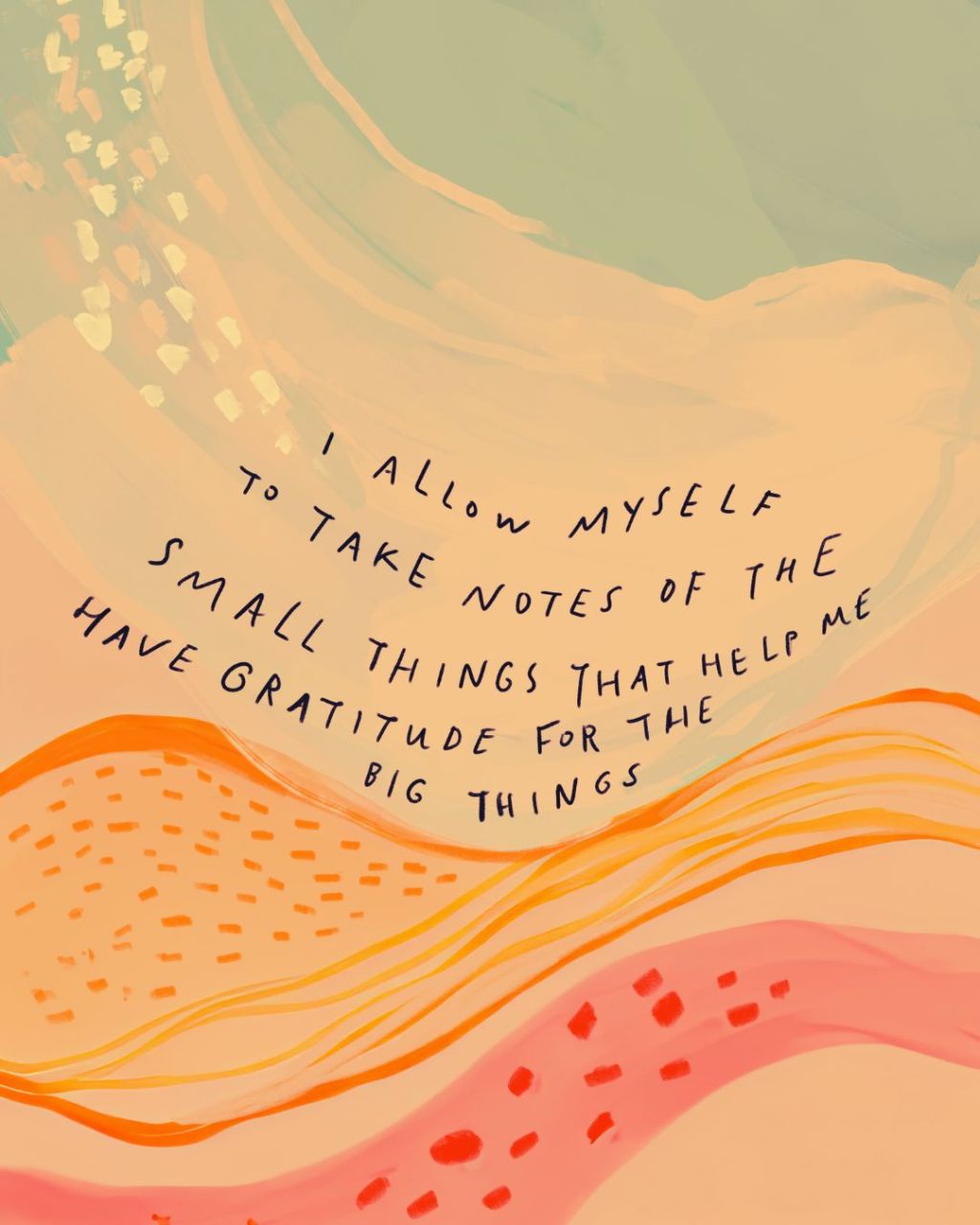
    You are allowed to take notes on the small things, even if they’re not extraordinary. Let yourself explore all the fragments that make up the whole, even brief encounters. These moments are often overlooked, but if we write them down, we might look back over time and find that they held more value than we initially realized.

    When thinking about the conversations we have, it’s not always just the topic of discussion that matters. It could be the warmth we feel when talking with someone, the familiarity of someone we know well, or the energetic curiosity when it’s someone new. Taking note of the ways we have shared moments with others might seem insignificant in the moment, but they are more than that. Like sand, these moments can slip through our hands, but when we look around, we recognize that the same sand is still a part of the landscape…a landscape that grows. A landscape that you can move through and continue to find new connections in.

    What matters here is knowing that even if something feels fleeting, it doesn’t mean it doesn’t matter. It’s still a part of a larger landscape, and you are allowed to take note of it. Let these moments accumulate. Take photos of ordinary things and write down fleeting moments. Come back to them again and again, and be surprised by the vastness of the landscape in which you have been living.

    If something felt special to you––even if just for a moment, let it be special. If the conversation that night felt like poetry, then let it be poetry. If even the most brief moment of joy felt like sunlight shining in, then that sunshines. Even when it feels fleeting, you are allowed to engage with the bittersweet feeling that it matters. – Morgan Harper Nichols

  • A repeatable practice for overwhelm

    A repeatable practice for overwhelm

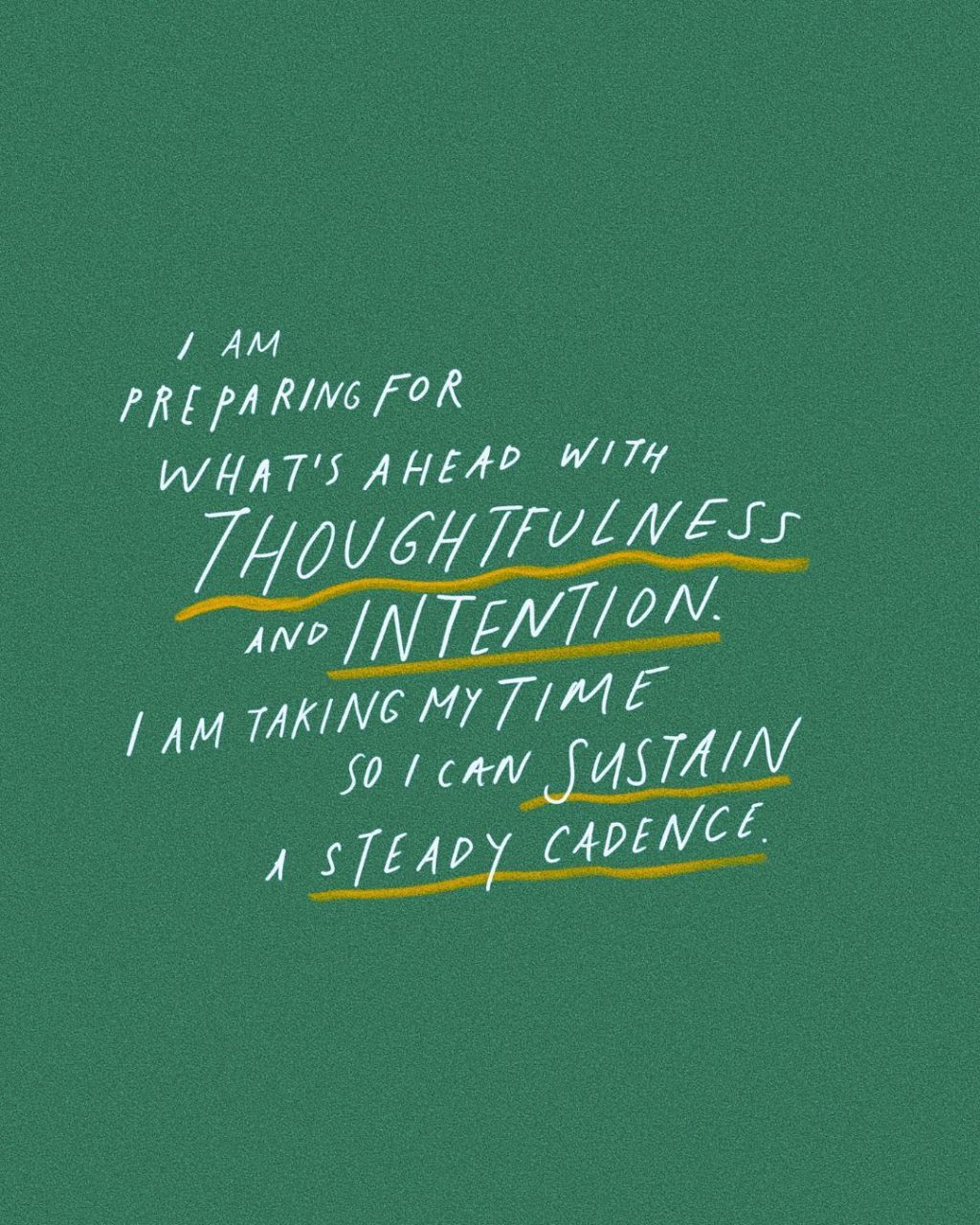
    Prepare for what’s ahead with thoughtfulness and intention.

    Take your time so that you can develop a steady cadence.

    Take a moment to pause and figure out what you need right now.

    When you feel overwhelmed by the number of things you need to do, and it’s been hard to know where to start, thoughtfulness and intention could look like this: take time to assess where you may need refinement and where you can let go. Take time to ask yourself thoughtful questions to help clarify your intentions:

    “Do I thrive more in routine or spontaneity?”

    “Which could I benefit more from right now: more social interactions or by solitary reflection?”

    “Do I gain clarity through planning in detail or by allowing things to unfold naturally?”

    “Am I needing something new or just a renewed sense of focus?”

    The difference between these questions and more standard questions such as “What’s my top priority?” or “What’s the next step?” is that they help you assess what your needs are, beneath the surface, instead of just focusing on task completion. There’s nothing wrong with the more general questions, but in those moments where you’re starting to feel overwhelmed by the unknown future, clarity and intentionality can make all the difference, and take the pressure off feelings like you need to have all of the answers right away.

    Create a steady cadence by welcoming the kind of questions that cause you to pause and reflect. Allow yourself to explore how you can be specific with what you need right now as you prepare for what’s to come. – Morgan Harper Nichols

  • Connection, even from far away

    Connection, even from far away

    When bioluminescent algae light up the ocean at night, it makes the water glow. This happens when lots of tiny algae come together and react to the water’s movement, creating light through a chemical process.

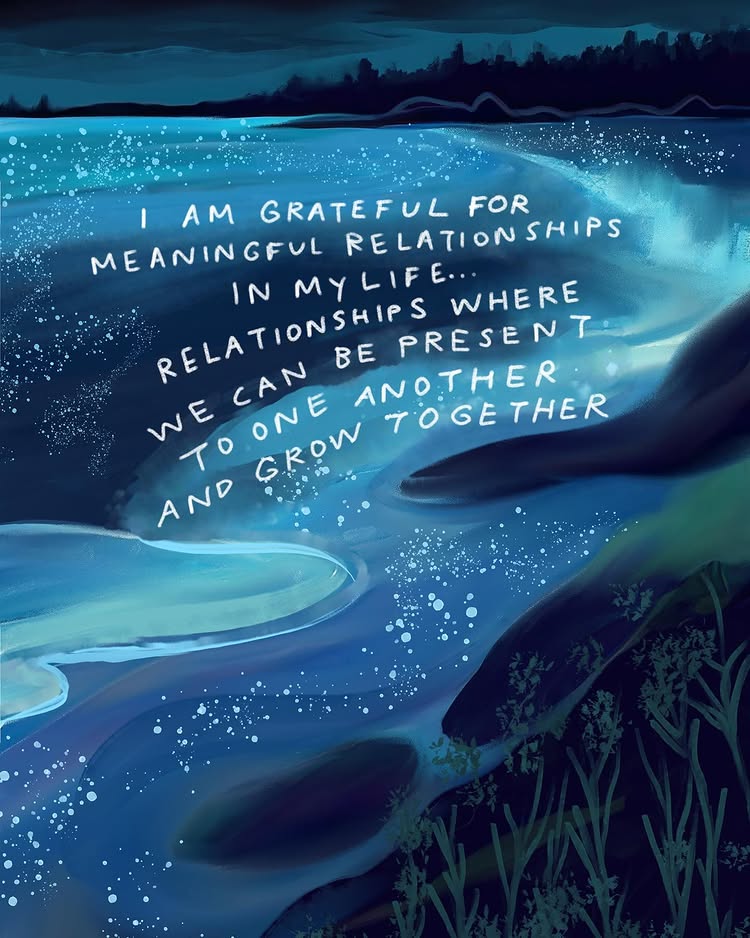
    What if we could see meaningful relationships in our lives in a similar way? As we react to the “movement of the water” in daily life, where we adapt and interact, we’re not the only ones seeking to produce light, seeking to navigate each experience. Like algae, we are in community with one another, whether we are directly connected or spread out in different places. And when we come together and interact, there’s this exchange of thoughts, emotions, and stories that together create a vibrant, illuminated network. This exchange can lead to new ideas and connections…just like how the algae’s chemical reactions produce a visible glow.

    It might be hard to see in a very literal way how algae lighting up the ocean is like our relationships, but think of it like this: both are about small, individual things coming together to make a larger group. Just as algae create a glowing ocean, our relationships and interactions create a network of shared experiences that enrich and brighten our lives. Think of moving through the day in a way you might think of algae moving through water: reacting to the movement and mixing with other algae to make a glowing web of light.

    Just like algae in the ocean, we move through our days reacting to what’s around us and mixing with others to create a glowing web of connection.

    Being present in our relationships isn’t about always finding a large, ideal group of friends or always spending lots of time together. Of course, it can be those things, but it’s also about noticing and asking questions about how you’re moving through things together. Even if it’s just noticing that you have moved from Monday to Tuesday with others, these shared moments are meaningful and worth noticing and talking about, wherever we are. Like bioluminescent algae in the sea, our small actions and interactions can spark a bright web, creating and deepening relationships in more ways than we realize. Connection can be created up close, and perhaps, like bioluminescent algae show us, far away. – Morgan Harper Nichols

  • Courage is an ongoing process of small shifts

    Courage is an ongoing process of small shifts

    Dragonflies are known for their ability to hover and swiftly change direction which is surely a testament to their agility and precision. Their two pairs of wings can move independently and this mechanism is what actually allows them to maneuver effortlessly in all directions, even backward, when they need to. Their 360-degree vision makes them adaptable and agile, like a courageous dream could be: gliding over serene ponds and through lush wetlands.

    To dream is to explore possibilities beyond the constraints of what’s been done in the past, yet still slowly learning to use patience to navigate. And this practice of dreaming leads to the freeing act of learning to hover, despite our fears, even before the fears fully go away. To hover amidst the reeds. To glide even in the winds. Like a dragonfly, we can find our way through the reeds and lily pads of all of the curiosities, convictions, and stories that make up the dream.

    As dragonflies pivot and adapt in mid-air, when it comes to our dreams, no matter how old or new, how vivid or fleeting, perhaps, we too can pivot, adapt, adjust, and thrive. Courage, like a dragonfly’s precision, can continue to transform paths we journey through, as we learn to adjust and evolve, like the dragonfly in the ever-changing winds. It’s okay if courage requires adjustment. You are free to let it become an ongoing process of small shifts.

    Amidst all of the wonder typically associated with dragonflies, there’s a flexibility we gain from dreaming. And even as we face the unknowns of those very dreams, like a dragonfly, we still learn to fly right where we are. – Morgan Harper Nichols

  • Small Joys, Even in Fragments

    Small Joys, Even in Fragments

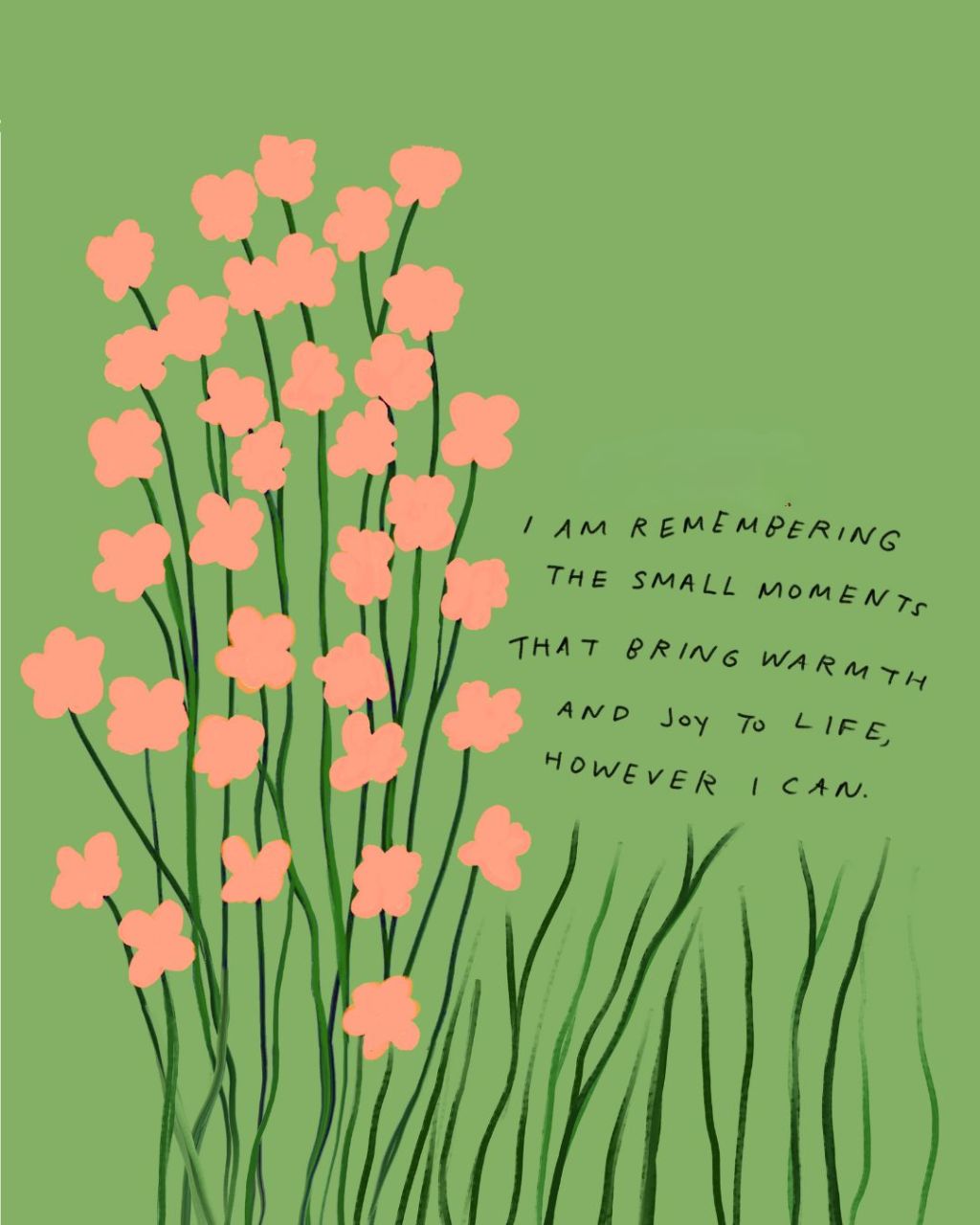
    Remember the small moments that bring warmth and joy to your life, for even if they feel far away or no longer as potent or relevant as they used to be, the fact that you can remember them at all is a reminder that through it all, you have been connected to this life. Through it all, you have been alive. Notice how many things that bring warmth to life are connected. Whether it’s spending time with other people or spending time with other people’s stories as you read books or listen to music, it’s all connected somehow. Even if you’re just passively observing or vaguely remembering those warm moments, that’s still something worth holding on to and building upon, no matter how small it is.

    And when it comes to the present moment, and how you seek to find joy and warmth in the days to come, allow yourself to think of the smallest things. In addition to all the good things that could be connected to other people, these things can also be connected to your senses as well:

    What specific color makes you think of joy?
    What song seems to have a sense of warmth to it?
    What scents or textures help you remember joyful moments yet again?

    Increase your ability to notice what might grow right here by allowing yourself to ask these kinds of specific questions. Use your available senses to anchor yourself in these small joys and let them be a pathway for finding warmth and happiness in the present and in moments to come. And if you’d like, you can also ask someone you know to answer these questions and explore the many nuances and ways different people move through these more subtle experiences and how they connect to a bigger picture. – Morgan Harper Nichols

  • Reframing what it means to even “try”

    Reframing what it means to even “try”

    Sometimes it’s hard to engage in new experiences when you feel that you might not be able to do it perfectly or avoid making mistakes.

    What if you said “yes” only to realize it’s not what you expected?
    What if it doesn’t go as planned?
    What if you find it overwhelming or challenging?
    What if not doing it correctly leads to new kinds of judgment from others?

    It’s only human to have these worries. It’s only human to ask “what if” when you’re faced with new unknowns. And at the same time, it is also only human to allow yourself room to breathe as you ease your way into new things. Allow yourself to acknowledge the courage it takes to move through something new: even if that something “new” is just a new day you’ve never experienced before.

    For instance, when it comes to moving through a new day as a new experience all on its own, it’s easy to overlook the strength required to do the most simple things or the energy needed to navigate even the most subtle changes.

    If you’ve made it through anything today, even if it’s just a series of regular breaths you took without thinking about it, no matter how small and whether anyone noticed or not, take this as a reminder of how you’ve been engaging with the new experience of a new day. Reflect on how, even when you weren’t thinking about it, you were breathing and moving through each hour. You were subtly but surely learning to be present in this new experience of a day, even without being able to make perfect sense of everything.

    Carry this with you as you engage in new experiences that ask more of you. Remember the countless, everyday ways you’ve been moving through each new day with courage, even when you weren’t fully aware of it. Look for areas in your life where you try something new, knowing the courage to move through unknowns has already been rising up within you.

    So here’s to moving beyond the need for perfection by reframing what it even means to “try.” Let this be a form of grounded hope, allowing onward and upward movement to arise gradually.

    -Morgan Harper Nichols

  • Permission to name needs

    Permission to name needs

    You are allowed to create space to name the need.

    …Here are a few words (of many) you could consider:

    acceptance
    appreciation
    beauty
    closeness
    community
    companionship
    ease
    flexibility
    friendship
    hope
    inspiration
    movement
    space
    structure
    understanding…

    Of course, having needs met is very important, but at times, it can be easy to forget an earlier step: naming them in the first place. This alone can be a powerful act. Consider friendship. If you were to say, “I need friendship right now” to someone, it’s the kind of thing that is sure to, at least, spark attention and awareness. It may not immediately lead to the dream friendship you need right now in the next five minutes, but naming it provides a language for your needs, helping you articulate and express what you are seeking. It could lead to deeper, more specific questions:

    Do you need the kind of friendship that is supportive or adventurous? Consistent or spontaneous?

    Specificity not only helps you identify what you may need but narrows your focus in such a way that you may begin to explore what necessary steps are required for it to become possible.

    Allow yourself to get specific. For instance,

    If you need “acceptance,” ask yourself — “what kind?”

    If you need “ease,” ask yourself, “What might ease look like on Saturdays?”

    If you need “space,” ask yourself, “Where? What kind of space has been helpful in the past?”

    -May there be space for you to identify what you need and how it might help you move through the day. – Morgan Harper Nichols

  • Creating Breathing Room, Even here

    Creating Breathing Room, Even here

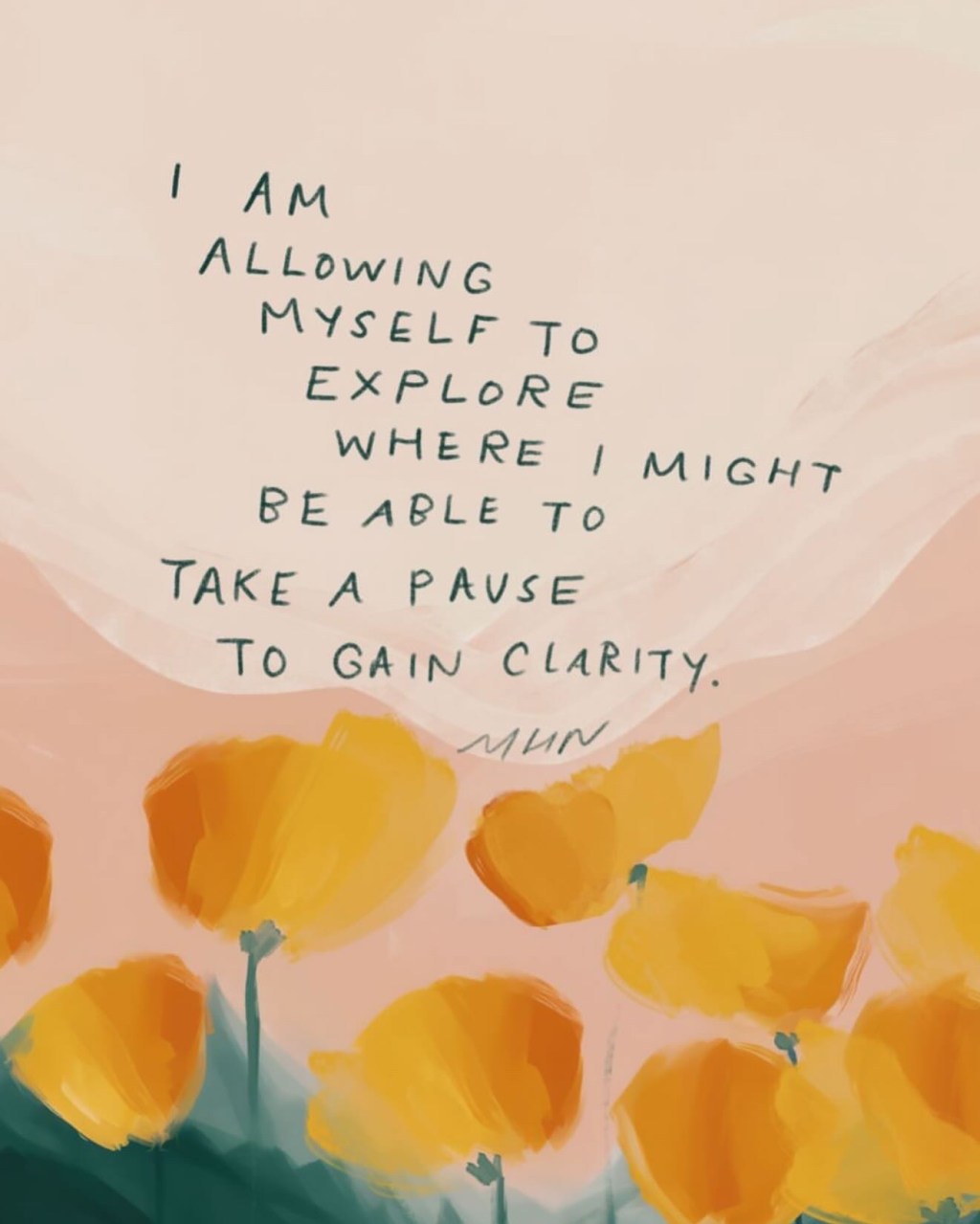
    Taking a pause when there’s much to do can feel like putting down a heavy book in the middle of an intense chapter – the story keeps pulling you in, yet the break helps you absorb what you’ve read so far.

    Just like in a story, taking breaks helps you process everything you’ve been taking in. By taking small breaks, you give your mind time to rest and think.

    For whatever it is that you are processing right now, taking a pause isn’t the opposite of finding clarity. A break might be the very thing you need to figure out what you should do next. Even if this starts in small ways, allow yourself to notice the pauses that already exist and allow yourself to identify more.

    The quiet moment on the elevator before you reach your floor and go on to the next thing.

    The few minutes when the phone battery has lost its charge and before it’s charged again.

    The silence while waiting for the microwave to finish.

    The moment between seeing a notification and opening it.

    There was a brief silence after saying goodbye before hanging up the phone.

    These moments are so brief it is easy for them to go unnoticed, yet, at the same time, they are places where you can begin to pay attention to the pauses that allow you to reset, regroup, or recharge, and return to whatever it is you need to do with clarity.

    And remember if it’s not an automatic reset that doesn’t mean that nothing is happening. Sometimes, it’s like seeds quietly growing underground. Recognizing that resets can vary in length can free you up from the pressure of instant results. By recognizing that progress in understanding things can grow slowly, even with pauses, you can find clarity in time. Start small in whatever way you can and build from there. – Morgan Harper Nichols

  • Embracing the depths of your story

    Embracing the depths of your story

    If you were to think of your life as a story, there are likely chapters that you could easily recite over and over. For some, it might be the story of how you grew up, and for others, it might be the story of how you ended up in the city you’re currently in or the story of your middle name. These stories become a part of us in a way that can be very useful. This is especially true if you have parts of your story that people might not be familiar with, such as having a rare name or being from a small town that few have heard of. However, one of the challenges of having familiar stories is that they can feel fixed and stuck in time. You may even get tired of telling other people the same old stories. You may even get tired of telling those stories to yourself, too. So what can you do?

    Here’s something you can try:

    Think of a book you’ve read where you’ve been able to watch or read an interview that features the author of the book. It’s likely that upon listening to them talk about the story and its characters, you learned something new about the book when hearing them dive into all of the details that weave the story together, even if it’s not written on a page. They share details that only they know because they’re the only ones who have been telling that story. What if––if only for a moment––you could imagine yourself as the author of a fictional book you’re writing, where you’re sharing the behind-the-scenes later on:

    What are some details of your life that may have been overlooked or forgotten? What are the untold stories and hidden layers that add depth and richness to the narrative? The details you might share face-to-face or with certain people? The things that were beautiful and meaningful but hard to put into words?

    You don’t have to put words into a perfectly publishable narrative to take a moment to reflect on the details. Even just acknowledging them is a way to be reminded that your story is alive with a richness that is worth paying attention to.

    May the hidden layers of your story help you realize the depths of it. – Morgan Harper Nichols

  • Small Ways to Expand A Sense of Possibility

    Small Ways to Expand A Sense of Possibility

    Allow yourself space to explore new connections, even in small ways. There are so many things that you can pay attention to that might seem small or seemingly insignificant but that can actually tell a story of something so much more.

    Consider the photos on your phone. When was the last time you printed some of them out? How might looking at a moment that you were really grateful for in a physical piece of paper help you remember it more? It doesn’t even have to be a formal photo print. You could print something on a black and white piece of regular paper, fold the page, and use it as a bookmark in your journal.

    Of course, a printed photo might not change everything, but in a life where so much is fleeting, it can become a symbolic act of taking a little extra time and effort to find value and appreciation in an easily overlooked place.

    This is an example of making new connections—allowing yourself to connect one small thing to the other in pursuit of something forgotten or never realized before.

    A new connection could be a photograph you took years ago; that’s “old news” that takes on new life when you print it.

    A new connection could be a moment when you think of two people who don’t know each other but know you, and you introduce them so they can become friends.

    A new connection could be realizing that you already have a skill in one area of your life that comes naturally to you and that you can apply to another area of life.

    These are just a few of many examples and you are free to go in search of many more, one connection at a time. – Morgan Harper Nichols

  • Creating Space to Think Things Through

    Creating Space to Think Things Through

    Whenever you’re faced with a conversation you need to have, a dilemma you’re trying to figure out, or something else that requires some serious thought before taking action, having a go-to place where you can really think things through is something that can help in the process. Having this kind of space allows you to organize your thoughts and explore new possibilities.

    However, trying to find a way of doing this that works for you is something that can be practiced. Here’s a simple exercise called “Subtle Shifts” to help you create that space and practice organizing your thoughts:

    Step 1 – For the next 3-5 days, take a photo of something ordinary or mundane in your daily life, such as the view from your window or the arrangement of items on your desk.

    Step 2 – Review the photos you’ve taken at the end of the week.

    Step 3 – As you review them, open up to a blank page in a journal and write “Subtle Shifts” at the top of the page. Then, write down what subtle changes you noticed from day to day. If everything remained the same, that’s perfectly fine. Challenge yourself to identify at least one small difference. You can format your entry as a list or a paragraph – there’s no right or wrong approach.

    This may feel like a small exercise, but in reality, it can make a significant impact on how you process your thoughts, observe, reflect, and prepare for what’s next.

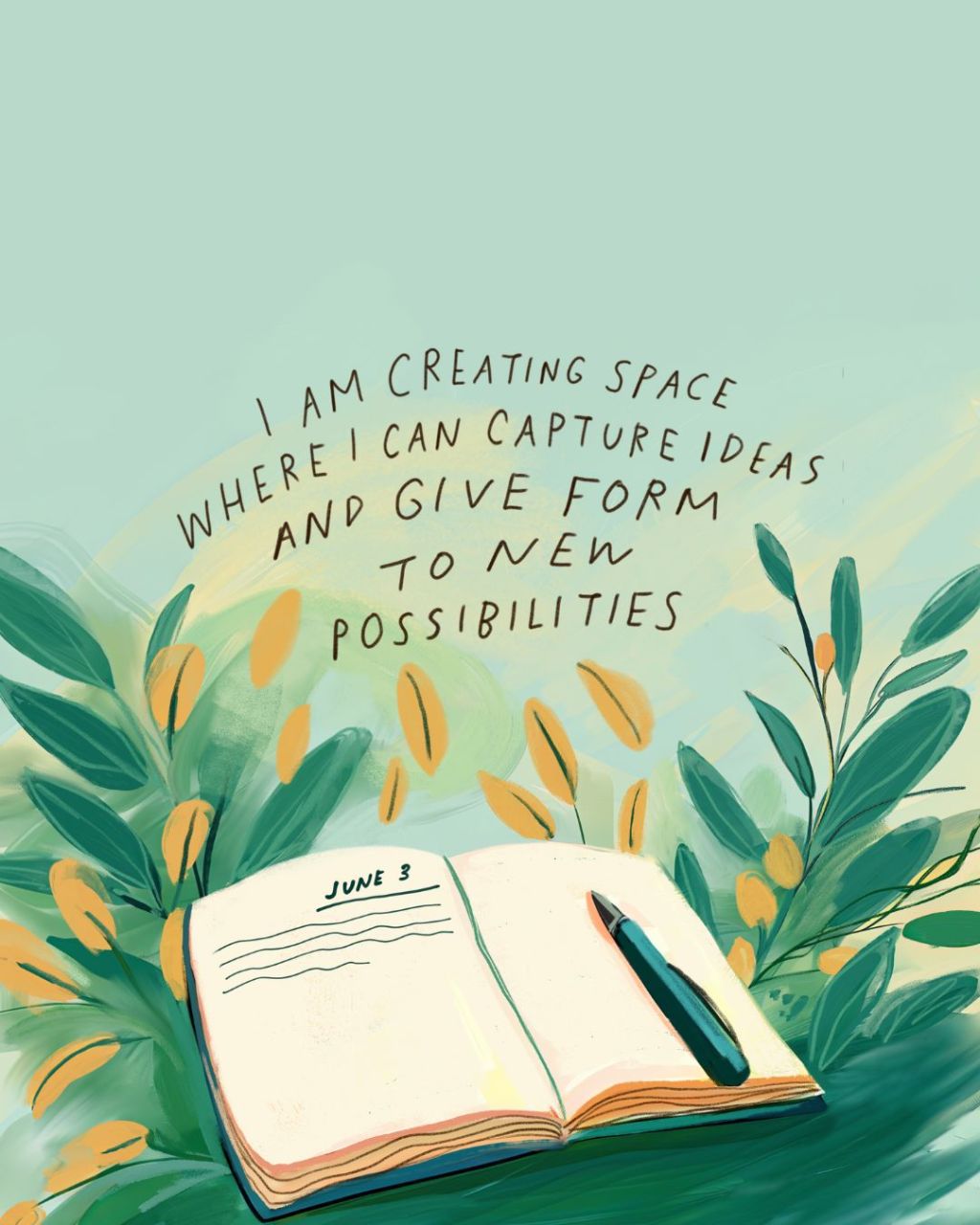
    By creating space to organize your thoughts, even before the smallest thing, you are engaging in a valuable process that can grow and even give form to new ideas. Through these simple observations, you might even begin to notice new things you’ve never paid attention to before.

    Of course, organizing thoughts is not the only part of working through something, but it’s a part that can be overlooked because it can be overwhelming. So give yourself permission to start small and create a space where you can practice giving form to new possibilities. – Morgan Harper Nichols

  • Making space to gather possibility

    Making space to gather possibility

    There are so many reasons why looking ahead can feel too abstract, too daunting, and too uncertain. So, instead of trying to think about it all at once, let yourself think for a moment of a new memory you’d like to create.

    The idea of a “memory” can have a lot of strong emotions attached to it.

    For instance, you might have memories associated with people you are no longer around to or close to anymore. There could be grief there and at times this can also make it hard to imagine — what will new memories look like?

    So give yourself permission to create space to explore what new memories might look like. What new things have you not been able to do? What things might you like to try alone, and what other things are focused on other people joining in?

    Make a list. Look up pictures and make a mood board. Ask a friend: “What kind of new memories would you like to make?”

    It is not selfish to try this, for the language and images that you end up finding can become points of inspiration and even templates for others to join in on, too.

    This doesn’t have to be the only thing you do when looking ahead, but it can be one of many. Find a space (even if it’s just one page in a journal or one mood board) where you can explore the possibilities of new memories.

  • There is space to try again

    There is space to try again

    I hope after everything, you feel free to write it again. Even if it’s nothing more than a few words for the beginning of a message you may never send. Even if it’s just to create just enough space in your life to say: I was here. And I’m still here. And here, in the wild of June, this story has not yet reached its end.

    And you do not have to wait to know what the next chapter will entail for this to be true: you are allowed to keep returning to the spaces that allow you to breathe and explore the possibility of what could be. Even if it just begins with one line at a time.

    “Here’s what I’ve been meaning to say…”

    “I don’t have perfect words for this for here’s what I know…”

    “I used to hold so much in. But now…”

    Even if it’s just nothing more than a few words, allow yourself to create space this June. You never know what small beginnings (even if in the form of a sentence) can teach you.

    -Morgan Harper Nichols

  • Grace for Unfinished Chapters

    Grace for Unfinished Chapters

    When you are able to cultivate gratitude in the present, you are also laying the foundation of contentment that you can carry with you, toward the future.

    This can especially be true when it comes to how you relate to other people. In moments where you find yourself being compared to others or something was said to you that doesn’t reflect who you fully are, it’s in moments like this where you can remember what’s actually true about you, and how that’s something worth being grateful for.

    If there is a moment in the future where someone says, “Oh, you’re still working on that? I thought you’d be done by now.” In that space, you can reflect on all the ways you’ve been learning to be grateful for your own pace and growth.

    There might be times when others tell you (or you tell yourself), “It’s surprising you haven’t moved on to bigger things yet.” And in those moments, you remember how you’ve been learning to be grateful for your unique journey.

    When you’re hearing, “Are you still doing that? I thought you’d have found something else by now,” You can remember the small ways you’ve been learning to be grateful for your own strengths and progress.

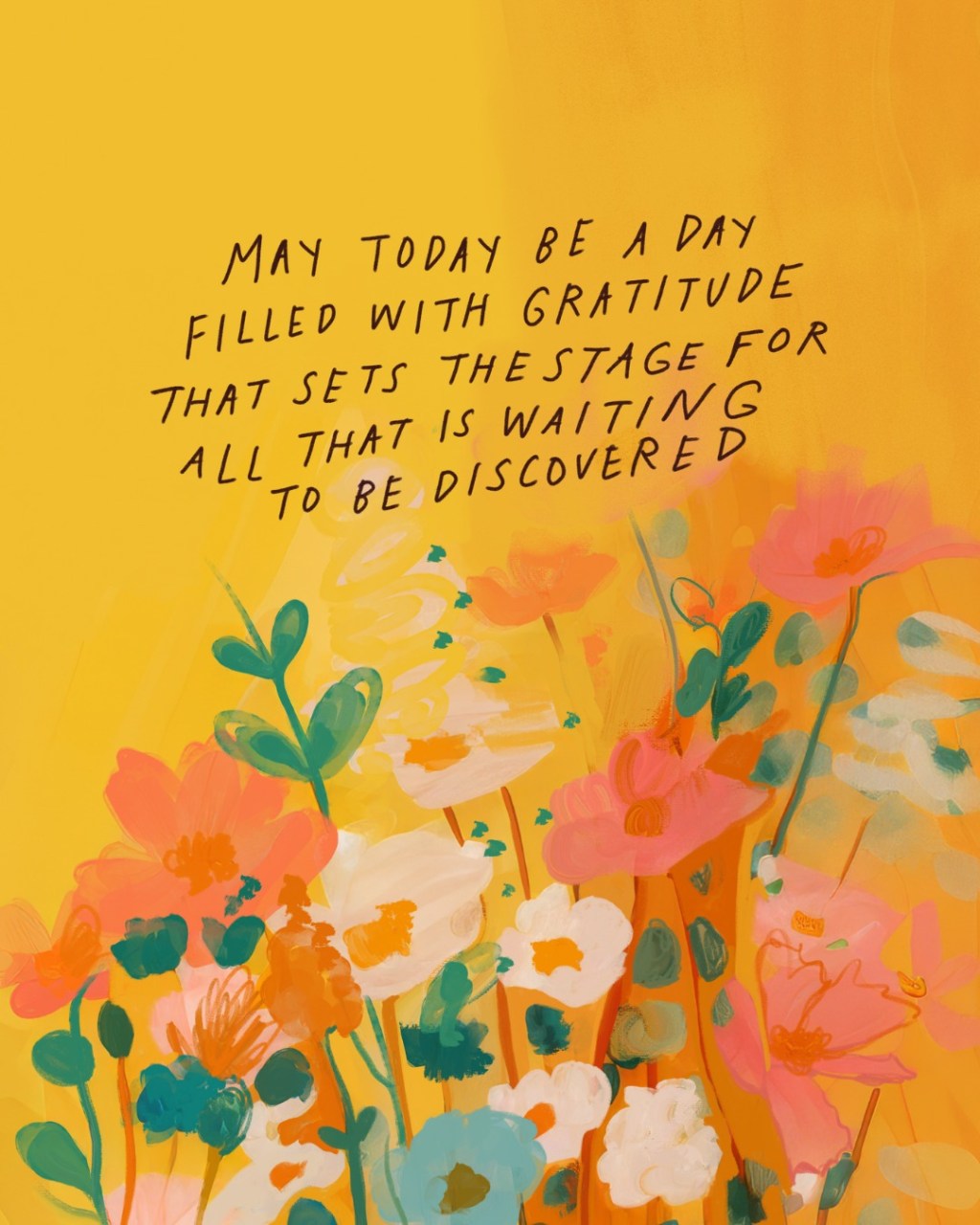
    There is no way to perfectly prepare for everything that will come, but you can still take moments right here in the present, learning to be grateful for what you have, what you’ve learned, and what you’ve been becoming more aware of each day. On this last day of May, may today be a day filled with gratitude that sets the stage for all that is waiting to be discovered. May there be grace for unfinished chapters. May there be spaciousness in the journey of becoming. – Morgan Harper Nichols

  • The life that happens in overlooked moments

    The life that happens in overlooked moments

    When you look at a flower, you might pay more attention to the bright petals than to the other parts of the flower. But there are many different parts that make a flower complete: the petals, the stem, the leaves, and even the tiny stamens and pistils inside. Each part has a role to play, and even though some parts are small and often overlooked, they are just as important as the bright petals. Our lives are much longer than the life of a flower, but when you consider the smaller experiences that make the whole…the moments we allow ourselves to deeply feel an emotion, experiences where we gain clarity, or an unexpected lesson that ends up making a difference..they are a part of the larger experiences we have in life, too. By themselves, they may seem like fleeting moments, however, these small parts are like all of those details that help the flower grow and thrive. Try to notice the small details in life wherever you can find them…especially the ones that aren’t as tangible, such as letting yourself feel or taking a moment to reflect. For it’s not just the big, tangible moments that are a part of the whole story. Continuing to notice the small details matters, too. – Morgan Harper Nichols

  • Possibilities of Hidden Potential

    Possibilities of Hidden Potential

    At times, what might seem like nothingness might just be rich soil waiting for seeds to be sown and watered. Closer observation opens up the possibility of hidden potential.

    Sometimes, what looks like nothing might actually be soil full of potential, waiting for seeds to be planted and watered. Think about a garden: at first, it might just look like a patch of dirt. But when you look closer, you realize it can become a place full of plants and flowers. This is like the quiet moments in our lives where it may seem like nothing is happening. However, if we pay attention, we might find that these moments are full of possibilities. So, just like in a garden, take the time to see the potential in what seems like nothing. These quiet spaces can help you figure out important things that become part of the larger blooming of what matters most.

  • Growth can spiral before it blooms

    Growth can spiral before it blooms

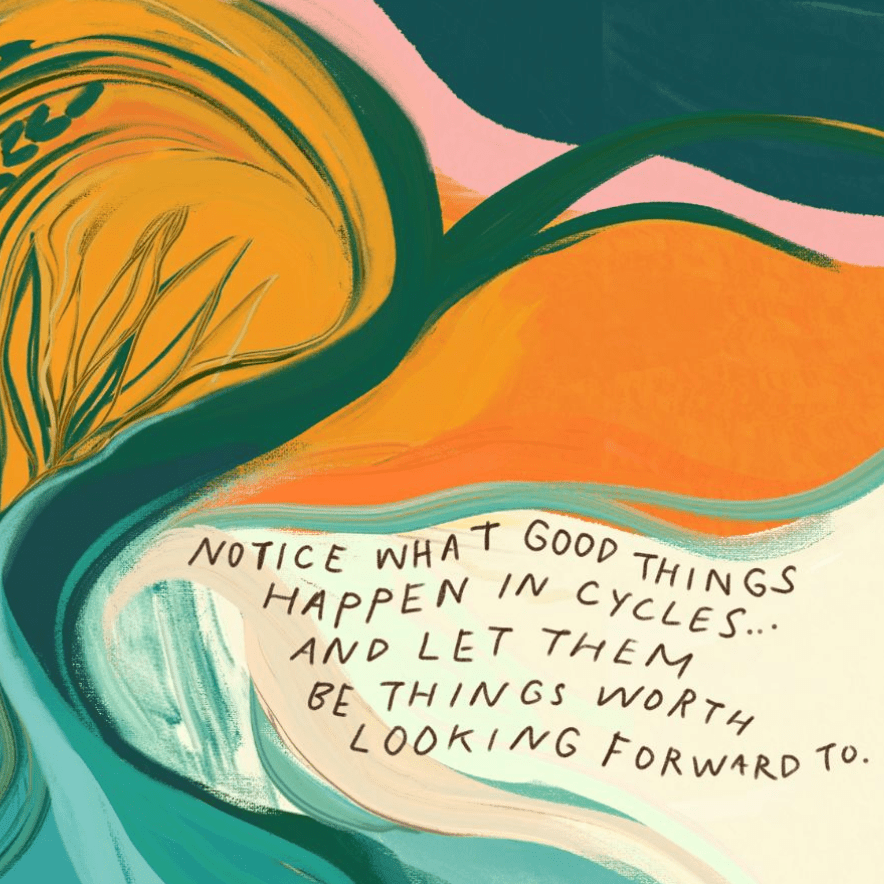
    Notice what good things happen in cycles…and let them be things worth looking forward to.

    This can be valuable to remember because we live in a world where there are things that are more step-by-step and feel very defined.

    Many things happen in ways that feel more like a linear series of steps. Just to name a few:

    Baking a cake
    Washing dishes
    Traveling on a road
    Building a piece of furniture
    Navigating a traffic light
    Writing a term paper
    Going up or down an elevator
    Moving through an assembly line

    Daily life is filled with things that require a clear sequence of steps to complete.

    However, not all of life is like that. And that’s okay…

    While step-by-step processes are helpful for many things because they show a clear path from start to finish when it comes to so many other things in life, it can be a little less predictable: paths we take toward dreams and desires, moving through grief and all of its (often-intertwined) stages, understanding and finding connection in different relationships.

    In a world of step-by-step, at times, it can be easy to feel as though nothing is happening if it’s not linear. You might feel as though you are going in circles, constantly going back to where you started. In that space, may you remember that there are many things that happen in cycles and going through these cycles is natural. Seasons. Lunar cycles. Water cycles. The cycle between day and night.

    As you move through the different cycles of life, be kind to yourself. If something has ended up being a bit more of a winding, circular path than you expected, allow yourself to seek out space to feel, to talk it out, to rest, to write it out in a journal (even if you feel like you’re rambling!), and just be reminded that life doesn’t have time be sorted out into step by steps before you can breathe and move through the space you’re in at a mindful pace. Continue to notice the good things that happen in cycles––even if it’s something that feels small, like the cycle between day and night. Pay attention to these rhythms and embrace when, where, and how they apply to other areas of life. Sometimes, growth can spiral before it blooms.

    – Morgan Harper Nichols

  • Some transitions speak in subtle ways

    Some transitions speak in subtle ways

    When you are listening to music, oftentimes, it will be easier to pay attention to the musical notes more than the spaces in between. These gaps are called “rests,” and even though they are silent, they are just as much a part of the song. Of course, our lives are much longer than the length of a song, but when you consider the ways we move through our days, moments of transition, and quiet pauses, there is something to be learned from the significance of rests in music. This is especially true considering that the in-between moments in the songs are the ones that get overlooked, and yet, they are essential to the rhythm and flow of the music.

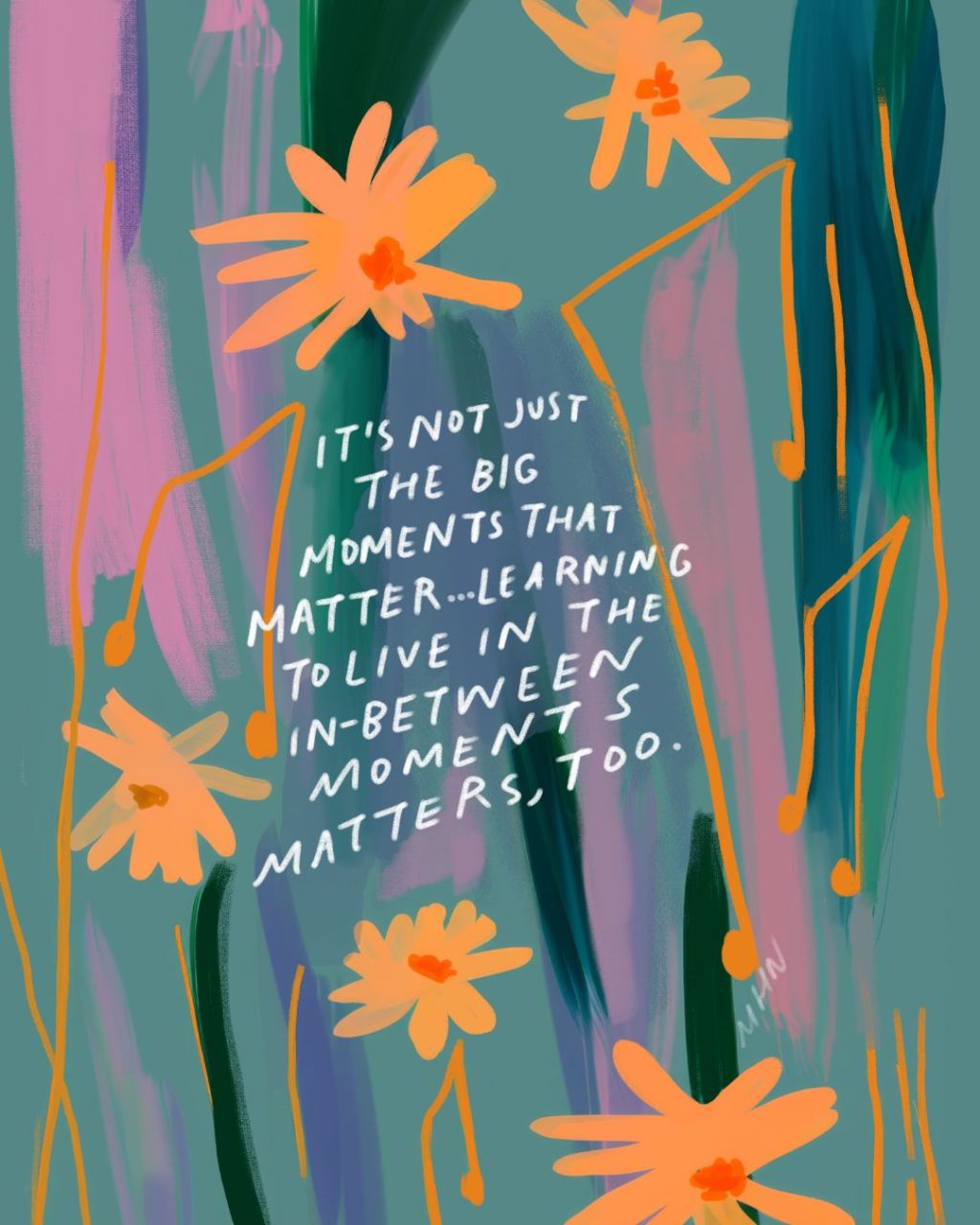
    Try to listen for the pauses in the music wherever you can find them. For it’s not just the big moments that matter. Learning to live in the in-between moments matters, too. Some transitions speak in subtle ways.

    -Morgan Harper Nichols

  • Questions to Create Clarity and Space

    Questions to Create Clarity and Space

    Questions to ask yourself:

    Can I finish something else first and come back to this?
    Is anyone counting on me to finish this today?
    Will pausing this help me think more clearly about it later?

    Creating space for questions like this is a way to begin to explore how, where, and when subtle shifts might be possible. For even though every single thing won’t have an immediate, easy answer, you’re allowed to make space to consider where you might be able to take pressure off and create breathing room.

    Not being able to figure it out all at once does not mean you are a failure. Not being able to answer this in this very moment doesn’t automatically mean you might not be able to answer it later. Let the questions you ask become spaces you create to pause, reflect, and consider, even before the moments of clarity.

    For all of the questions that you must answer for everything else, allow yourself to welcome a gentle question or two. Create space where it’s possible. It matters, even when it starts small.

    -Morgan Harper Nichols

  • Write down a few plans in pencil

    Write down a few plans in pencil

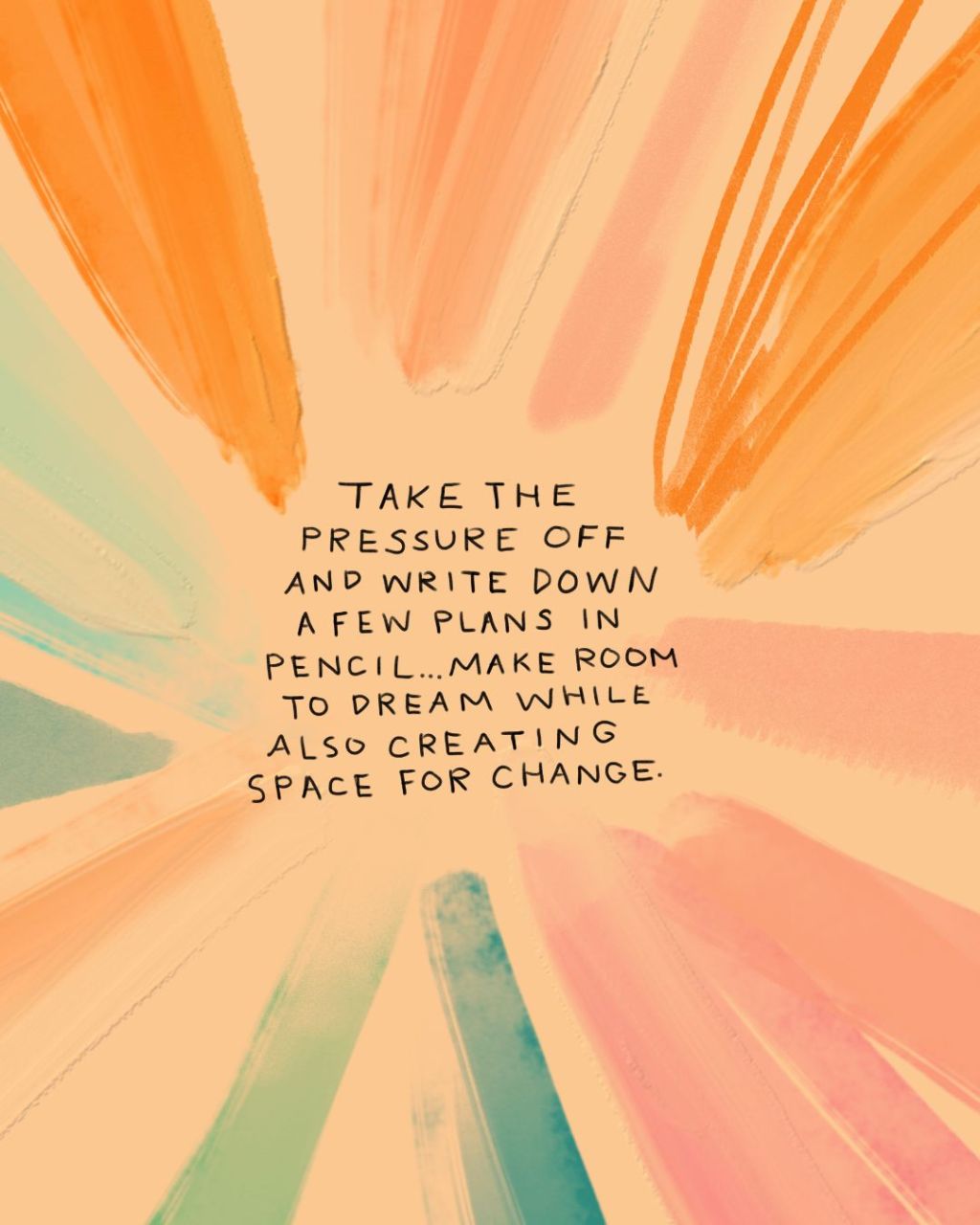
    Take the pressure off by writing down a few plans in pencil. Make room to dream while also creating space for change. There is nothing wrong with desiring for a goal or plan to feel concrete and real, but at the same time, you are free to consider: that if something is started to feel like a lot of pressure, could this be something you keep on the list but know it’s okay if it changes later? This is not a way of ignoring all commitments but instead, recognizing that adaptability and flexibility can be a part of meaningful progress too.

    Questions to consider:

    -How can I celebrate small victories along the way, even if my plans change?
    -Are there any commitments that I can prioritize differently to reduce pressure?
    -Where in my life can I put up a lot of different ideas and explore options openly?

    Even if it’s nothing more than a mood-board where you allow yourself to move things around or a journal where you brainstorm freely, allowing yourself to have some free space is a way to create a little breathing room.

    -Morgan Harper Nichols