Tag: writing

  • A Space to Just Be and Belong

    A Space to Just Be and Belong

    inhale, exhale
    and take a moment to imagine
    you have followed a forest trail down to

    a river
    where the banks hold the weight of past centuries,
    and yet also, the generous shade of the enduring trees
    all bending together to create room to breathe.

    time slows down here
    and for a moment you finally feel:
    you don’t have to hurry anymore.

    and even when you feel this distinct gap between you and the water below,
    you are still free to be connected here.
    yes, you are still free to be connected here…
    for you are both shaped by the same gravity of everything,
    and you are both learning to move through it all.

    notice when the surface water appears restless.
    notice when the pull beneath appears constant.
    notice when you feel this tension within you, too.
    notice how both ways of being here can be true.

    notice when the water sings,
    “all is passing. notice how all is passing.”

    and even as the hours start to rush faster for you,
    you are still free to carry the river’s rhythm with you.

    for yes, you are free…
    free to hold on
    to any little part of this rhythm that helps you breathe:

    “even here, I am steady and I am safe
    to envision forest trails
    that lead to the kind of place
    where a river keeps flowing,
    amid all the unknowing,
    and I can arrive, with it all, and belong.”

    I wrote this piece while thinking about a video game concept where the character you’re playing enters a landscape. Before there are quests, tasks, or goals, the character simply has space to roam and explore. I started wondering what it might feel like if a voiceover or poem played as the character moved into that environment.

    It began as just a concept, but as I wrote, I realized something similar happens in real life. We often find ourselves stepping into situations where it feels like we have to play a role. For me, that sense of being “on” or having to perform rarely feels calm. Instead, it can feel draining, tied to responsibilities or expectations. Even when we are grateful for the roles we have, it can still be difficult to find space to just be and belong as we are.

    With this poem, I wanted to create a different feeling: becoming a character who doesn’t need to perform, who can simply sit by the river, breathe, and exist without pressure. I wanted to show that even if it’s just for a moment, it matters. Even if the space to just be and belong at first only exist as an half-conceptualized image or idea in our minds, the fact that we took time to even imagine is significant all on its own and it’s something we can build upon.

    We all know what it means to carry roles and these roles bring responsibilities and are a part of who we are, but they don’t define the whole of who we are. And it makes a difference when we have spaces where we get to ask: what does it look like to just belong, as we are? What are the challenges that come with trying to create that space? How can we create rhythms that acknowledge both the tensions and need to just be?

    I don’t have a clear answer for what that looks like for every single scenario, but I hope I at least touched on this in this short poem. May we continue to create spaces where we feel free simply to arrive, to belong, and to be.

    Thanks for listening / reading! – Morgan Harper Nichols

    (This piece has been cross-posted on my Substack. You check it out here!)

  • Finding language to tell this story

    Finding language to tell this story

    It can take a lot of energy to describe things and search for the right words, even when it comes to experiences we’re intimately familiar with. However, it can make a difference to give yourself permission to practice and explore within a space where there’s less pressure.

    Here’s an idea you can try. This exercise invites you to explore the subtle differences in how we perceive and describe shared experiences, ultimately helping you to find language for your own story.

    1 – Think of a recent, neutral or positive experience with someone else, like a dinner conversation or a trip to the grocery store. Write down 3-5 words that describe the overall feeling or atmosphere of that experience (e.g., relaxing, warm, busy). Don’t worry about being creative—just note what comes to mind.

    2 – Reach out to the person you shared the experience with. Explain you’re doing a journaling exercise: “Random question. What 3-5 words describe [briefly describe the experience] for you? I’m doing a quick journaling exercise.”

    3 – Compare your lists. Take note of word similarities and differences. Do they highlight different parts of the experience?

    4 – Observe even in shared experiences, we each perceive, describe, and tell stories differently.

    Alternative Exercise: Describe an experience today using 5 words. In 3 days, describe the same experience again without looking at your original words. Did anything change?

    Why This Matters: This exercise helps you validate your voice by showing how we all perceive and describe even simple experiences differently.

    This can have a profound impact on the stories we tell. When you can acknowledge and embrace these differences, it creates an opportunity for deeper connections and an opportunity to grow in confidence and it also allows you to connect more deeply with others and learn how they tell stories. You can start to notice your unique way of finding language for a store by noticing the subtle differences in how you (and others) describe even the most simple things.

    -Morgan Harper Nichols

    If you’re interested in finding language to tell stories (through journaling, letter-writing, or creative or professional work) join me for an in-person writing workshop in Atlanta, Georgia on July 26! Tickets

  • Discovering New Ways to Be Present

    Discovering New Ways to Be Present

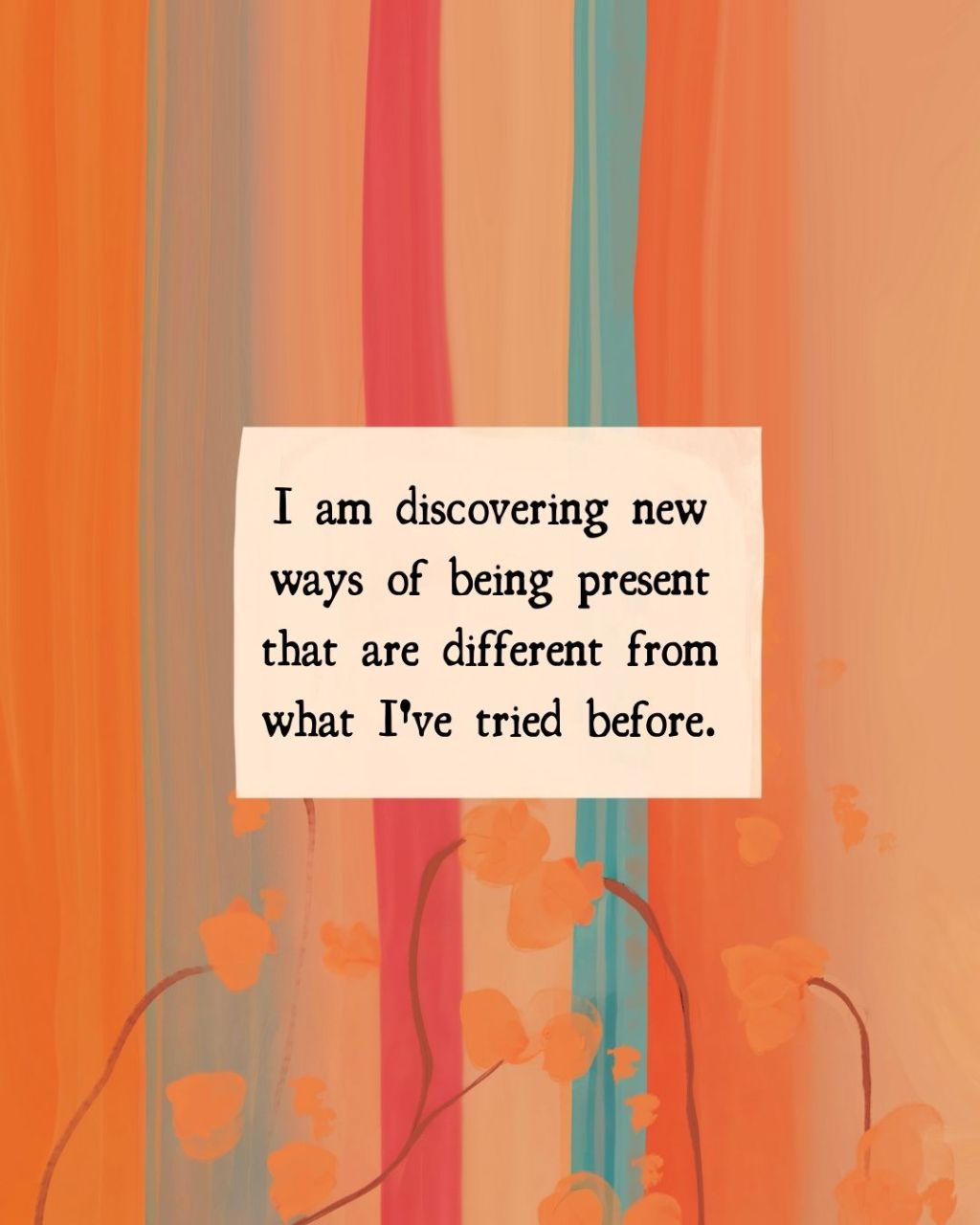
    Being present doesn’t only mean thinking quietly or sitting still for a long time. Sometimes, being present is being attuned in a conversation, being aware of a feeling, or being attentive in a particular setting.

    Even when the days are long, busy, crowded, you are still free to notice the small moments are still worth acknowledging. You are still allowed to observe and recognize the ways you are learning to be alive, right here. Let moments of attunement, awareness, and attentiveness be a reminder that you are being present, even in small ways. Let them be reminders that even when you notice others being present in different ways, the way you’ve learned to move through the actual space you’re in right now matters more than you know.

    So whether you feel like you’ve been able to find enough quiet time or not, it is never too late to allow yourself to explore new ways of being present. And you can do this by acknowledging the ways you’ve already been attentive in your life right here, recognizing that this is something you can continue to be build upon. Allow yourself to keep exploring new possibilities for engaging more fully right here where you are. – Morgan Harper Nichols


    I’ve just announced a new in-person writing workshop in the Metro Atlanta Georgia area (where I’m from!) on Saturday, July 26. Would love to see you there! Tickets now available

    There’s also a few more spots available for the free virtual writing workshops in July. Click here to RSVP

  • Connection, even from far away

    Connection, even from far away

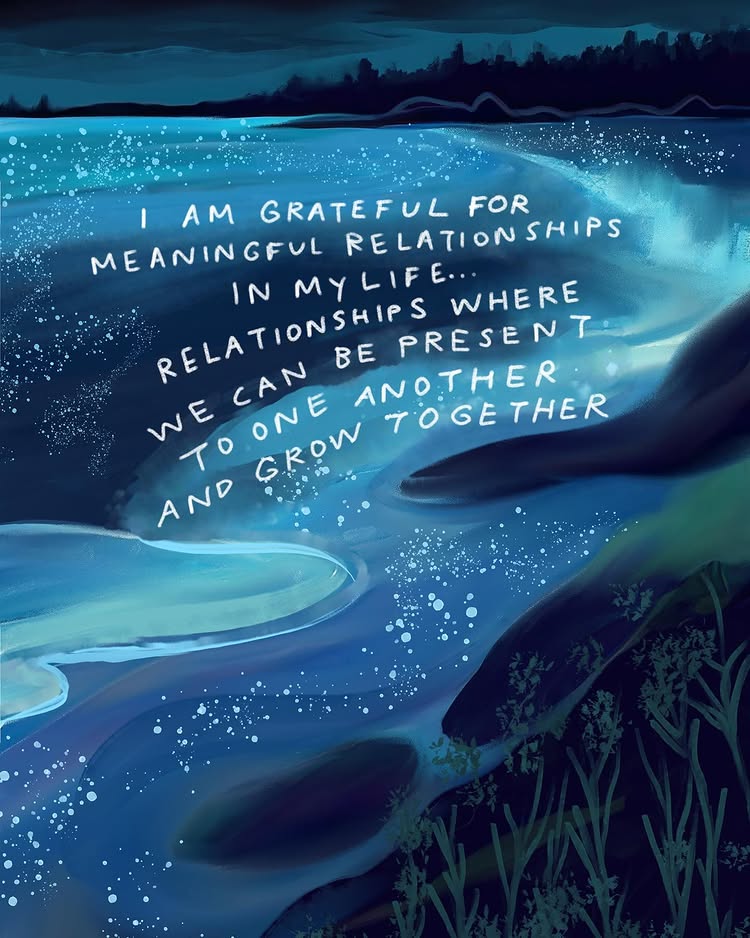
    When bioluminescent algae light up the ocean at night, it makes the water glow. This happens when lots of tiny algae come together and react to the water’s movement, creating light through a chemical process.

    What if we could see meaningful relationships in our lives in a similar way? As we react to the “movement of the water” in daily life, where we adapt and interact, we’re not the only ones seeking to produce light, seeking to navigate each experience. Like algae, we are in community with one another, whether we are directly connected or spread out in different places. And when we come together and interact, there’s this exchange of thoughts, emotions, and stories that together create a vibrant, illuminated network. This exchange can lead to new ideas and connections…just like how the algae’s chemical reactions produce a visible glow.

    It might be hard to see in a very literal way how algae lighting up the ocean is like our relationships, but think of it like this: both are about small, individual things coming together to make a larger group. Just as algae create a glowing ocean, our relationships and interactions create a network of shared experiences that enrich and brighten our lives. Think of moving through the day in a way you might think of algae moving through water: reacting to the movement and mixing with other algae to make a glowing web of light.

    Just like algae in the ocean, we move through our days reacting to what’s around us and mixing with others to create a glowing web of connection.

    Being present in our relationships isn’t about always finding a large, ideal group of friends or always spending lots of time together. Of course, it can be those things, but it’s also about noticing and asking questions about how you’re moving through things together. Even if it’s just noticing that you have moved from Monday to Tuesday with others, these shared moments are meaningful and worth noticing and talking about, wherever we are. Like bioluminescent algae in the sea, our small actions and interactions can spark a bright web, creating and deepening relationships in more ways than we realize. Connection can be created up close, and perhaps, like bioluminescent algae show us, far away. – Morgan Harper Nichols

  • Courage is an ongoing process of small shifts

    Courage is an ongoing process of small shifts

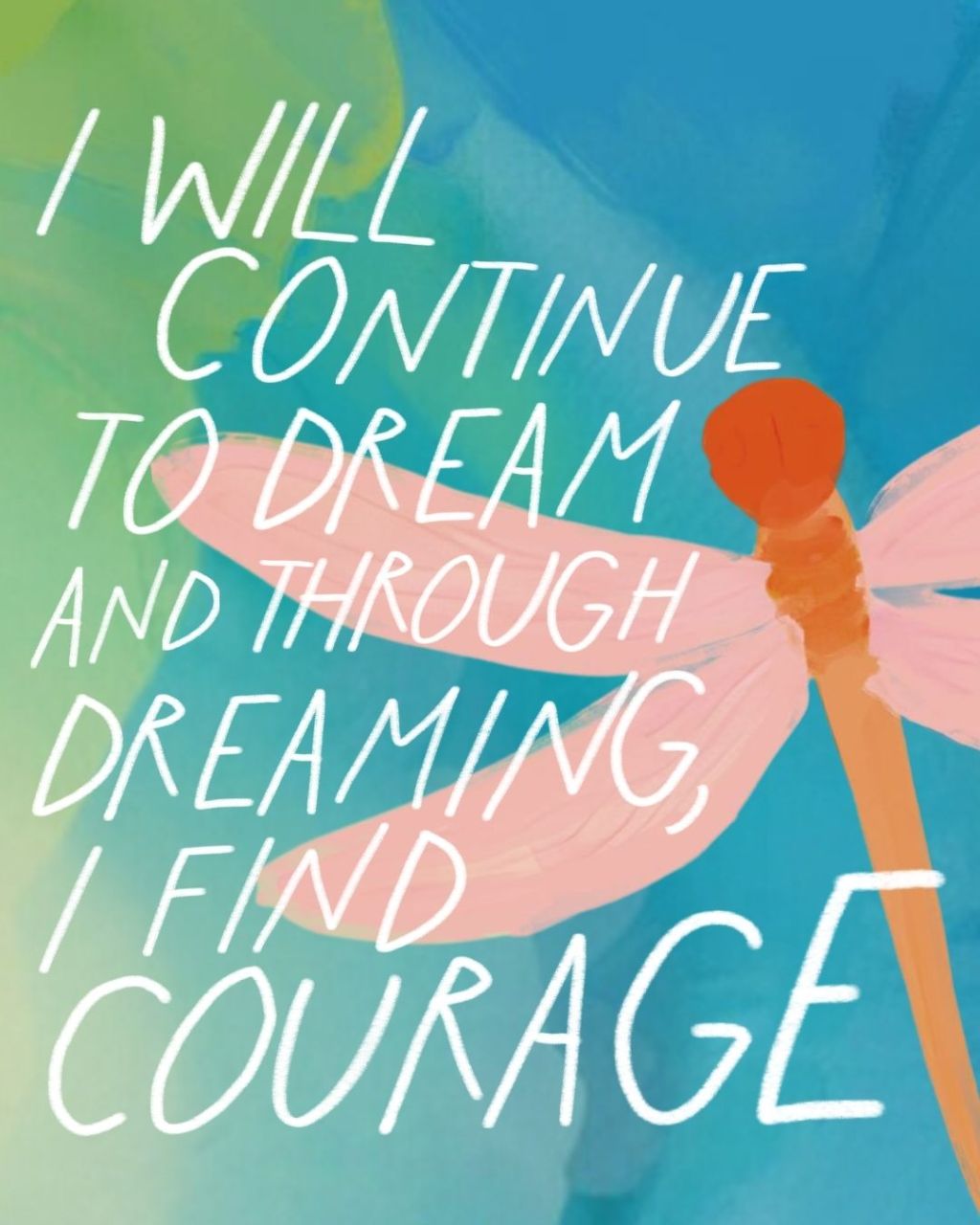
    Dragonflies are known for their ability to hover and swiftly change direction which is surely a testament to their agility and precision. Their two pairs of wings can move independently and this mechanism is what actually allows them to maneuver effortlessly in all directions, even backward, when they need to. Their 360-degree vision makes them adaptable and agile, like a courageous dream could be: gliding over serene ponds and through lush wetlands.

    To dream is to explore possibilities beyond the constraints of what’s been done in the past, yet still slowly learning to use patience to navigate. And this practice of dreaming leads to the freeing act of learning to hover, despite our fears, even before the fears fully go away. To hover amidst the reeds. To glide even in the winds. Like a dragonfly, we can find our way through the reeds and lily pads of all of the curiosities, convictions, and stories that make up the dream.

    As dragonflies pivot and adapt in mid-air, when it comes to our dreams, no matter how old or new, how vivid or fleeting, perhaps, we too can pivot, adapt, adjust, and thrive. Courage, like a dragonfly’s precision, can continue to transform paths we journey through, as we learn to adjust and evolve, like the dragonfly in the ever-changing winds. It’s okay if courage requires adjustment. You are free to let it become an ongoing process of small shifts.

    Amidst all of the wonder typically associated with dragonflies, there’s a flexibility we gain from dreaming. And even as we face the unknowns of those very dreams, like a dragonfly, we still learn to fly right where we are. – Morgan Harper Nichols

  • Permission to name needs

    Permission to name needs

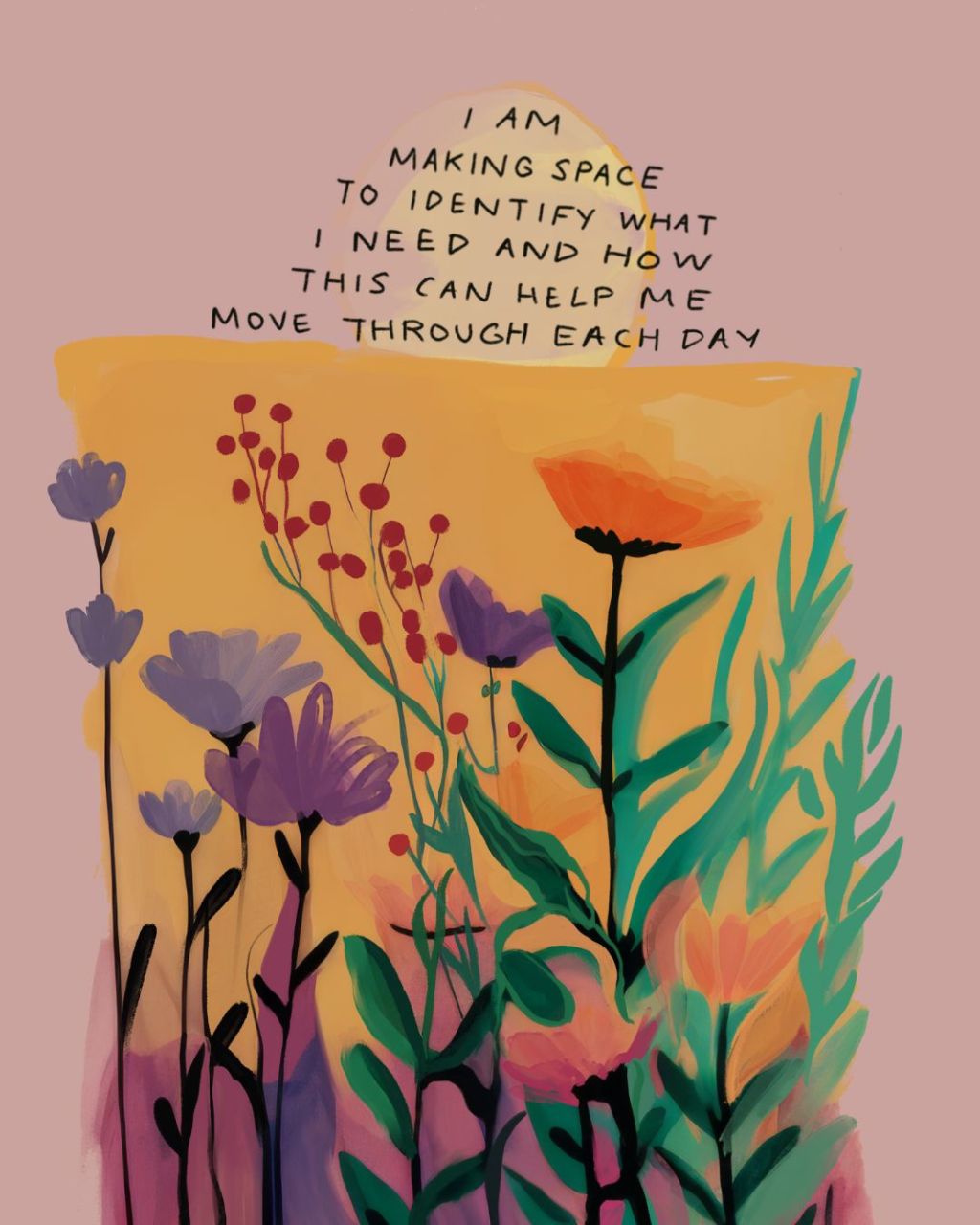
    You are allowed to create space to name the need.

    …Here are a few words (of many) you could consider:

    acceptance
    appreciation
    beauty
    closeness
    community
    companionship
    ease
    flexibility
    friendship
    hope
    inspiration
    movement
    space
    structure
    understanding…

    Of course, having needs met is very important, but at times, it can be easy to forget an earlier step: naming them in the first place. This alone can be a powerful act. Consider friendship. If you were to say, “I need friendship right now” to someone, it’s the kind of thing that is sure to, at least, spark attention and awareness. It may not immediately lead to the dream friendship you need right now in the next five minutes, but naming it provides a language for your needs, helping you articulate and express what you are seeking. It could lead to deeper, more specific questions:

    Do you need the kind of friendship that is supportive or adventurous? Consistent or spontaneous?

    Specificity not only helps you identify what you may need but narrows your focus in such a way that you may begin to explore what necessary steps are required for it to become possible.

    Allow yourself to get specific. For instance,

    If you need “acceptance,” ask yourself — “what kind?”

    If you need “ease,” ask yourself, “What might ease look like on Saturdays?”

    If you need “space,” ask yourself, “Where? What kind of space has been helpful in the past?”

    -May there be space for you to identify what you need and how it might help you move through the day. – Morgan Harper Nichols

  • Embracing the depths of your story

    Embracing the depths of your story

    If you were to think of your life as a story, there are likely chapters that you could easily recite over and over. For some, it might be the story of how you grew up, and for others, it might be the story of how you ended up in the city you’re currently in or the story of your middle name. These stories become a part of us in a way that can be very useful. This is especially true if you have parts of your story that people might not be familiar with, such as having a rare name or being from a small town that few have heard of. However, one of the challenges of having familiar stories is that they can feel fixed and stuck in time. You may even get tired of telling other people the same old stories. You may even get tired of telling those stories to yourself, too. So what can you do?

    Here’s something you can try:

    Think of a book you’ve read where you’ve been able to watch or read an interview that features the author of the book. It’s likely that upon listening to them talk about the story and its characters, you learned something new about the book when hearing them dive into all of the details that weave the story together, even if it’s not written on a page. They share details that only they know because they’re the only ones who have been telling that story. What if––if only for a moment––you could imagine yourself as the author of a fictional book you’re writing, where you’re sharing the behind-the-scenes later on:

    What are some details of your life that may have been overlooked or forgotten? What are the untold stories and hidden layers that add depth and richness to the narrative? The details you might share face-to-face or with certain people? The things that were beautiful and meaningful but hard to put into words?

    You don’t have to put words into a perfectly publishable narrative to take a moment to reflect on the details. Even just acknowledging them is a way to be reminded that your story is alive with a richness that is worth paying attention to.

    May the hidden layers of your story help you realize the depths of it. – Morgan Harper Nichols

  • Small Ways to Expand A Sense of Possibility

    Small Ways to Expand A Sense of Possibility

    Allow yourself space to explore new connections, even in small ways. There are so many things that you can pay attention to that might seem small or seemingly insignificant but that can actually tell a story of something so much more.

    Consider the photos on your phone. When was the last time you printed some of them out? How might looking at a moment that you were really grateful for in a physical piece of paper help you remember it more? It doesn’t even have to be a formal photo print. You could print something on a black and white piece of regular paper, fold the page, and use it as a bookmark in your journal.

    Of course, a printed photo might not change everything, but in a life where so much is fleeting, it can become a symbolic act of taking a little extra time and effort to find value and appreciation in an easily overlooked place.

    This is an example of making new connections—allowing yourself to connect one small thing to the other in pursuit of something forgotten or never realized before.

    A new connection could be a photograph you took years ago; that’s “old news” that takes on new life when you print it.

    A new connection could be a moment when you think of two people who don’t know each other but know you, and you introduce them so they can become friends.

    A new connection could be realizing that you already have a skill in one area of your life that comes naturally to you and that you can apply to another area of life.

    These are just a few of many examples and you are free to go in search of many more, one connection at a time. – Morgan Harper Nichols

  • The Importance of Sharing Your Story

    The Importance of Sharing Your Story

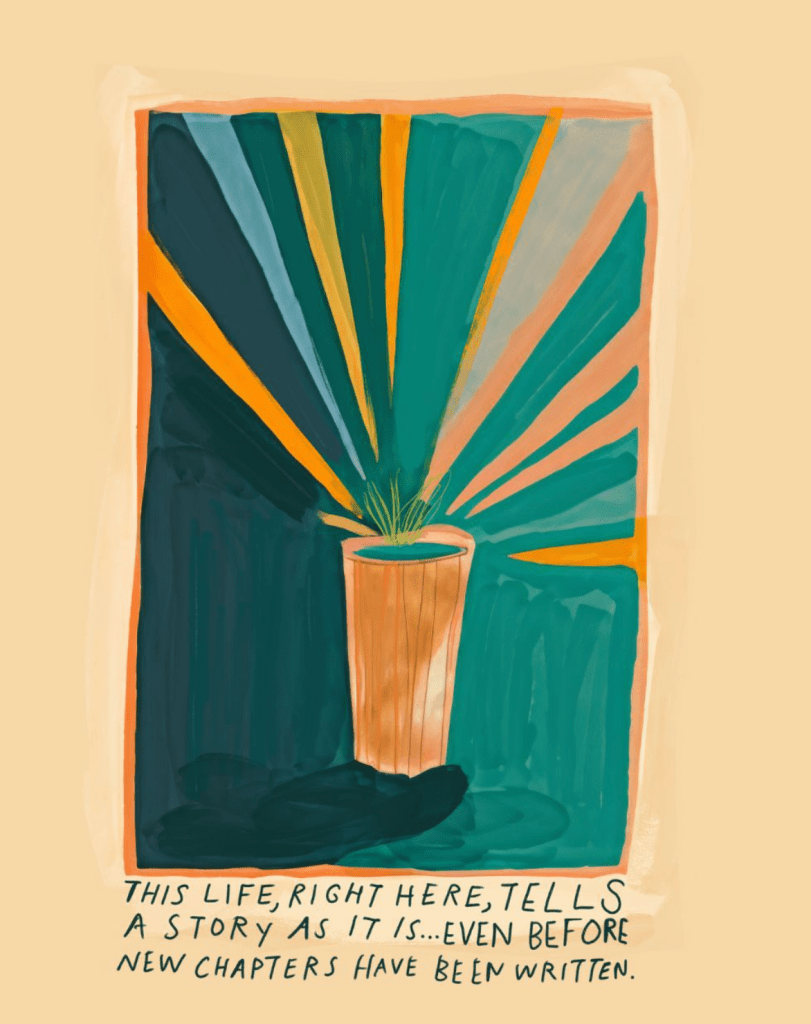
    Imagine buying a pot with soil for a plant to grow. The entire experience of going to the store and selecting the pot is an important part of the process, even before the plant begins to sprout. This experience is a part of the story, just as significant as the growth that will follow.

    Now, picture meeting a friend later that day and they ask you about your day. You share the story of going to the store, choosing the perfect pot, and picking out the seed. As you recount the details, you express your emotions and excitement about watching the plant grow in the future. This narrative can be complete and meaningful story even without the plant’s growth.

    Perhaps, in some ways, your life, as it is right now, has parts that can be shared like that. It’s a story unfolding, filled with experiences, emotions, and anticipation for what’s to come. You might not have the exact details of how everything is going to turn out, but you’ve been fully engaged with the steps of the process not because you have all the answers but because you’ve lived it…and it’s something you can share with others.

    Pay attention to the moments of your life where you start to tell the story of where you are and who you are. Notice how there might be storylines unfolding in your life right now that quite have this easy-to-explain metamorphosis moment, but it’s still something worth telling because it’s real, and it also reminds others that they don’t have to have every storyline figured out before it’s something worth telling.

    There are moments in life when advice is given, but perhaps, there are even more moments in life where stories are untold. But who says they have to be perfectly polished stories? Who says there can’t be places for stories to be shared, even while they’re still in the making?

    Even before the next chapters are written, your current story is valid, significant, and worth sharing.

    An illustrated image of a small potted plant with green leaves, centered against a background of radiating teal, dark blue, yellow, and peach beams that resemble stylized sunlight or energy. The pot is terracotta-colored and sits on a dark shadow. Below the image is handwritten text that reads: “This life, right here, tells a story as it is… even before new chapters have been written.” The overall style is painterly and contemplative.

    – Morgan Harper Nichols